Dominican Republic to reopen Haiti border for trade, but Haitians will still be barred
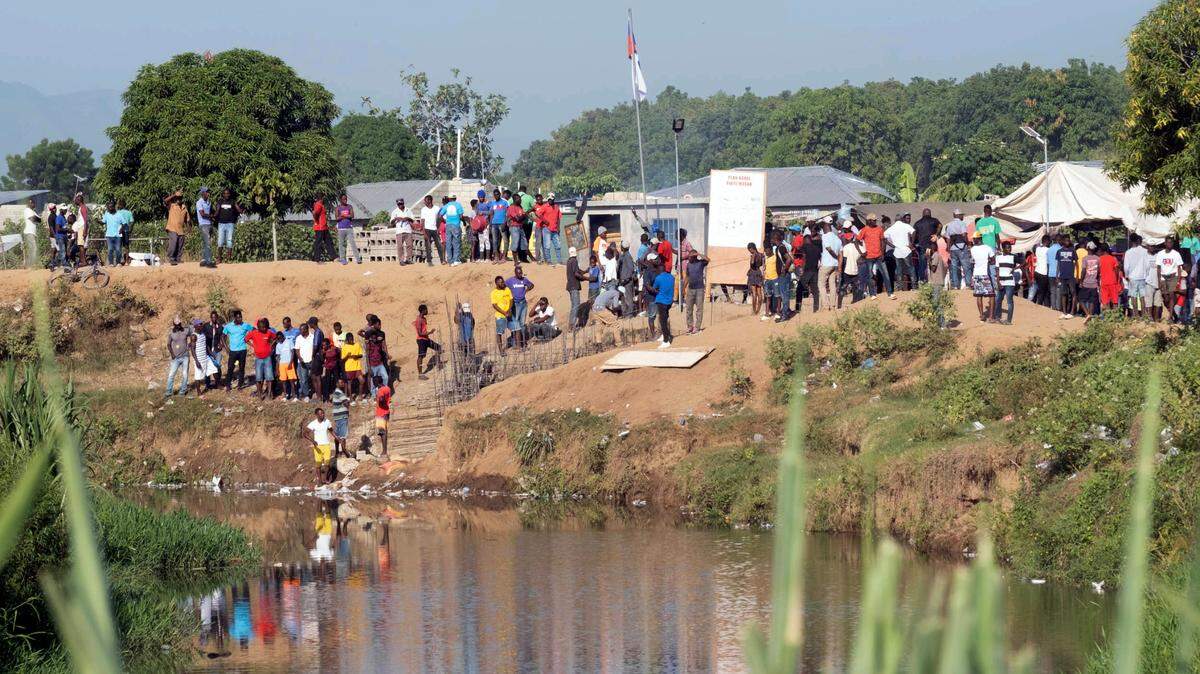
Nearly a month after shutting down its entire border with Haiti, the Dominican Republic says that it is ready to reopen for business, but Haitians will continue to be banned from entering the country.
The commercial corridor between the two countries will be under strict military controls and mandatory biometric checks to facilitate the trade of essential Dominican products such as food and medicine, especially for infants. While residents of the two nations will be able to trade, the Dominican National Security Council said Haitians will continue to be barred “indefinitely.”
The council also announced that among other measures the Dominican Republic “will indefinitely extend the suspension of the issuance of visas to Haitian citizens” and “will ban the export of electronics, cement, rebar and other construction materials to prevent structures from being built that threaten our environmental assets.”
“President Luis Abinader has said that the border cannot and will not be the same,” the council said in a statement Monday. “For this reason, these measures will continue to be the new normal on the border until we achieve a return to governance in Haiti. Our priority will continue to be the defense of the national interest and the security of our citizens.”
The decision follows weeks of tension and calls by the international community, led by the United States, for the two neighbors to resolve an ongoing dispute over the construction of a canal on the Haitian side of the border on the Massacre River, which straddles the two countries. In addition to calls for a resolution, the U.S. and United Nations asked the Dominican Republic to allow humanitarian aid to cross the border to Haiti.
But Abinader, who is seeking re-election, doubled down on the closure and defended his decision. But in recent days pressure has been building as angry Dominican business owners along the border complain about being unable to sell their products and textile factory owners weigh laying off workers.
In its decision Monday, the National Security Council continued to defend the border closure, saying it has been successful in keeping out Haitian gangs and reducing the flow of undocumented migrants. The Dominican military, the council announced, will continue to control border access to make it “even more difficult for gang members” to cross.
On Sept. 11 the council suspended visas for Haitians and threatened to close the border if Haiti and the Dominican Republic were not able to resolve the dispute over the canal’s construction. Days later, Abinader made good on the threat.
The president’s office said the border was shut down to protect national security in the face of the political and social instability caused by gangs in Haiti and to protect the environmental integrity threatened by the unilateral construction of a canal on the river.
“With the closure of the border we keep Haitian gangs out of our territory; we stimulate the voluntary return of thousands of immigrants; the entry of undocumented immigrants is reduced; we control the smuggling of weapons and prohibited substances; and, most importantly, we show the international community our firm opposition to any Dominican solution to the Haitian problem,” the council said. Thousands of Haitians have reportedly voluntary returned to Haiti from the Dominican Republic since the border closure.
In the weeks since the dispute, Dominican authorities have moved to cut access to the waters of the Massacre River.
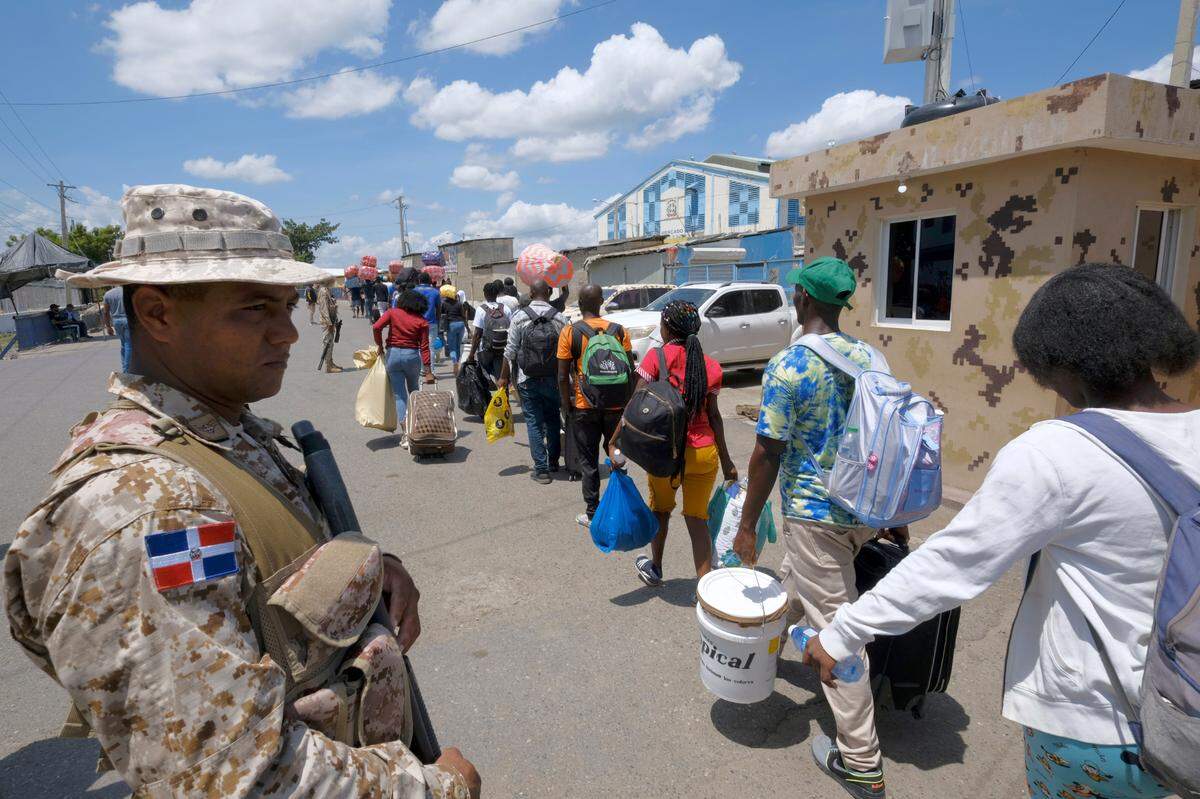
The Haitian government said it plans to discuss the latest Dominican measures at a cabinet meeting, but in a statement reiterated its position that it believes the best way to resolve the diplomatic tensions is through dialogue. It also congratulated the people of Haiti, who have continued to help build the canal in northeast Haiti near the border of Ouanaminthe and Dajabón.
“The government of the Republic of Haiti congratulates the population for their calm, serenity and patriotism in the face of the disproportionate measures taken by the Dominican authorities. It continues to conduct consultations and make appropriate arrangements in the interest of Haitians,” the statement said. “The government reaffirms the inalienable right of Haitians to equitably use” the river water.
Any attempt to divert the waters of the said Massacre River, Haiti said, would deprive Haitians of its use and violate a 1929 agreement between the two countries.
“The Government of the Republic of Haiti believes that an outcome will only be considered suitable if it allows the equitable sharing of water resources, the normalization of relations between the two countries and a return to the movement of people and goods of the two sides, as was the case between the two Republics before the unilateral closure of September 15,” the Haitian government said.
This story was originally published October 9, 2023 at 7:25 PM.