U.S. embassy in Haiti cuts back on services to public after gunfire erupts nearby
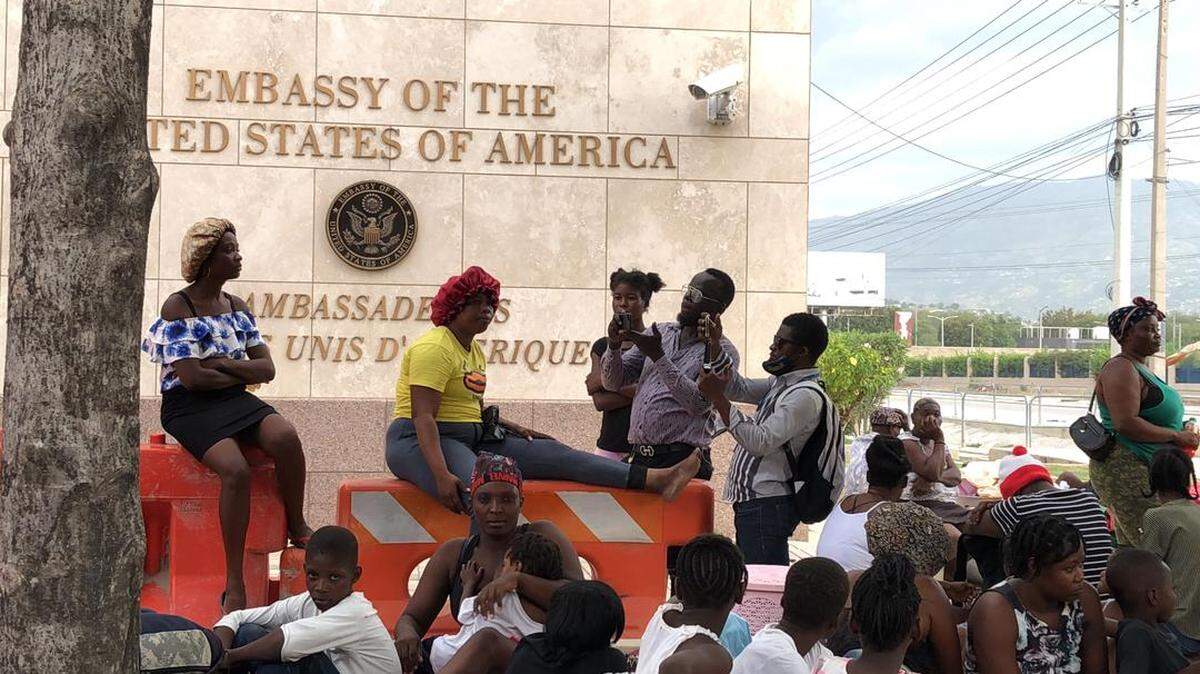
U.S. diplomatic personnel in Haiti have been restricted to the U.S. embassy until further notice after gunfire erupted Tuesday in the vicinity, forced a curtailing of services.
Initially, the U.S. embassy in Port-au-Prince issued an alert saying that it was closed until further notice due to gunfire in Tabarre, the Port-au-Prince suburb where it’s located. Soon after, a correction was issued stating that while the embassy’s doors remained open, “the embassy will not be providing services to the public and is open for limited operations only.”
“All personnel are restricted to Embassy compounds until further notice due to gunfire in the vicinity of the Embassy,” the correction read.
The U.S. compound, just east of the capital, is the latest to be affected by Haiti’s incessant gang violence, which has led some foreign diplomats to shutter their doors and work from the neighboring Dominican Republic.
The effects of armed -ang violence on Haiti’s nearly 12 million residents have reached unprecedented levels, the United Nations said earlier this year as its Office for the Coordination of Humanitarian Affairs estimated that around 80% of Port-au-Prince is under the control or influence of gangs.
That influence has grown exponentially since the July 2021 assassination of President Jovenel Moïse left Haiti without an elected president and in a constitutional crisis. The violence is not only being felt in the metropolitan Port-au-Prince area but also in the region just north, where dozens of people in the Artibonite Valley last month were summarily executed by gangs, according to a local human rights group.
The unceasing violence has led to more than 1,600 people being kidnapped, killed or injured between January and March, according to the U.N.
The violence prompted the State Department late last month to order the withdrawal of non-emergency personnel from the embassy, and the evacuation of U.S. citizens from Haiti. The order, issued on July 27, came after dozens of Haitian families from nearby communities sought refuge in front of the embassy when armed men invaded their neighborhoods. That same day, an American nurse from New Hampshire and her daughter were abducted from a clinic run by a Christian humanitarian aid organization, El Roi Haiti, in the capital.
Despite the evacuation order for embassy personnel and U.S. citizens, local Haitian staff have had to continue working, traveling through gang-controlled neighborhoods to get to their embassy jobs, often with no forewarning of the deteriorating security situation.
The increase in gunfire appears to be led by the gang Kraze Barye, led by gang leader Vitel’homme Innocent. Despite a $1 million reward by the U.S. for information leading to Innocent’s arrest, he appears to have grown in power. as he expands his control from the Torcelle and Tabarre areas of Haiti.
Recently, the government of Kenya said it would consider leading a multinational force into Haiti to help the Haitian national police root out gangs. Though the consideration has been welcomed by the United States and Haiti’s government, which has been meeting with opposition groups to hash out a political accord that could lead to elections, it has not helped quell tensions in the country.
On Monday, thousands of protesters took to the streets in the capital demanding protection from armed gangs and an end to the violence. Many of the demonstrators concealed their faces as they marched from Carrefour-Feuilles to Champ de Mars and then to the prime minister’s official residence, where they set a car on fire.
Other protesters burned barricades and clashed with police, who used tear gas to disperse the crowds.
On Tuesday, the rapid gunfire continued, and a specialized anti-gang police unit was. deployed at 3 a.m. after receiving word that gangs were trying to take control of a nearby neighborhood in the Tabarre area.