‘Only God can save me.’ After Haiti earthquake, hospitals struggle to treat the injured
At a government-run hospital in this rural coastal city on Monday, there were dozens of earthquake victims with broken bones but not enough plaster to cast them. Basic medicines, such as painkillers, antibiotics and intravenous saline, were also scarce. The most seriously injured were rushed to the airport on a school bus so they could be evacuated by airplane for better medical care elsewhere in the country.
But the window was quickly closing as approaching Tropical Depression Grace threatened to drench the country — adding to the already difficult challenges for international rescue efforts after Saturday’s magnitude 7.2 earthquake leveled buildings along Haiti’s southwestern peninsula. The latest confirmed death toll also rose to 1,419, along with nearly 7,000 injured, and more than 37,000 homes have been damaged or destroyed.
“We are at the mercy of God,” said Francesse Moril, 24, who lost her home in the earthquake. Moril sat under an open UNICEF tent at the bedside of her friend, Michaela Belcombe, 53, a mother of five and grandmother of three.
They were part of a chaotic scene unfolding outside Les Cayes’ hospitals as hundreds of others like them sought help, overwhelming the region’s under-resourced healthcare system.
Haiti’s hospitals frequently lack water, electricity and basic medicines on the good days. After a natural disaster on the scale of Saturday’s earthquake, hospitals were overflowing with the wounded, many of whom had not received medical attention in 48 hours as doctors and nurses struggled to find the basic medical devices and drugs they need to treat traumatic injuries.
“We do not have enough equipment to fix the fractures, and we don’t have IV solution, or antibiotics and materials to take care of the wounds,” said Dr. Jean Yves Glaud at OFATMA Hospital, which is run by the Haitian government.
‘I don’t have anything’
Glaud said earthquake victims continued to come in with serious injuries, including open fractures and head trauma since the earthquake. But the hospital was running out of supplies.
“We need gauze,” he said. “We need material ... to fix the fractures. We need plaster for casting.”
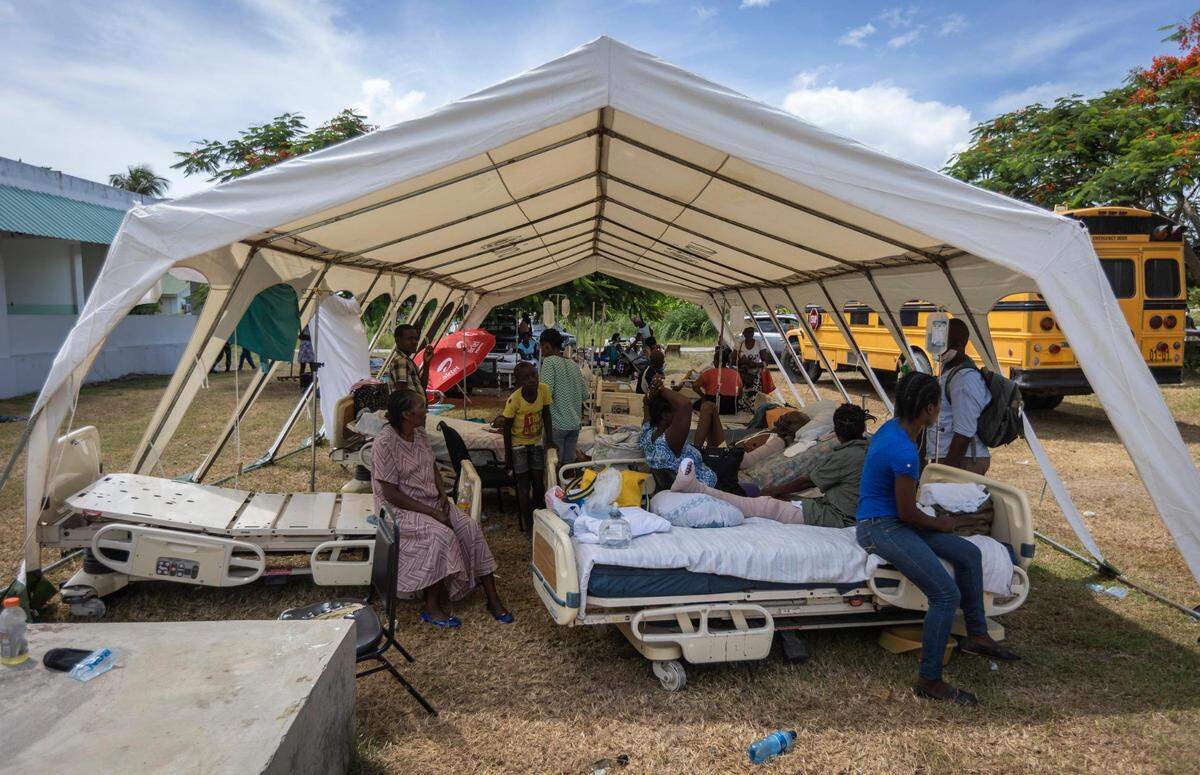
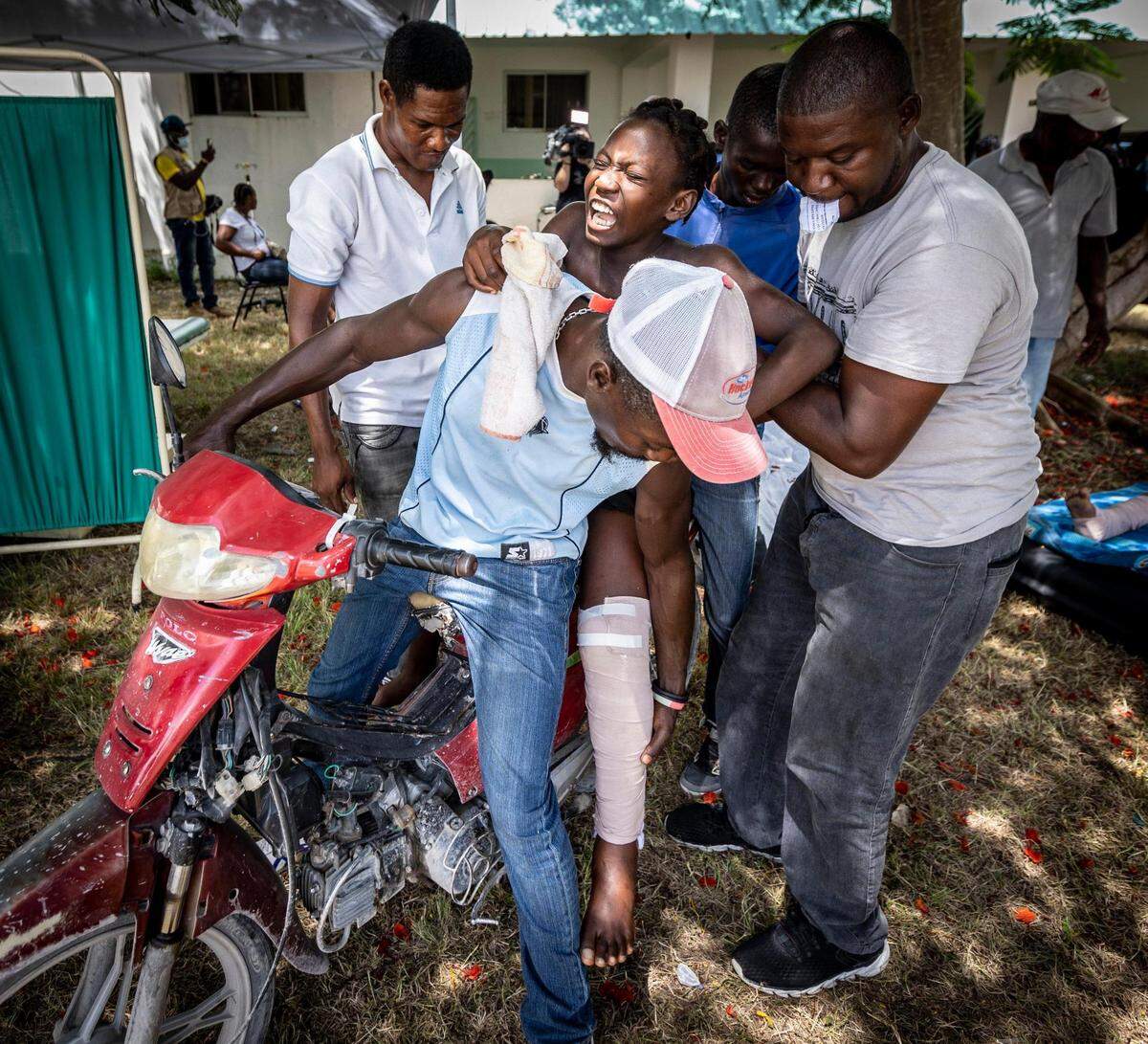
At the 64-bed private hospital, Centre de Sante Lumiere, the facility’s administrator, Welser Romelus, said he had lost count of the number of patients the facility had seen. Many were wheeled in on recliner chairs or transported to the hospital in the cargo beds of pickup trucks or the back seat of an SUV.
Romelus said the hospital’s seven doctors could not keep up with the rush of injured people, and that transferring the most traumatically injured patients to Port-au-Prince was too risky because of violent gangs in the Martissant neighborhood that control the road leading from Les Cayes to the capital city.
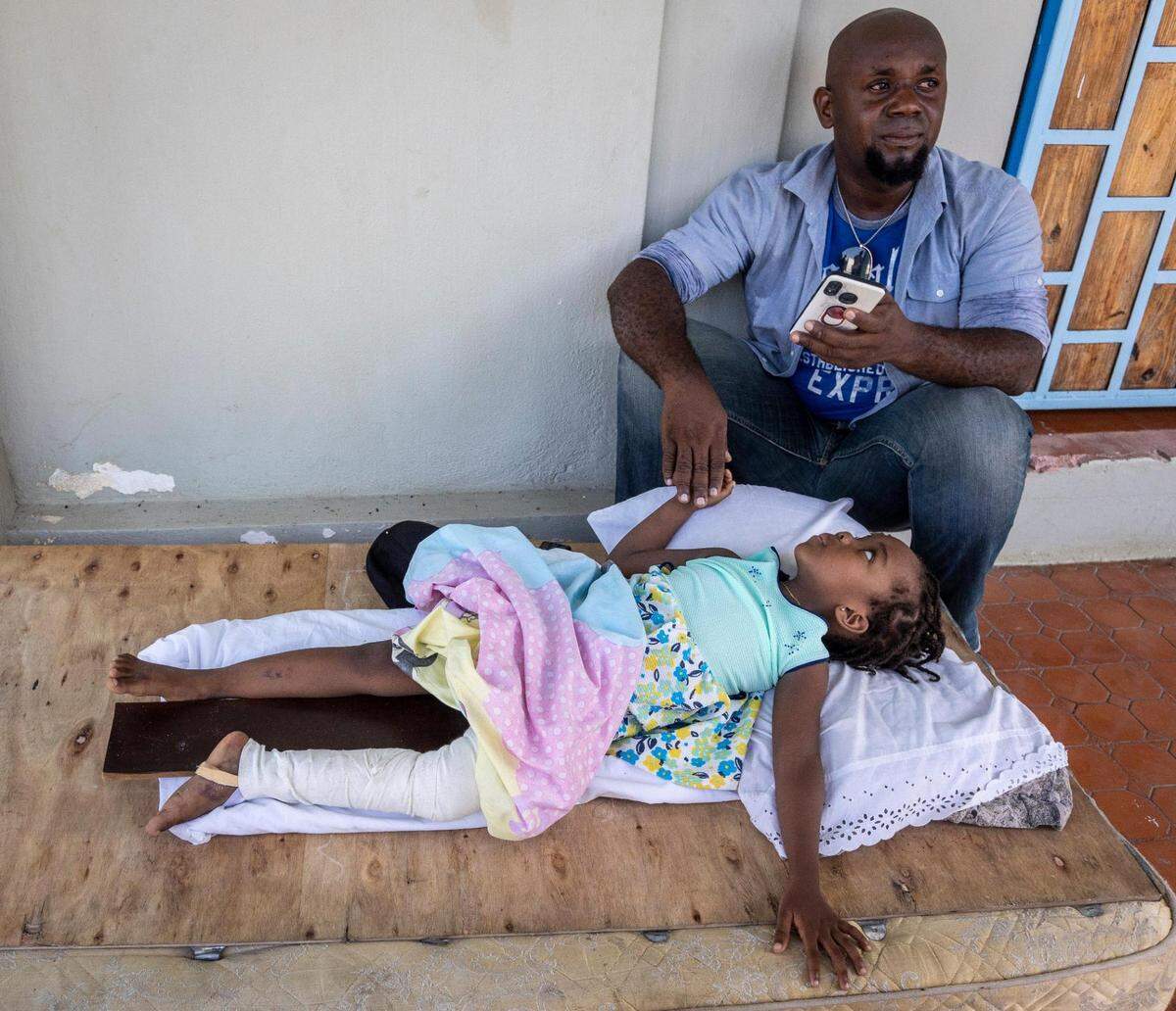
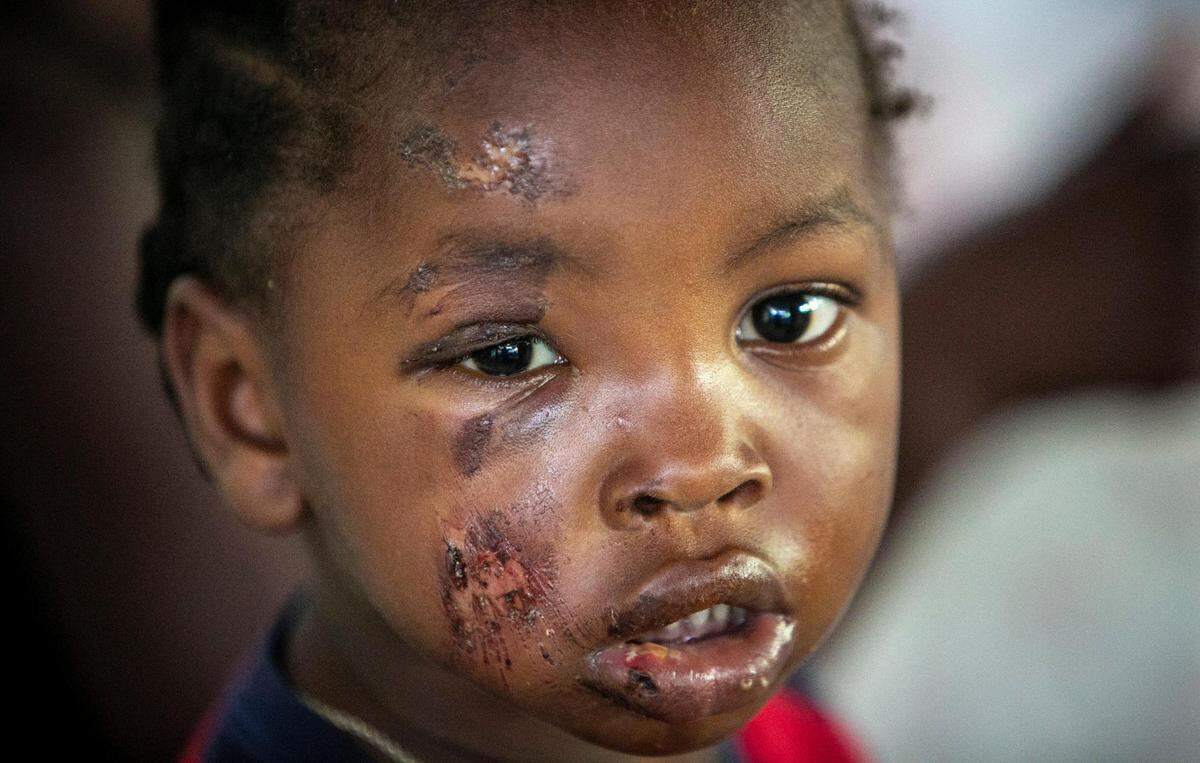
One mother whose face had been bludgeoned and bloodied by falling concrete was forced to choose which of her injured children to seek help for first. Carline Jeune, 45, said all four people in her house were injured in the quake. But with no money, she had to choose which of her injured children to bring to the private Lumiere hospital for care.
Jeune chose her 8-year-old daughter, Micalove Polynice, who had broken her arm. Doctors said the girl will require surgery. Jeune said she had trouble getting the $14 she needed to take them to the hospital and pay for an X-ray. A food vendor at a market before the earthquake struck, Jeune doesn’t know where she will get the money for surgery after losing so much in the disaster.
“I don’t have anything,” she said. “No house, no business.”
Other patients, such as Soivella Macier, had been waiting at Lumiere for two days and unable to find a safe route to another hospital. Macier, 76, injured her hip when a table fell on her during the quake. Macier’s daughter took her to the Les Cayes hospital on Saturday, but feared driving all the way to Port-au-Prince for better care.
“I would like to get medical treatment for her but I would not like to have to cross Martissant,” said Sanette Pierre-Louis, Macier’s daughter. Pierre-Louis said that as of Monday, her mother had yet to receive any treatment for her injuries.
“They have not given her any medicine,” she said.
Evacuating the worst cases
At the airport in Les Cayes, Richard Hervé Fourcand, a former Haitian senator who loaned his personal airplane to ferry the injured to Port-au-Prince for medical help, said he had arranged about 25 rescue flights — mostly by persuading pilots who had brought search-and-rescue teams, international humanitarian workers and journalists to ferry back injured residents.
The need for drinking water, food and shelter is great, Fourcand said.
“Tents are very important,” he added, “because the people don’t want to sleep inside the house.”
Volunteers helping to coordinate patient evacuations at the airport said many of the injured people arriving had not received any medical attention prior to getting there, and that they had to put splints on patients and stabilize them before moving them onto U.S. Coast Guard helicopters.
Doctors at OFATMA Hospital said they had received more than 520 patients between Sunday and Monday. The hospital’s director, Dr. Jean Saintilus Messeroux, said about 40 of those patients were very grave and transferred to the capital with the help of Fourcand.
Messeroux said doctors had performed 150 surgeries as of Monday, though 32 patients would need follow-up surgeries to have metal rods implanted in their broken bones. The hospital had run out of the devices, he said, but the patients keep coming.
“We don’t know when we are going to stop,” he said. “Every now and again you look up and you see someone who is injured shows up.”
Messeroux pleaded with the public that if they want to help, they should send medical supplies and equipment.
“If anyone is going to make a donation, it needs to be medical materials,” he said. “Buy medical supplies and bring them, but you don’t need to come with cash because we are not going to accept it.”
Aftershocks continue
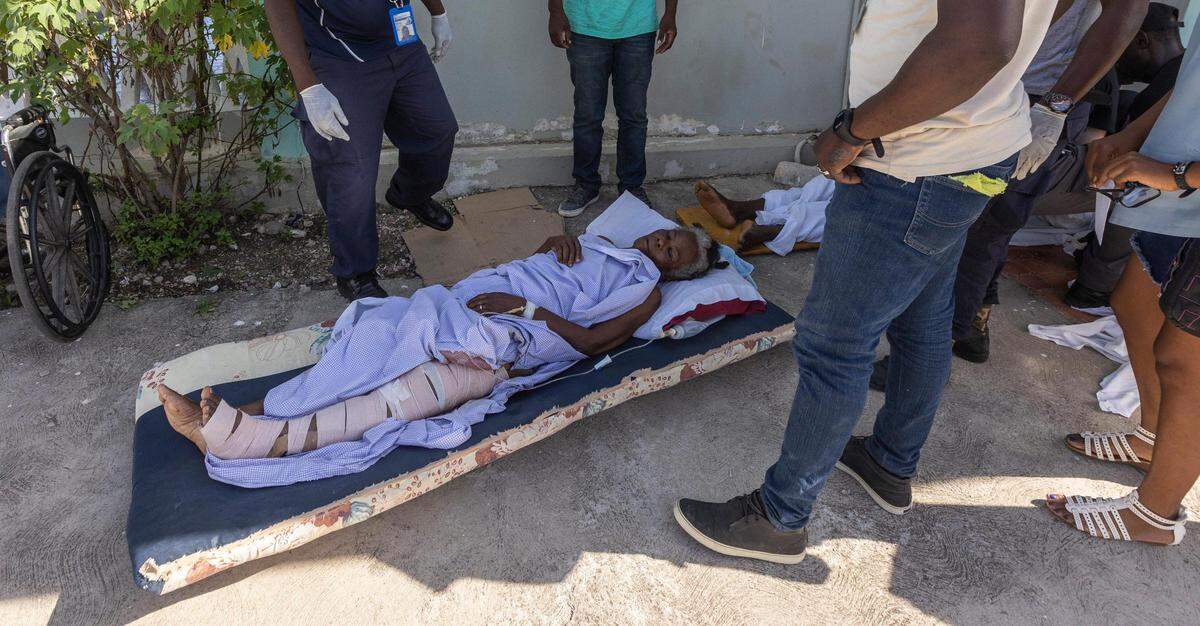
In the hospital’s courtyard, Dr. Glaud of OFATMA made rounds, carrying a clipboard and walking from bed to bed, checking on patients and examining medical records and X-rays.
Michaela Belcombe, one of the patients, said concrete blocks in her partially collapsed home fell on her. The home in Camp-Perrin was already wiped out by Hurricane Matthew five years ago and she had not yet fully rebuilt the structure. Attached to an intravenous tube and with her left leg bandaged, she prayed for divine intervention to bring respite to Haiti’s string of misfortune.
“My leg hurts, my waist hurts,” Belcombe said. “And now bad weather is coming? Only God can save me.”
The hospital, its walls cracked from the earthquake, is one of three in a devastated city where doctors must quickly assess injuries and decide who should be flown out now and who can stay as Grace approaches and aftershocks continue.
Glaud said the OFATMA Hospital, built in 2015, has been deemed unsafe due to damage from the earthquake, forcing patients to be treated outside.
As the storm approached, Glaud and volunteer nurses from Canada said they were quickly trying to move out patients who need to be transferred. The patients who stay will be cared for outside in the courtyard.
“We don’t have any other plan, other than to keep those patients out [of the hospital building],” he said. “The tremors keep coming. People are afraid to stay under the building.”
Shortage of specialists
Medicine and equipment are not the only resources in short supply in Haiti’s rural southwestern peninsula. There’s also a shortage of physician specialists.
Dr. Edouard Destine, 35, an orthopedist, said there are only three specialists in the region and if another doctor wanted to come, it would help a great deal. But the road from the capital is deemed too dangerous to travel.
”Others want to come here from Port-au-Prince but they cannot come. Martissant is a problem,” he said, referring to the gang-controlled area at the southern entrance to the capital. “If it’s possible to have another doctor, they are welcomed.”
Other roads inland, near Camp-Perrine, have been split open by boulders that rolled down mountains. With Grace forecast to bring 5 to 10 inches of rainfall to Haiti overnight, many were worried that mudslides and flash floods would wipe out important roads connecting the rural southwestern peninsula to the rest of the country.
Destine said most of the injuries he has seen occurred inside of homes.
Though Haiti was badly shaken by a magnitude 7.0 earthquake centered west of Port-au-Prince in January 2010, most of the patients at the hospital on Monday said this was their first experience with such a natural disaster. Many were injured while running, Destine said, an indication that people have not been taught how to stay safe during an earthquake.
“We have a problem with the education of the people. They don’t know what to do when they have an earthquake, if they have to go outside or stay inside,” Destine said.
In between treating patients, Destine said that like many healthcare professionals he was dealing with personal trauma due to the earthquake. His father, Michel William Destine, a local judge and surgeon, was evacuated to Port-au-Prince with traumatic hand injuries, and Destine was trying to secure a humanitarian visa for him to receive the physical therapy he will need.
But Destine said he put the injuries to his father in perspective.
“When you have an earthquake, you can be sure that you are going to have open fractures — open fractures of the leg, open fractures of the femur,” he said. ”We have many cases of femur and tibia fractures. We have hip fractures, head trauma and ... spine trauma.”
Most of the serious head and spine trauma injuries are transferred to Port-au-Prince.
For the patients still at OFATMA Hospital on Monday, Destine and others were waiting on reinforcements of medical staff and orthopedic supplies. The hospital was also in desperate need of iron to fix broken bones, as well as screws, plates and wires.
This story was originally published August 16, 2021 at 1:42 PM.