Haitian journalists injured as nation plunges deeper into turmoil amid constitutional crisis
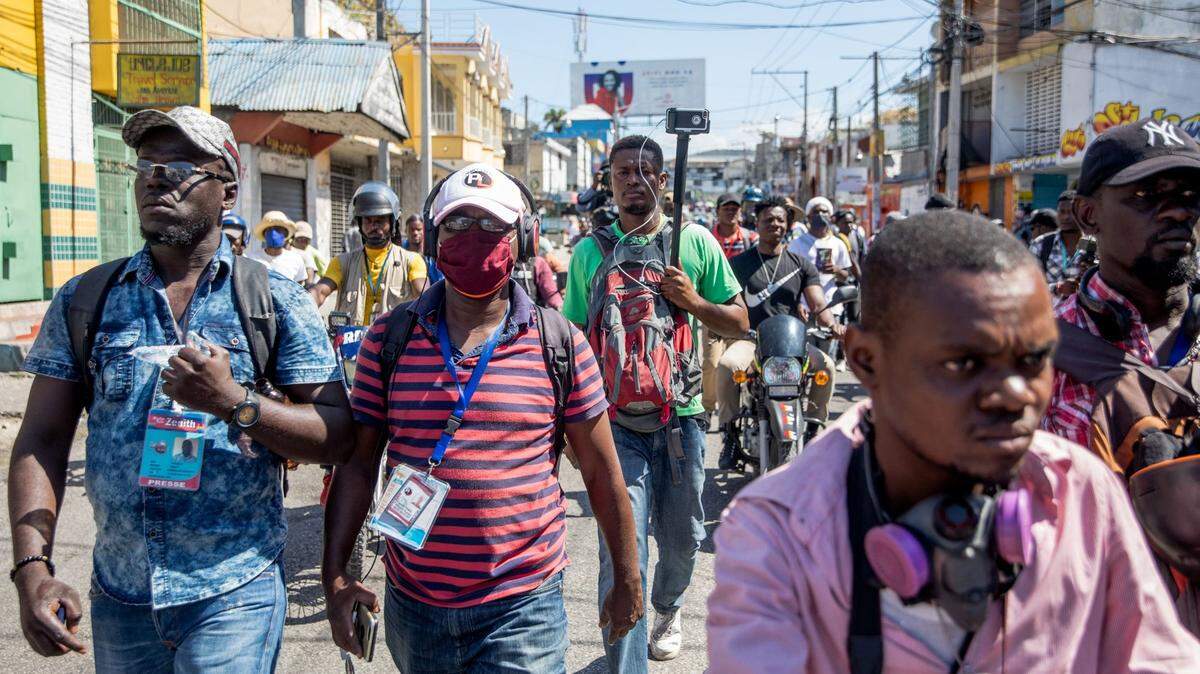
At least two journalists were injured Wednesday while covering a protest in Haiti, where police and demonstrators clashed as the nation plunges further into turmoil over Haitian President Jovenel Moïse’s rule.
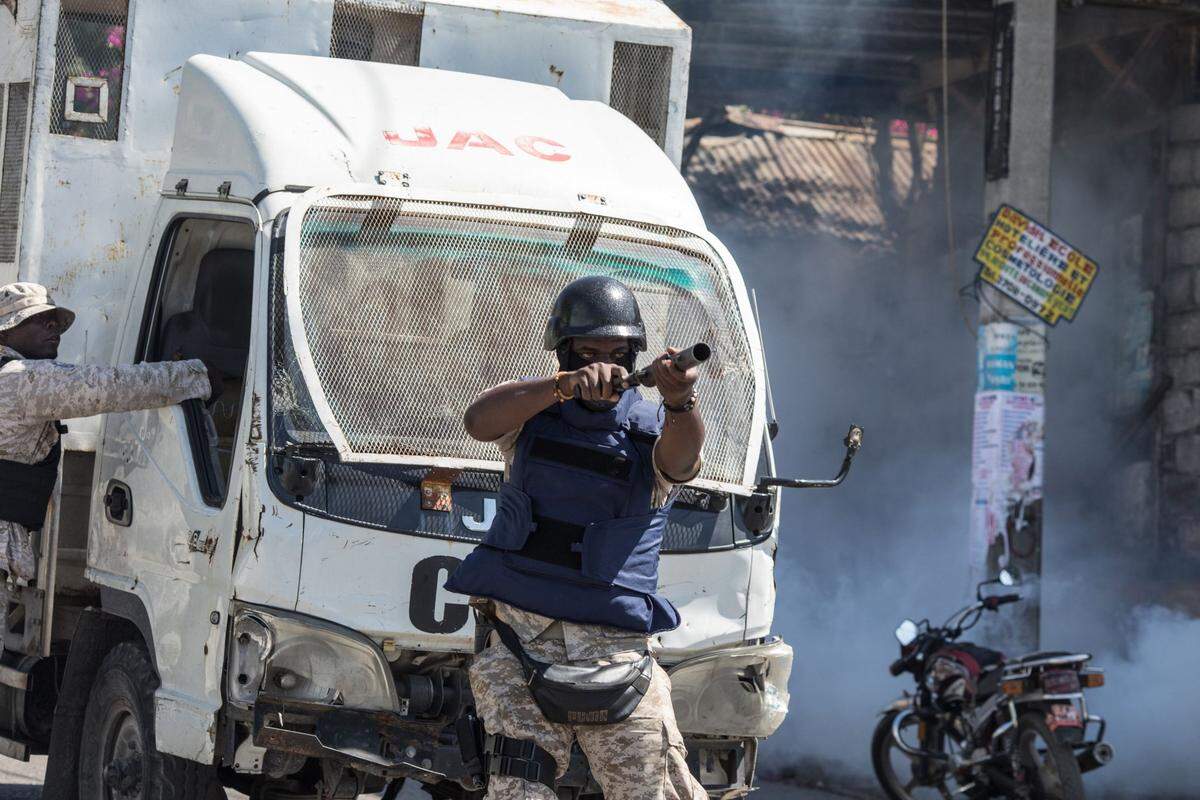
Video of one incident shared on social media shows officers in the back of an unmarked white pick-up truck launching tear gas at a clearly marked media vehicle belonging to Radio Tele Pacific. The vehicle sped away from the scene and the fumes forced reporters to scramble and seek cover on a Port-au-Prince street.
Radio Tele Pacific owner Philippe Lerouge said his journalists and others traveling in the back of his company vehicle managed to escape before suffering any serious injuries. The high command of the Haiti National Police later called to apologize and said any agents at fault would be sanctioned, he said.
“We are taking them seriously and will remain watchful while continuing to exercise our duties to the community,” said Lerouge, whose media outlet regularly broadcasts live coverage of protests. “We deplore and regret the unfortunate incident that took place today.”
The attack was condemned by journalists, who called it deliberate and marched to a police headquarters to protest. It comes on the heels of another incident earlier in the week in which two other journalists were wounded and follows a protest by media workers against police brutality last month. Observers say it points to an atmosphere of heightened tension between the government and the press.
“There is a huge threat today today hanging over the head of press freedom in Haiti,” said Jacques Desrosiers, secretary general of the Association of Haitian Journalists.
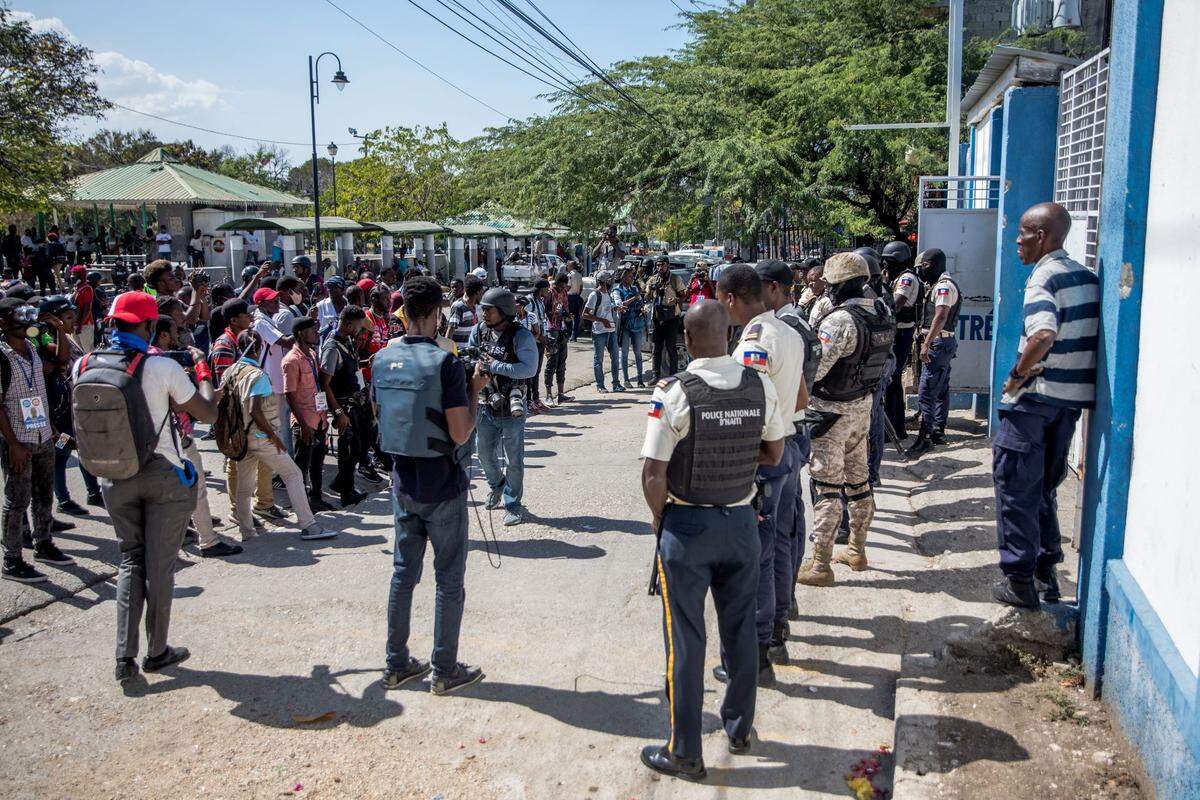
The two journalists injured Wednesday were both hit by tear gas canisters. One was hospitalized and treated for two broken bones. Rep. Andy Levin, D-Michigan, who watches Haiti closely, condemned the incident.
“As the situation in Haiti deteriorates, it is essential that the Haitian government respect the human rights of journalists, organizers and all people,” he wrote on Twitter.
.JPG "AFP_92P6UMjpg (1).JPG")
Haiti is in the midst of a deepening political crisis as opponents of Moïse accuse him of exercising increasingly autocratic powers. His detractors say he should have stepped down Sunday, when they contend his five-year term ended. The embattled leader says his term does not end until 2022, a claim supported by the Biden administration.
On Monday, two journalists, Alvarez Destiné and Méus Jeanril, were shot and wounded near the presidential palace as the Haiti National Police and the Armed Forces fired live ammunition to disperse demonstrators throwing stones, according to reports.
Jodel Lessage, commander in chief of the Haitian Armed Forces, later issued a statement denying that his soldiers were involved in the shootings, saying such allegations were “purely false and totally erroneous information, knowingly conveyed for the purpose of manipulating public opinion.”
Destiné, owner of the internet broadcaster Actualités Locales TV, where he also works as a reporter, was shot in the hand; Jeanril, a reporter for the online television channel Tele Pam, was shot in the stomach, the Committee to Protect Journalist said in a statement.
CPJ called on Haitian authorities to thoroughly investigate the shootings of Destiné and Jeanril, who remains in critical condition and is scheduled to undergo another operation Thursday, and hold those responsible accountable. The organization noted that in November 2019 it wrote a letter along with Reporters Without Borders to Haitian authorities urging them to investigate multiple shootings of journalists covering protests.
“Once again, journalists covering protests in Haiti face deadly violence. Haitian authorities must take serious measures to ensure that the press can work without fear of being shot,” said CPJ South and Central America Program Coordinator Natalie Southwick, in New York.
This story was originally published February 10, 2021 at 11:24 PM.