Dr. Paul Farmer, who expanded health care in Haiti and Rwanda, wins prestigious Berggruen Prize
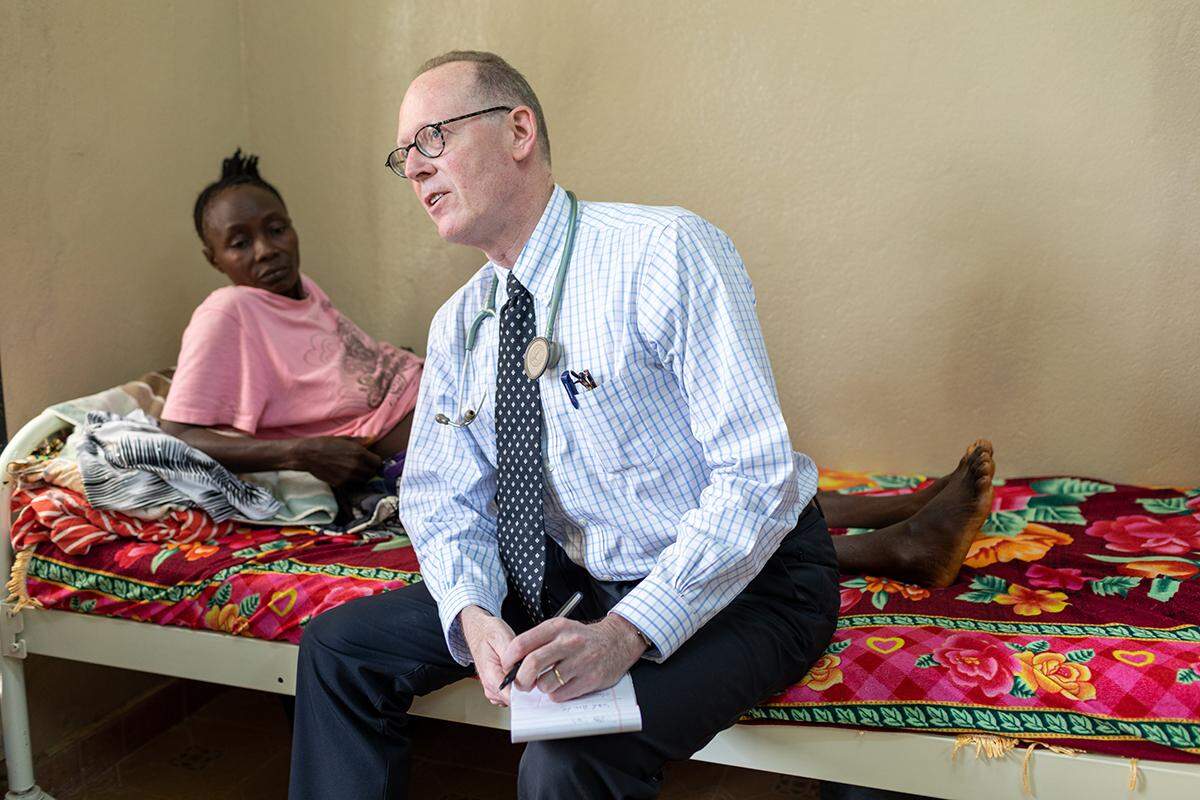
Dr. Paul Farmer, the acclaimed doctor and anthropologist who has devoted nearly four decades to fighting deadly epidemics and delivering health care to millions throughout the world, especially in Haiti and Rwanda, is no stranger to accolades — even if they do make him a bit uncomfortable.
“I always feel that the work we do is so imminently collective, so fully team work,” said Farmer, the co-founder of Partners In Health, the nonprofit health care organization based in Boston and currently working on four continents. “So being singled out in any way, there is always an anxiety-provoking part of it.”
But in a year when disease and disparities have come into full view for Americans amid the deadly coronavirus pandemic, Farmer — and his personal mission to change the way humans think of infectious disease and address social inequalities in health care delivery — is being singled out.
The Florida native is the newest recipient of the 2020 Berggruen Prize for Philosophy and Culture, and its $1 million cash award. The annual prize, which usually goes to philosophers, recognizes thinkers whose ideas “have profoundly shaped human self-understanding and advancement in a rapidly changing world.”
Farmer, 61, is one of them, the prize jury said. They chose him “for his impactful work at the intersection of public health and human rights.”
“He has reshaped our understanding not just of what it means to be sick or healthy but also of what it means to treat health as a human right and the ethical and political obligations that follow,” said Kwame Anthony Appiah, chair of the Berggruen Prize Jury and professor of philosophy and law at New York University.
Established by philanthropist Nicolas Berggruen in 2016, the prize is awarded by the Los Angeles-based Berggruen Institute, a research organization dedicated to improving governance and cross-cultural understanding.
Past winners include Canadian philosopher Charles Taylor and American philosopher and classicist Martha Nussbaum. Last year, Ruth Bader Ginsburg, the late U.S. Supreme Court justice, became the first non-philosopher to win for her work in pioneering gender equality and strengthening the rule of law.
Now, Farmer is the second non-philosopher and the prize’s fifth winner. He was chosen from among hundreds of nominees, and his recognition will be celebrated in a virtual talk moderated by BBC News World Service in late spring 2021.
The honor, Farmer said, was unexpected. He received the call during a rare stateside presence before traveling to Peru, Haiti, Rwanda or European Russia, where Partners In Health has a presence.
“My first reaction of course was shock and gratitude,” said Farmer, the chair of Harvard’s Department of Global Health and Social Medicine. “Someone just called me on the phone, someone who I knew but I had no idea why he would be calling me.”
After allowing the honor and its massive cash award to sink in, Farmer said he’s come to accept both as an opportunity to “signal what matters to me right now.”
“A gift this large, allows me to join the donor class,” he said. “I’m going to steer my prize money to two big but far from insurmountable problems: Getting us out of this pandemic and amping up our reckoning with racial injustice. Primary beneficiaries will include two organizations with which I’ve been involved for decades, Partners In Health and the Equal Justice Initiative. These are organizations that do not turn away from the problems associated with exclusion, and the mistrust that invariably follows exclusion.
“Indeed, this is the backdrop against which efforts to roll out novel vaccines will occur. I’m particularly grateful for the world’s caregivers, who aren’t primarily but include health professionals, and note that women and girls are often left to shoulder outsize responsibilities even when higher education and job security are denied to them,” Farmer added. “So I will be thinking, as I’m so often forced to do in the course of even the most clinical tasks, about extending educational and employment opportunities for women and girls living in poverty.”
Fighting pandemics
Name the epidemic of the last several decades — HIV/AIDS, tuberculosis, cholera, Ebola, Zika and chikungunya and now COVID-19 — and Farmer has been there on the front lines, with his army of health care workers and researchers.
In trying to figure out how best to treat illness, they have also taken on the challenge of improving delivery as evidenced by the post-quake, state-of-the-art 200,000-square-foot University Hospital of Mirebalais that Partners In Health and its sister organization in Haiti, Zanmi Lasante, built.
“He is a real thinker of our time,” said Loune Viaud, the executive director of Zanmi Lasante. Farmer’s contribution to Haitian health care, she said, “has been the value of the partnership, accompaniment and pragmatic solidarity.”
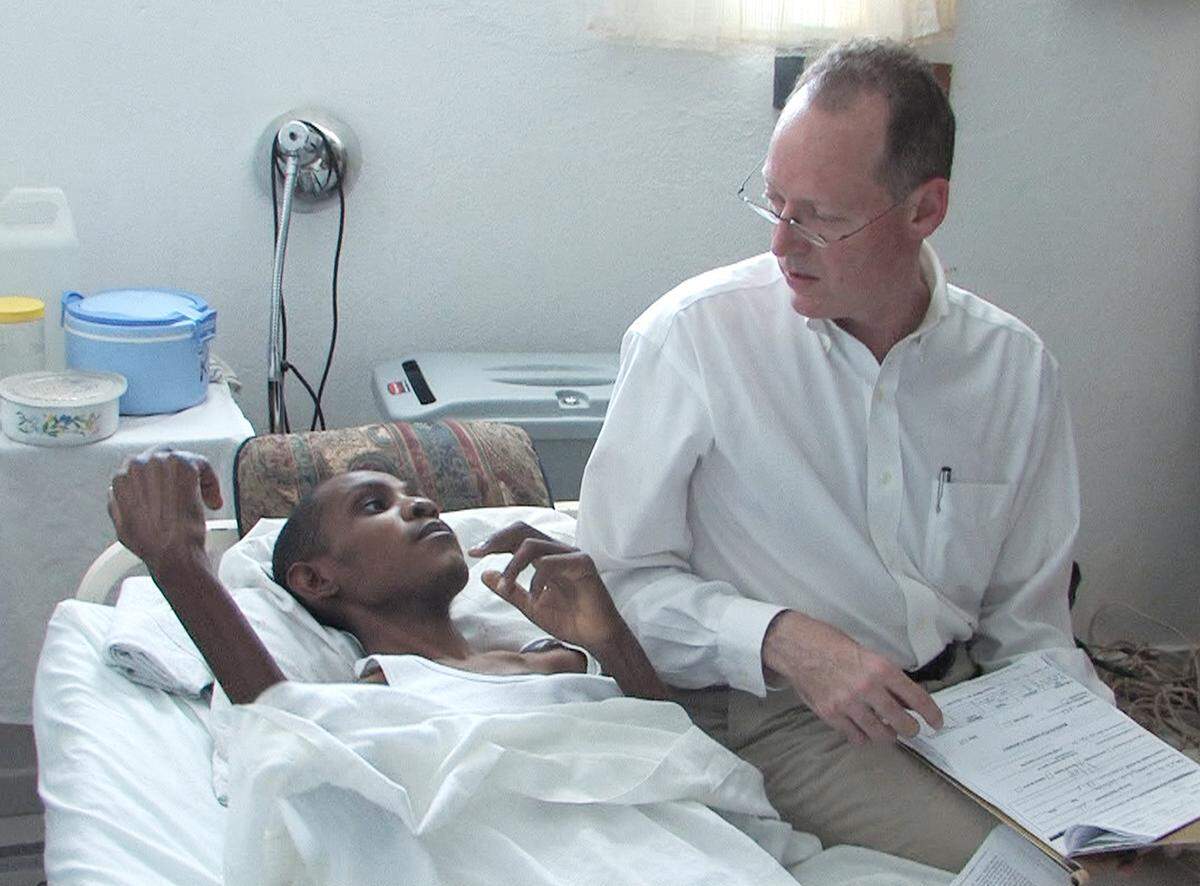
The author of a dozen books, Farmer’s latest, “Fevers, Feuds, and Diamonds: Ebola and the Ravages of History,” takes readers into the brutal fight to contain the viral disease that became the leading infectious killer in three West African nations, Liberia, Sierra Leone and Guinea, nearly seven years ago.
While the book is about Ebola, he hopes it will offer some insight into the fight against COVID-19, which is addressed in the last chapter.
Despite the brutal reality of all of these epidemics, there is reason for optimism, Farmer said, because “if we direct our attention in a sustained manner, to the problems, they always get better.”
“Whether it’s AIDS in Haiti, Ebola in West Africa or COVID in Rwanda, you can see improvements very quickly,” he said. “Now in the United States, you can see a new painful burden because we have done uniquely poorly in our home country. And that has been tough.”
Since the outbreak of the coronavirus in the United States, Partners In Health has expanded its focus to working with contact tracers in Massachusetts, with whom Farmer had a call Wednesday morning at the same time the prize’s announcement was made public.
“Bringing vast experience from the Ebola outbreak in West Africa, he and his colleagues at Partners In Health designed and implemented the COVID-19 response in Massachusetts, centered around an intensive contact tracing program inclusive of resource coordinators to help people isolate safely,” the press statement announcing Farmer’s award said. “This approach was widely adopted by dozens of other states.”
Nicolas Berggruen, chairman of the Berggruen Institute, said as both a thinker and actor, Farmer “has connected the philosophical articulation of human rights to the practical pursuit of health.”
“He has done this on the basis of new ideas and new analyses and also by connecting the human experience and practical politics of health to enduring challenges of human rights and justice. Not least, he has led by impressive moral example as an educator, a leader, and a physician,” Berggruen said.
This story was originally published December 16, 2020 at 10:00 AM.