‘Radical Jack’ Lieberman, social activist and champion of leftist causes, dies at 70
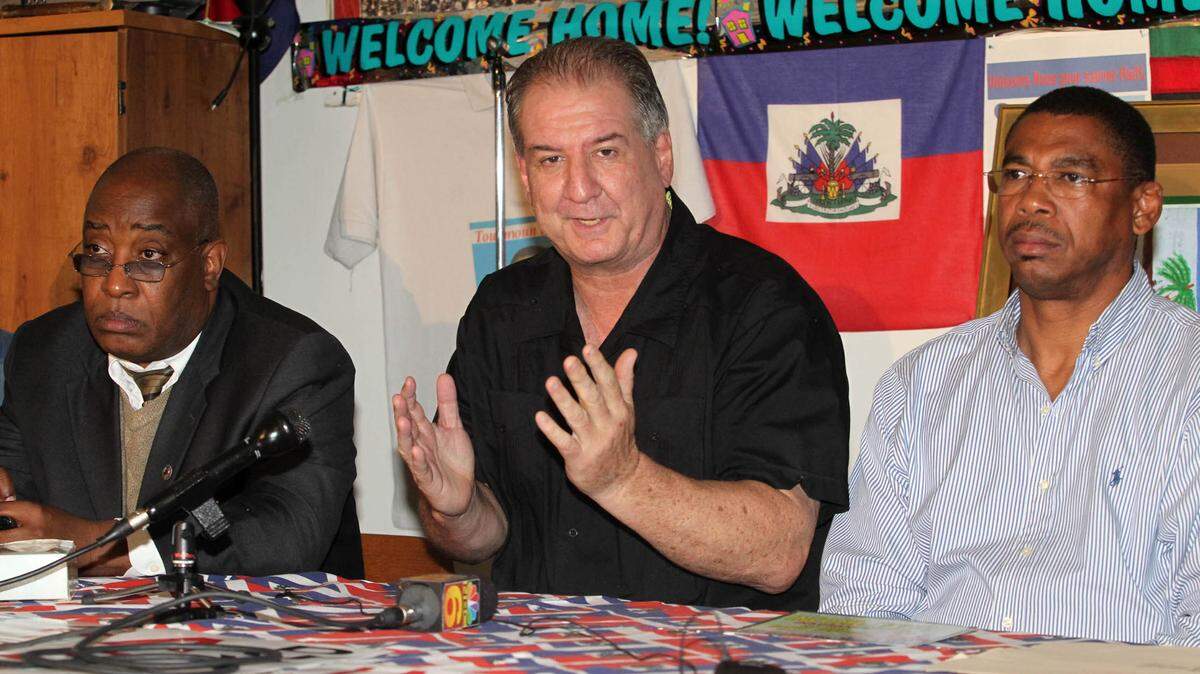
Whether it was the recent protests against racial injustice and police brutality in the wake of George Floyd’s killing, or the demonstrations in favor of Haitian refugees or against U.S. intervention in El Salvador and Nicaragua, Jack Lieberman was always present.
A left-leaning, rabble-rousing activist, he earned the name “Radical Jack” while attending Florida State University in Tallahassee. Instead of a degree, he earned an expulsion from FSU for teaching a course called “How to Make a Revolution in the United States.”
During the 1972 Democratic National Convention in Miami Beach, Lieberman’s telephone was wiretapped by the Florida Department of Law Enforcement.
After moving to New York, where he met his wife Marilyn at City College, Lieberman returned to South Florida in 1975, where he had graduated from Miami Norland Senior High, and quickly became a fixture in the Haitian rights movement. Alongside the late Rev. Gérard Jean-Juste, he co-founded the Haitian Refugee Center, demonstrated against Jean-Claude “Baby Doc” Duvalier’s dictatorship in Haiti and demanded equal treatment and asylum for Miami’s new immigrants fleeing poverty and political violence in their Caribbean homeland.
Lieberman died Sunday from COVID-19-related illness at Hollywood Memorial Hospital East. He was 70.
“If there was a movement for social justice, Jack got involved in it,” said his wife, Marilyn Markus-Lieberman, 70. “That’s what he lived for; that was his life. You just knew when you were with Jack, he loved his family, but he loved making the world a better place to live in and nobody could stop him from doing that.”
Lieberman created a T-shirt and signage business, Progressive Rags, that allowed him to make a small living while funding his political leanings. As recently as June, he was observed by a Miami Herald reporter standing across the street from the Torch of Friendship in downtown Miami at a George Floyd protest wearing one of his T-shirt designs with President Trump’s name preceded by an expletive.
“He produced that shirt and sold it,” said Markus-Lieberman. “His shirts were all progressive. He didn’t take any printing business from the Republican Party. His printing business helped non-profit political organizations and other organizations that were fighting for social justice and political candidates that he felt would help make our system better. He donated a lot of things to those organizations.”
This week, the Broward Teachers Union, Miami-Dade Democrats and political consultant Evan Ross were among those who paid tribute to Lieberman. “He was a reliable presence anywhere a liberal cause existed,” Ross said.
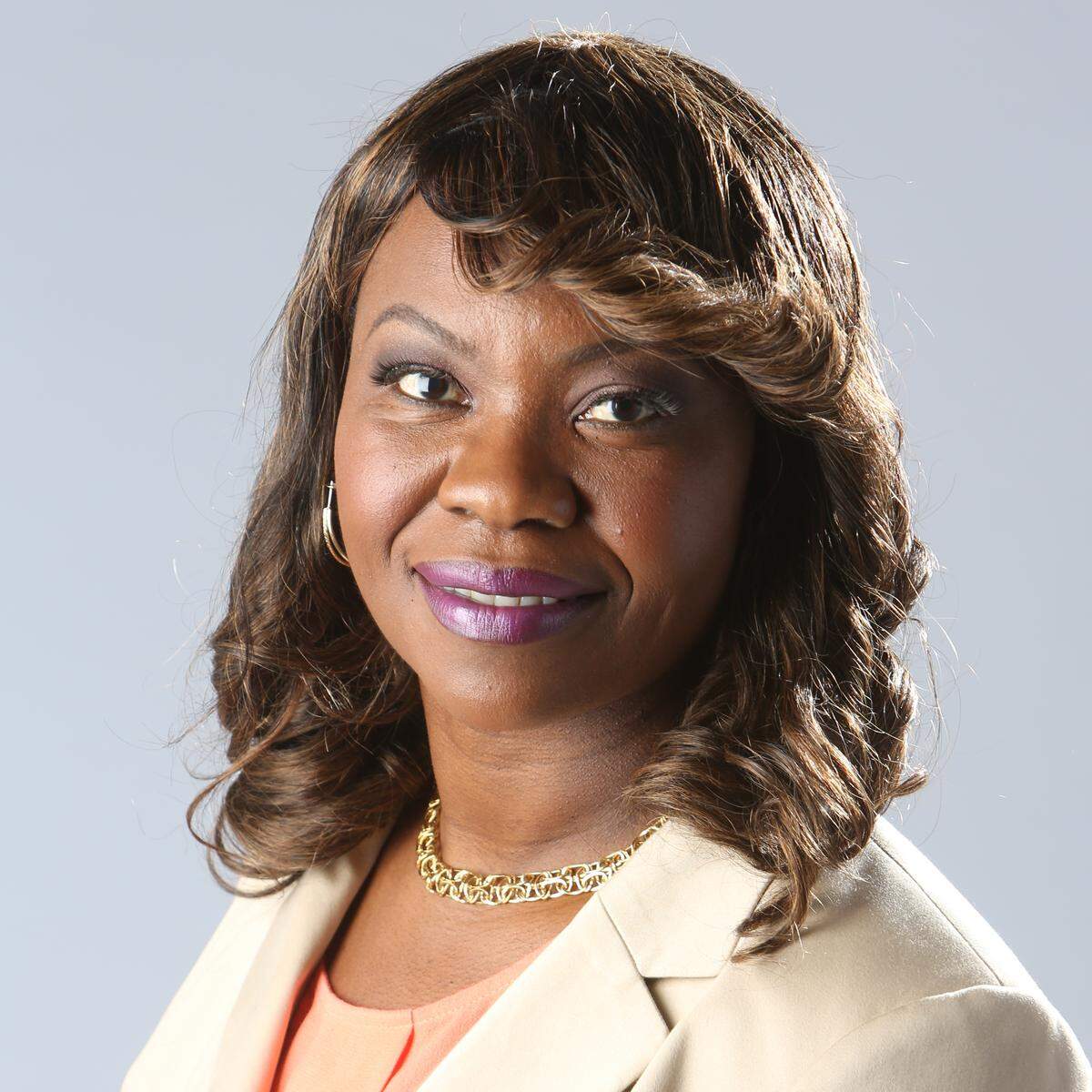
Marleine Bastien, who met Lieberman in 1981 after arriving in Miami from Haiti, called him a “human rights hero.” A paralegal for the Haitian Refugee Center, Bastien worked and marched alongside him for nearly four decades.
“I’ve never known a time when Jack was not involved in one struggle, or one fight or the other against racism or refugee rights; not just from Haiti but refugees from all over the world,” said Bastien, who is planning a memorial tribute for Lieberman on behalf of her organization. “He was never tired or discouraged. He not only marched after the George Floyd killing, he donated fliers and signs to our group and to several others.”
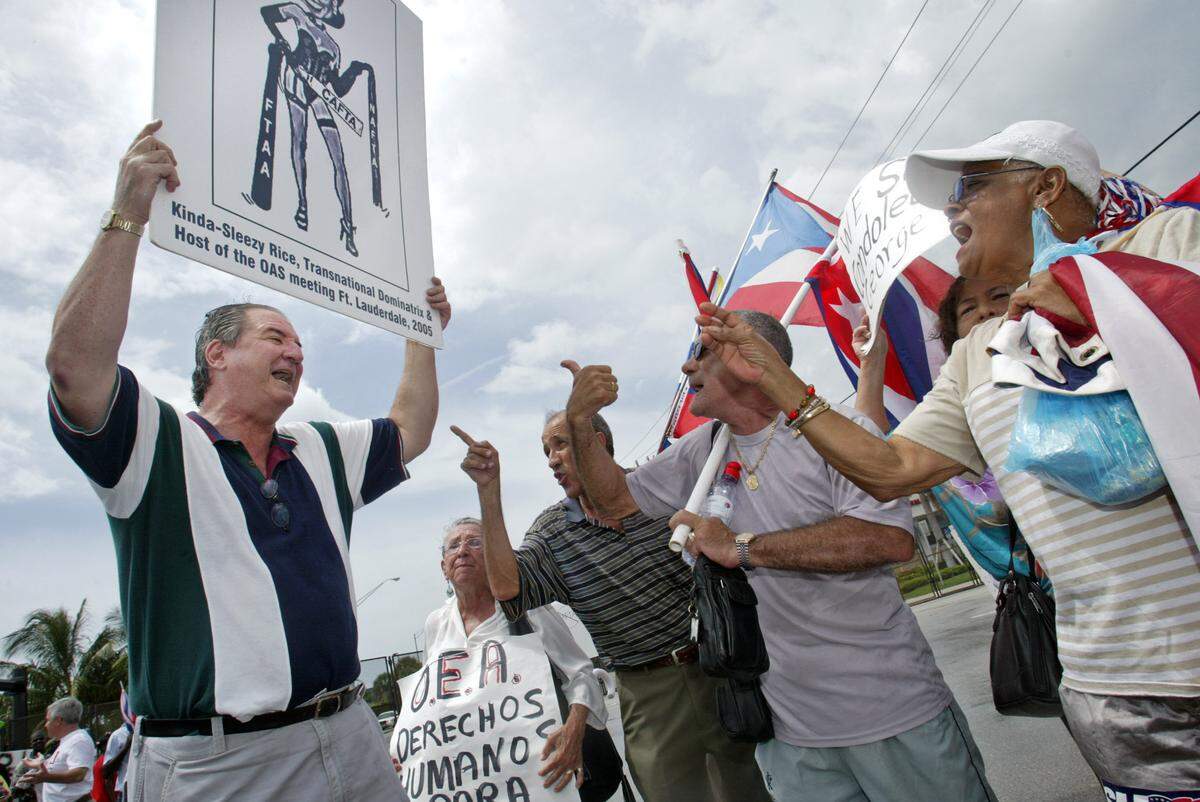
Lieberman, she said, knew the true meaning of selflessness and unconditional love for humanity.
“Jack was present at every rally, every trouble, every effort to get Haitian refugees the basic rights of due process. He was there every step of the way,” said Bastien, the executive director of Family Action Network Movement, an advocacy group that was previously known as Fanm Aysien Nan Miyami, or Haitian Women of Miami. Lieberman was a mentor and a board member, Bastien said.
Born on July 11, 1950, Lieberman was a working-class kid from Philadelphia when he moved to Miami as a teenager with his parents.
Marty Goodman, 71, who met Lieberman in high school in 1966, recalled how he was initially in favor of the war in Vietnam, “but staunchly anti-racist.”
“We had a lot of conversations. He turned around on the war issue, which was the boiling point at that time and became a great anti-war activist, supporter of the Black Panther Party and he went up to FSU and became ‘Radical Jack,’ ” Goodman said.
After gaining notoriety in Florida in the 1960s, Lieberman temporarily moved to New York, where he continued his activism before returning to Miami in the mid-70s. Housing and job discrimination as well as abortion rights also made the list of his causes.
Lieberman, Goodman said, came to play a critical role as a non-Haitian “in raising consciousness and support for Haitian rights and political asylum, which was systematically denied to Haitians despite the fact that the U.S. was supporting a dictatorship in Haiti.”
“We were like brothers, nothing less; a lifelong friendship built on trust and love,” said Goodman, a retired transit worker living in New York who at one point joined the Haitian Refugee Center’s board with Lieberman. “I disagreed with Jack sometimes. But we were always the best of buddies, the closest of pals. I feel like in a way, I’ve lost everything with Jack’s passing.”
Lieberman is the second co-founder of the Haitian Refugee Center to die in a month from the coronavirus. Friend and fellow activist Bernard Fils-Aimé, who later became a telecom pioneer in his native Haiti, died on Aug. 8 at the age of 67 in Miami, after contracting the disease.
At the time of Fils-Aimé’s passing, Lieberman was hospitalized.
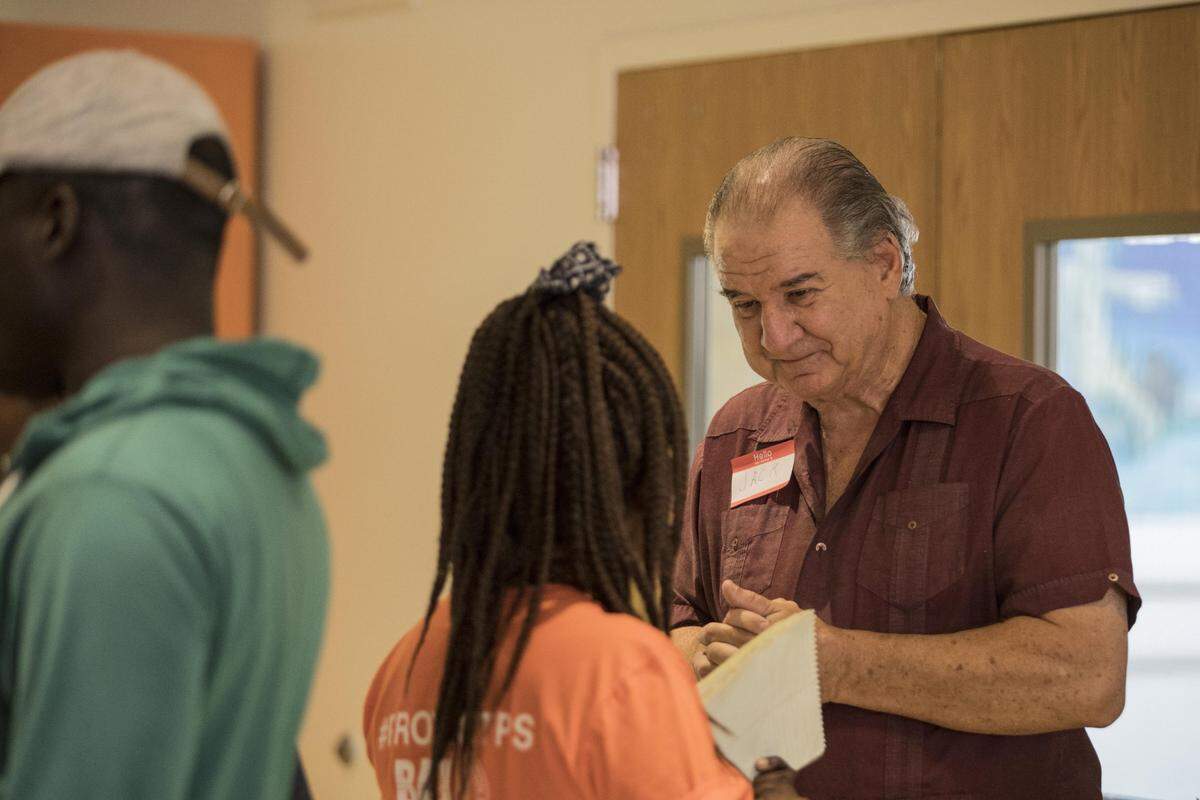
“It’s a sad time, a sad moment to see how the virus is killing so many people,” said Rulx Jean-Bart, one of the two surviving members of the refugee center’s original board. Lieberman, who was there from the beginning and remained active long after others had moved on, and Fils-Aimé “were two of the most important members of the Haitian Refugee Center,” Jean-Bart said.
“Nobody has worked on the Haitian issues longer than Jack in Miami,” Jean-Bart said. “Jack came before all of us, in ‘75, and as soon as he returned he joined the Haitian Refugee Center trying to help and his help was important.”
Recognizable by his towering stature and affable yet confrontational nature, Lieberman was often one of few white faces in the crowd. With his printing business and extensive contacts, he brought groups like the Jewish Cultural Center and the American Civil Liberties Union into the Haitian cause.
Jean-Bart recalled the first night of the 1980 Miami riots after the police officers who killed black insurance salesman and former Marine Arthur McDuffie were acquitted. Lieberman was among those at Miami’s criminal courthouse awaiting the verdict. When the jury came back with not guilty, Lieberman joined the mostly Black crowd in protesting the decision.
“We had to evacuate Jack. But even though that happened, the next few days he was at a rally at Charles Hadley Park in Liberty City and again, they had to advise him to leave because he was a tall white person and could have easily been attacked,” Jean-Bart said. “Here is a guy who put his life in danger to support the causes that he believed in.”
Three years later, he was once again in harm’s way and escaped unharmed, this time protesting President Ronald Reagan and supporting the revolutionary forces in Nicaragua, while opposing U.S. intervention in the Central American country.
A longtime Cuban political prisoner turned activist, hearing about Lieberman’s plan to picket in downtown Miami, went to the Torch of Friendship and started shooting after mistaking a group of anti-Communist activists for Lieberman and members of his Latin America and Caribbean Solidarity Association.
“He wasn’t just a person at the protests, he helped make those protests happen,” Markus-Lieberman said of her husband. “He didn’t just show up. He helped organized and make sure those protests took place.”
In addition to Markus-Lieberman, his wife of 45 years, Lieberman is survived by children Matthew and Marah Lieberman and sister Yvonne “Terri” Spector of Hollywood and children, Matthew and Marah Lieberman.
FANM, VEYE YO, the Florida Immigrant Coalition, New Florida Majority, Sant La and other organizations will pay tribute to Lieberman’s life of activism with a “Patriotic Wake” at 6 p.m. on Sept. 11, starting at the Toussaint L’Ouverture statue at Northwest 62nd Street and North Miami Avenue in Little Haiti and ending at the Little Haïti Cultural Center, 212 NE 59th Terrace.
This story was originally published September 2, 2020 at 5:00 PM.