
New photos of Fidel Castro show an engaged, alert comandante
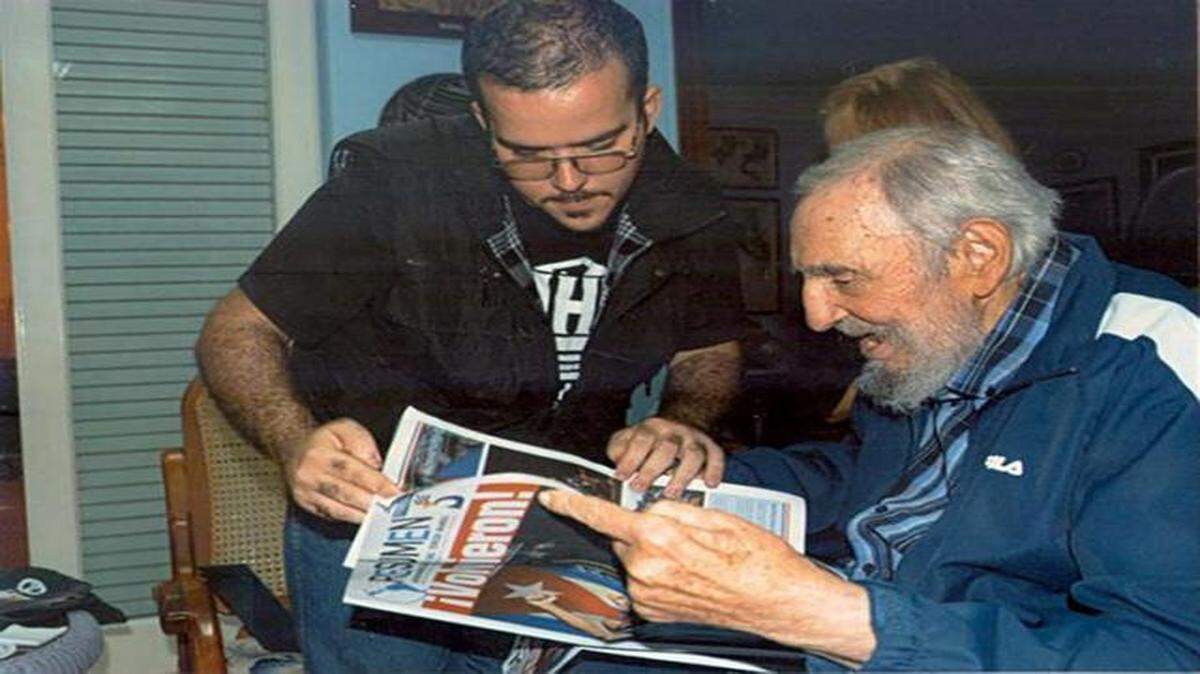
At 88 years old, Fidel Castro doesn’t hesitate to pick up a phone to summon a university student to come for a chat, is still obsessed with crop yields and agriculture and keeps abreast of world news.
Those details emerged from a recent interview and photo session the former Cuban leader had with Randy Perdomo García, president of the Federation of University Students (FEU) at the University of Havana.
The photos of Castro and the interview were published on Cuban government websites late Monday. It was the first time in many months that new images have been released of Castro, putting an end to rumors his health had taken a turn for the worse or that he was near death.
The last photos of Castro were published in August when he met with Venezuelan President Nicolás Maduro, and he last appeared in public on Jan. 8, 2014 while attending the inauguration of an art gallery in Havana. He looked frail, was hunched over and used a cane.
In a series of 21 photos, an alert-looking Castro is shown talking animatedly with Perdomo, looking through newspapers with him, accepting a commemorative plate from the University of Havana and viewing a television screen.
When Perdomo picked up the phone at 9:20 p.m. on Jan. 22, he was surprised to hear the voice of Fidel Castro.
“Randy, how are you?” Castro asked.
“Comandante, I’m well. I don’t believe I’m about to talk with you,” he replied.
The student said Castro called to thank him for a message he had sent about the university’s plans to celebrate the 70th anniversary of Castro’s entrance to the University of Havana on Sept. 4, 1945. He was a 1950 graduate in law.
During their 50-minute conversation, he said Castro bombarded him with questions about the university and ended up inviting him to his house the next day.
A few days after that, Castro sent a letter to FEU that broke his silence on Cuba’s new relationship with the United States and gave a discreet endorsement to his brother Raúl’s move toward reestablishing diplomatic relations with Cuba’s long-time adversary.
“I don’t trust the policy of the United States, nor have I exchanged a single word with them, but this does not mean I reject a pacific solution to the conflicts,” Castro said in his message to the students.
Castro temporarily relinquished power to his brother in 2006 when he became ill and then ceded power to him after he officially retired in 2008.
Castro’s wife Dalia waited at the garden gate for a nervous Perdomo and took him inside to begin a lengthy conversation with Fidel, who was dressed in a blue track suit and blue plaid shirt.
They talked about astronomy, food production — Castro showed him photos of various agricultural experiments — Castro’s daily exercises and his diet, and baseball.
“After that he speaks of revolutions that arise against the dominant philosophy and he comments to me that one shouldn’t stop believing in them since each revolution ends reborn,” Perdomo wrote. “In that special moment he refers to Venezuela and speaks with great emotion about [former President Hugo] Chávez and Maduro.”
On Castro’s work table, Perdomo said, there were dozens of press reports in a folder. Perdomo said Castro showed him work he was reviewing, including a report from the Central Bank of Cuba.
Before Perdomo left, he said they also talked of Nicaragua, new treatments for disease, Cuba’s work in the fight against Ebola and reviewed an issue of Resumen Latinoamericano, which was dedicated to the five Cuban spies who were returned to Cuba after serving lengthy jail terms in the United States.
The swap of three of the spies for a CIA agent held in Cuba paved the way for the release of USAID contractor Alan Gross and the diplomatic breakthrough that led to efforts to normalize U.S.-Cuba relations.
This story was originally published February 3, 2015 at 12:58 AM with the headline "New photos of Fidel Castro show an engaged, alert comandante."