
Cuba to privatize state companies; opens banking and energy to foreign and private capital
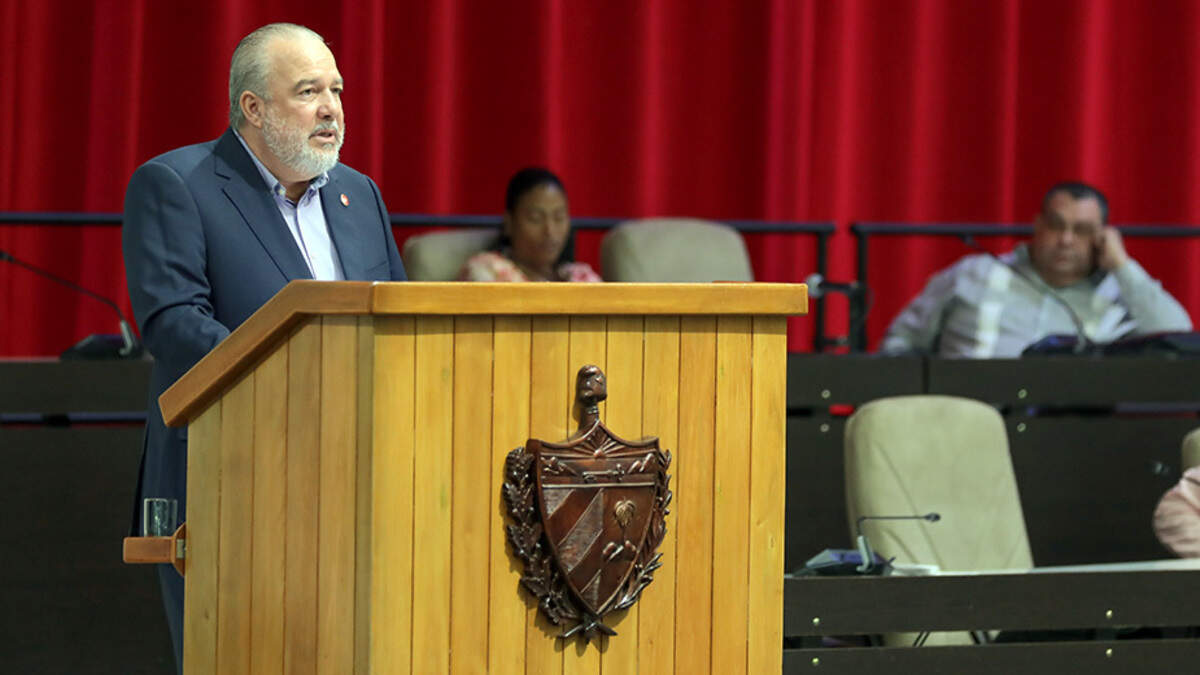
Cuba’s communist government will open key economic sectors such as banking and energy to private capital and foreign companies and begin privatizing state companies through share sales, the island’s prime minister told the National Assembly Thursday.
The measures are among the most consequential in a market-reform package that Cuban leaders have rushed to approve in an effort to remain in power amid a severe humanitarian crisis, daily protests and significant pressure from the Trump administration to modernize the country and make democratic changes.
In comments to reporters and in a speech at a Communist Party meeting this week to approve the reforms, Díaz-Canel announced some of the changes, including decentralizing the economy, granting more autonomy to state enterprises, reducing the government’s role and allowing foreign investment in the private sector. Some of the most impactful measures announced by Cuba’s Prime Minister Manuel Marrero Thursday include allowing:
- Private and foreign capital to purchase and sell fuel
- The creation of private corporate banking
- Private business owners to own more than one company and hire more than 100 workers
- Private businesses in agriculture and tourism
- Tourism property sales, evaluated case-by-case, for Cubans resident in the country and abroad
- Foreign investors to hire workers directly
- Foreign investment in Old Havana and other tourist spots, in state telecom ETECSA data centers, mobile networks, and other digital infrastructure
- The extension of surface rights up to 99 years and leases up to 50 years for foreign investments
- Real estate development in tourism
- Farmland lease rights for an “indefinite period”
- Wholesale and retail trade without limits by foreign entities
- The sale of state assets and state companies’ shares to the private sector and foreign companies. According to a report by Cuban state outlet Cubadebate, Marrero proposed “allowing the purchase of shares in state-owned enterprises by legal entities and individuals—both domestic and foreign—as well as authorizing the sale of state assets to these same economic actors.”
Dire Straits
Taken together, the reforms proposed significantly expand the private sector six decades after Cuba’s communist leaders forbade all private business—even frita stands— and adopted a centrally planned economy model that ended up ruining the country and dragging Cubans into a severe humanitarian crisis.
Currently, the government is in such dire straits that it is even seeking to transfer the management of the country’s zoos and aquariums to private hands, another announced change.
It is unclear whether the Cuban government has the capacity to enact these reforms under the current circumstances, when daily blackouts last more than 20 hours, and the government is broke and unable to import fuel, food and medicines. As Cuban leaders were laying out their proposals, protests were taking place across the country, especially at night during the power cuts.
The United States holds much leverage over how these reforms could go, not just due to the embargo but also to a recent executive order that allows the administration to sanction foreign companies doing business with Cuba, which has caused several to leave the island.
In a speech to the National Assembly on Thursday, the country’s handpicked president Díaz-Canel said that changes were necessary because these were not normal times. Cuba has been resisting “a barbaric punishment,” he said in reference to U.S. sanctions and military threats by President Donald Trump.
“Our beloved Cuba is living through the most difficult hours of this century, and we have the historic responsibility to save it,” Díaz-Canel said. “In our effort to correct errors and shortcomings while facing the external blockade, we have agreed to undertake the always delicate mission of further opening up the economy, prioritizing Cubans—whether residing in the country or abroad.”
He said those decisions were not linked to negotiations with the United States. He again made it clear that Cuba was not making political concessions.
“Cuba remains willing to engage in respectful dialogue with the United States government on all possible issues,” he said, adding that “Cuba will not ask for permission to exist, nor will it surrender its sovereignty.”
Raul Guillermo Rodríguez Castro, the grandson of Cuba’s nonagenarian leader Raúl Castro, who has been negotiating with the Trump administration and is believed to be behind the push for reforms, made a similar point in a rare interview published Thursday by The National, an English-language media outlet in Abu Dhabi.
“We continue to believe that the path of dialogue is the one that brings us closer, not confrontation. But those opportunities will never be based on conditioning, on impositions, and our people bowing to demands that will not be possible,” he said.
Implications for the Future
The reform package is extensive, and it will take time for economists, experts, and the business community to fully grasp its scope. The details are still scarce, and key questions about its implementation remain unanswered.
“The announced measures represent an acknowledgment of economic realities that many of us Cubans have been pointing out for years,” Hugo Cancio, a Cuban-American businessman who had been pushing for reforms in Cuba, told the Herald. “They are a positive step, but the real challenge is not announcing changes; it is creating the legal, financial, and property guarantees that generate the confidence needed to attract investment and produce concrete results.”
Díaz-Canel promised a new legal framework to protect investments, though he and Marrero made clear that the reform would not imply changes to Cuba’s communist constitution, which mandates a one-party communist system and lacks the core pillars of the rule of law.
“Any Cuban citizen residing in Cuba or abroad who is interested in investing, donating, contributing technology, opening a market, or launching a project in the country will benefit from a clear, stable, and respectful framework, just as foreign investors do,” he said.
But trust in the government and its ability to turn words into action is low among Cubans abroad and foreign investors. Several Cuban-American businessmen from Miami, including Cuba Study Group Chairman Carlos Saladrigas and Inter Miami owner and Mas Tec president Jorge Mas, told the Herald that major investments will not flow until there is a rule of law in Cuba.
Ric Herrero, the executive director of the Cuba Study Group, who studied similar market-reform processes in China and Vietnam, said that in communist countries opening up their economies, the rule of law was not immediately enshrined and that constitutional changes followed reforms first decided by those in power.
“So the proof will be in whether Cuban leaders can actually implement these reforms in an urgent way, given the crisis,” he said.
Herrero also fears that the sale of state companies’ shares and assets will turn into “a piñata,” with American and foreign companies buying Cuba’s assets on the cheap, similar to the rapid privatizations after the fall of communism in Russia.
“Given this administration’s focus on America first, it is foreseeable that you’re going to see American enterprises be the first ones to move in and try to see if there’s an opportunity here to secure a license and invest in some of these distressed assets,” he said.
The Trump administration has yet to comment on the proposed reforms. But Cuban exiles, who eye a democratic opening in Cuba under President Trump and Secretary of State Marco Rubio, will likely be disappointed if the administration looks at the reforms approvingly and seeks to engage with the current leadership to advance an economic agenda, similar to how it is dealing with Venezuela after the capture of Nicolás Maduro.
“Make no mistake, the playbook is Venezuela,” said Herrero. “And that’s going to disappoint a lot of people.”