
U.S. says $100 million offer to help Cuba still stands, if Havana will accept it
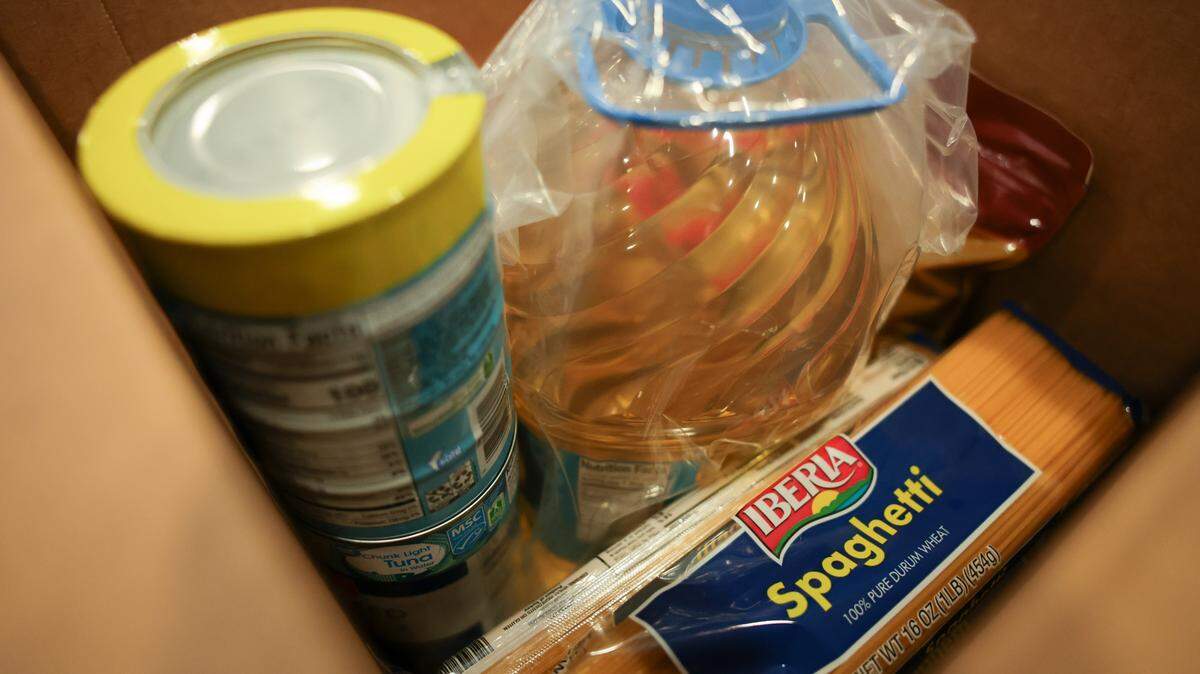
The U.S. State Department reiterated on Wednesday that it remains willing to provide $100 million in humanitarian aid to Cuba, after senior officials in Havana denied that the island’s government had previously received such an offer.
“Today, the Department of State is publicly restating the United States’ generous offer to provide an additional $100 million in direct humanitarian assistance to the Cuban people that would be distributed in coordination with the Catholic Church and other reliable independent humanitarian organizations,” the agency said in a statement. “The decision rests with the Cuban regime to accept our offer of assistance or deny critical life-saving aid and ultimately be accountable to the Cuban people for standing in the way of critical assistance.”
The new point of tension between the two countries arose last week after Secretary of State Marco Rubio said Cuba had not accepted a $100 million assistance offer from the Trump administration.
Speaking from Italy on Friday, Rubio said the United States had sent $6 million in hurricane relief, which the Catholic Church had distributed to families in eastern Cuba, and that the United States was willing to do more. “In fact, we’ve offered the regime $100 million of humanitarian aid that, unfortunately, so far, they have not agreed to distribute to help the people of Cuba,” he said.
Soon after, Cuban Foreign Minister Bruno Rodriguez denied that the Trump administration had made such an offer, calling it “a fable.”
“The U.S. Secretary of State, knowing for a fact that he needs to resort to lies to justify his criminal abuse against the Cuban people, fabricates the fable of an alleged offer for assistance that is worth $100 million or more, in an attempt to fool the people of Cuba and U.S. citizens themselves,” he said on X on Friday.
Then on Tuesday he doubled down, writing on X that someone should ask Rubio “about the fable of the alleged offer of $100 million in humanitarian assistance to Cuba, which no one knows about.” He questioned how such aid would be distributed and if it was, in reality, “a dirty business to curtail our independence.”
On Wednesday, the State Department reiterated that the administration has “made numerous private offers to the Cuban regime to provide generous assistance to the Cuban people, including support for free and fast satellite internet and $100 million in direct humanitarian assistance.”
The agency added that the United States “continues to seek meaningful reforms to Cuba’s communist system, which has only served to enrich the elites and condemn the Cuban people to poverty.”
The administration is walking a fine line on its Cuba policy. As it ramps up pressure on the Cuban government to make reforms, threatening tariffs on the country’s oil suppliers and sanctions on foreign companies doing business in Cuba, it risks worsening the humanitarian crisis already unfolding, largely resulting from the communist government’s own mismanagement.
Before heading to China, President Donald Trump dialed back the rhetoric about “taking” Cuba and wrote on social media that “Cuba is asking for help, and we are going to talk!!”
So far, there is little evidence publicly that the Cuban government is seeking U.S. help.
The country’s leader, Miguel Díaz-Canel, has been fiercely pushing back against Secretary of Defense Pete Hegseth’s remarks in a congressional hearing on Tuesday that called Cuba a national security threat to the United States.
“Cuba does not threaten; Cuba is constantly threatened,” he wrote in captions at the beginning of a lengthy post on X, blasting the administration for building what he called a narrative to “asphyxiate” the Cuban people and justify a military attack.
On Wednesday, as a protest in San Miguel Del Padrón, a neighborhood on the outskirts of Havana, was unfolding in the afternoon amid prolonged blackouts, Díaz-Canel again blasted the United States, blaming Trump’s actions for energy cuts.
“This dramatic worsening has a single cause: the genocidal energy blockade to which the United States subjects our country, threatening with irrational tariffs any nation that supplies us with fuel,” he said. “It is a perverse design whose primary objective is the suffering of the entire population, in order to hold them hostage and turn them against the government.”
Under pressure, the Cuban government loosened its grip on domestic fuel sales and, on Tuesday, announced it would authorize private and foreign companies to sell fuel at dollar-market prices at the pump.
Previously, the Trump administration had authorized the sale of U.S. fuel to private enterprises for its own consumption and for “humanitarian use.” Some private businesses that import fuel have been leasing pumps from gas stations operated by Cupet, part of the Cuban military conglomerate GAESA. Tuesday’s announcement means those private enterprises could start selling gasoline and diesel to the public.