
Costa Rica closes embassy in Cuba, calls communist government ‘illegitimate’
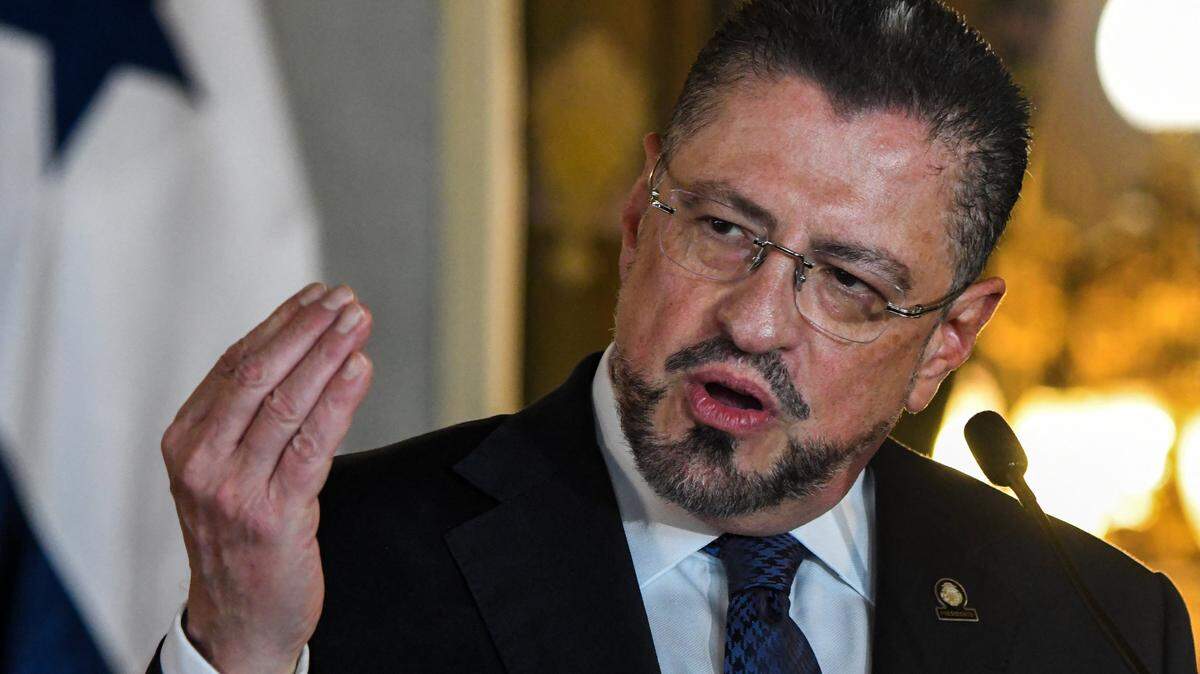
In an abrupt and unexpected gesture, the government of Costa Rica announced Wednesday the closure of its embassy in Havana and told Cuban diplomats to leave San José, the country’s capital, citing the Cuban government violations of human rights and lack of legitimacy.
“We must rid the hemisphere of communists,” Costa Rican president Rodrigo Chaves said in a press conference Wednesday. “The government of Costa Rica does not recognize the legitimacy of Cuba’s communist regime, in light of the mistreatment, repression and undignified conditions to which the inhabitants of that beautiful island are subjected.”
In the same event, Costa Rican Foreign Minister Arnold André said the country was closing its embassy in Havana and requested Cuba’s foreign ministry to withdraw its diplomats from its embassy in San José.
Chaves said Costa Rica will not provide consular services in Havana to its citizens, but kept open the possibility that Cuba could maintain its consular staff in San José. He said he made the decision to downgrade the diplomatic relationship in consultation with the country’s president-elect, Laura Fernandez. Chavez said Fernandez, a conservative politician like him, would keep “the same line,” pointing at her in the audience. She was captured by the cameras nodding.
The foreign affairs minister said Costa Rica made the decision out of “deep concern regarding the sustained deterioration of the human-rights situation on the island, as well as the increase in acts of repression against citizens, activists and opposition figures who are legitimately exercising their right to express themselves and participate in public life.”
Before his comments, a video of Cubans describing their dire living conditions was shown to the audience at the event in San José.
“By now, they must acknowledge that the communist model has failed in Cuba, just as it has failed in every place where it has been established; only human freedom can lead to progress,” said Chaves, a former World Bank economist.
The move coincides with increasing efforts by the Trump administration to diplomatically isolate the government in Havana amid increasing pressure on Cuban leaders to make significant changes to its economic and political system. The announcement comes days after a “Shield of the Americas” summit in Doral hosted by President Donald Trump attended by several conservative wing Latin American leaders including Chaves.
Havana quickly responded to Costa Rica’s announcement, blaming U.S. pressure for the decision and for orchestrating a campaign to isolate Cuba in the region.
“Under pressure from the United States, Costa Rica announces the closure of its embassy in Havana and limits relations with Cuba to the consular sphere,” Cuba’s foreign ministry said in a statement, calling it an “arbitrary” decision.
The ministry also “categorically” rejected “the disrespectful statements” made by Chaves, accusing him of “grossly” manipulating Cuba’s history and reality and adding that he “scandalously disregarded the direct responsibility that the United States’ policy of blockade has borne for the worsening of the economic situation and the deterioration of the living conditions of the Cuban people”.
This is the first time in decades that a country in Latin America closes its embassy in Cuba, and it speaks to the changing political climate in a region where several countries have elected conservative politicians. Following Cuba’s suspension from the Organization of American States in 1962, all governments in the region, with the sole exception of Mexico, broke off diplomatic relations with Cuba. But relations were restored in the following decades.
Earlier this month, the government of Ecuador expelled the Cuban ambassador in Quito and several Cuban diplomats after allegations of espionage. Cuba then said it was closing its embassy in Ecuador.