Live updates: What Miami-Dade faithful are saying about Cuba talks
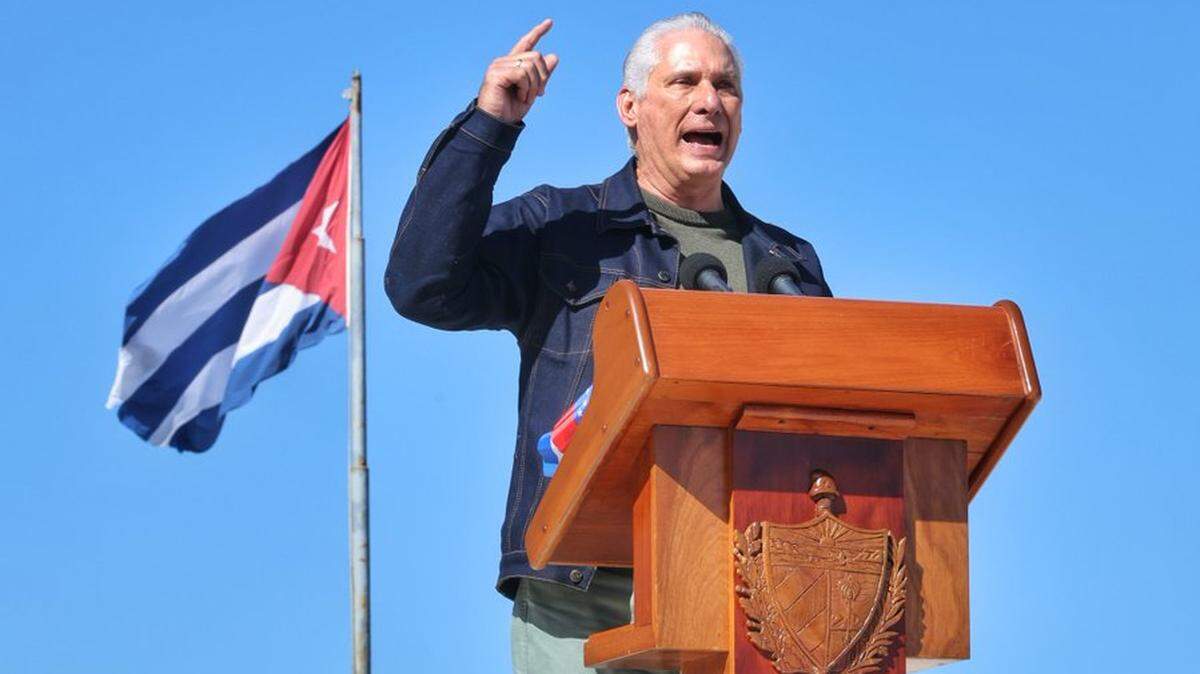
Cuban leader Miguel Diaz-Canel has announced the release of 51 prisoners and briefly spoke about the ongoing talks with the U.S. government during a government meeting aired on state TV early Friday.
Here’s what to know:
Could Florida do business with Cuba if the dictatorship ends?
Amid diplomatic talks between the United States and Cuba, state lawmakers on Friday passed a bill that contains a free trade provision with the island nation should the regime fall.
The amendment had first appeared in February in the Florida House, where Cuban-American House Speaker Daniel Perez, a Miami Republican, oversees the chamber.
“My hope is that the people of Cuba will finally get the freedom they’ve craved for so long and I’m thankful to President [Donald] Trump and Secretary [Marco] Rubio for their bold leadership and commitment to the people of Cuba and the principles of liberty and justice for all,” Perez told the Herald/Times in a statement on Friday. Read more here.
— Alexandra Glorioso
‘Put the matter in God’s hands,’ vicar says
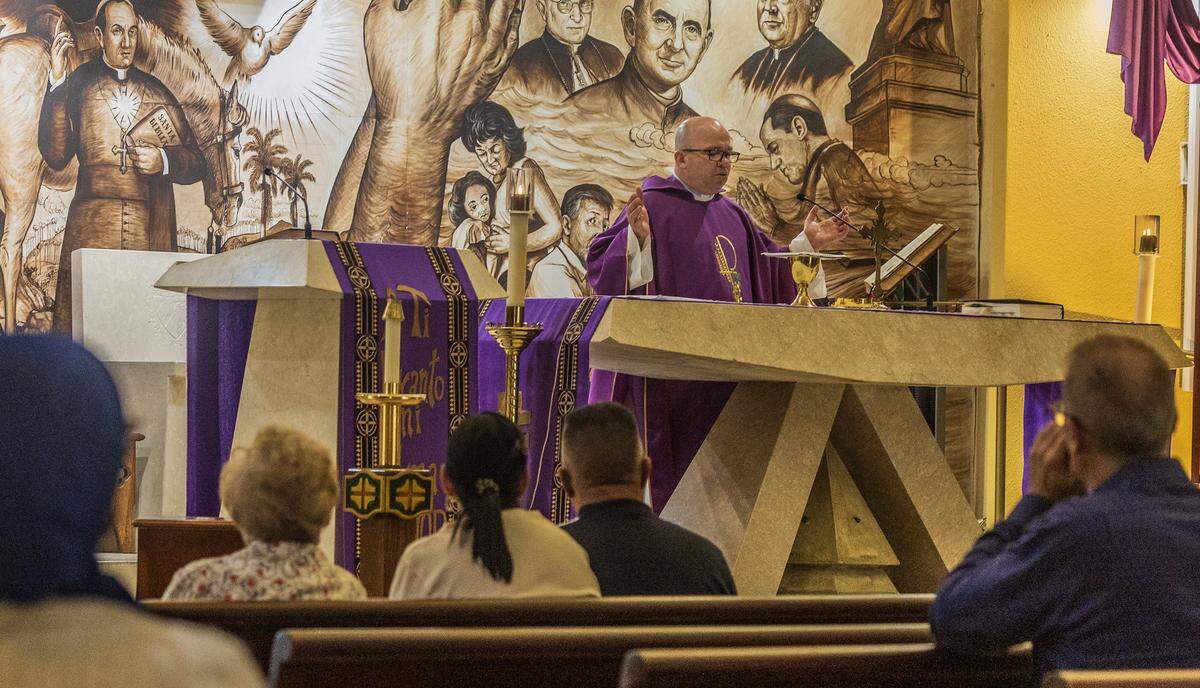
Amid a downpour of rain, Father Eliosbel Pereira Almaguer prayed for people living in countries under tyranny –– and for their leaders to do what is right and just.
Almaguer faced about two dozen parishioners at Coconut Grove’s Shrine of Our Lady of Charity, the Roman Catholic church named after the patroness of Cuba, on Friday afternoon. After, he told the Miami Herald he hopes the negotiations result in something positive for the people who have suffered under oppression in Cuba.
“That’s what we wish for, and that’s why we pray,” Amlaguer said.
Almaguer said his message to the Cuban people: Keep their confidence in God.
“As Christians, we have to ask God… when things are not in our hands … [and] put the matter in God’s hands.”
— Grethel Aguila
Cubans in South Florida skeptical about ongoing talks
As news spread Friday that Cuban leader Miguel Díaz-Canel had confirmed that Havana is in the midst of talks with the Trump administration, the mood among many Cubans in South Florida ranged from cautious hope to anger and skepticism.
Cuba’s confirmation of the talks come as the country faces a profound economic and energy crisis, with widespread blackouts and shortages of food and medicine across the island.
“It’s going to be the same old story,” said Guadalupe Varela, 71, who has lived in the U.S. since 1981 and lives in Hollywood. “If Díaz-Canel leaves or even if they replace him but keep the same leaders of the regime, the oppression, destruction and poverty in Cuba will remain. The same thing that happened in Venezuela will happen in Cuba: absolutely no change.”
— Veronica Equi Brito and Sarah Moreno
Take a look at Miami’s plan for any ‘significant change’ in Cuba
As the Cuban government engages in negotiations with the Trump administration, the city of Miami said it anticipates potential “mass migration” and is prepared for large-scale celebrations “in the event of a significant change in the government of Cuba.”
Miami City Manager James Reyes has told city commissioners that Miami’s fire and police chiefs have recently updated plans relating “to the challenges presented with the politics surrounding Cuba and the impacts here in the city of Miami.”
At a city commission meeting on Thursday, Reyes said that earlier this year, he instructed those agencies to “refresh” their action plans in light of “the politics currently playing out in Cuba, particularly on two fronts.”
— Tess Riski and David Goodhue
FBI might go to Cuba for boat crash investigation, Diaz-Canel says
FBI experts may travel to Cuba to help with a joint inquiry into the recent deadly shootout out at sea between a Florida-registered vessel and the island’s coast guard, Cuban leader Miguel Diaz-Canel said Friday.
“We’re in waiting for a possible visit ... of FBI experts to participate in the clarification and the investigations with personnel from our Interior Ministry,” Diaz-Canel said during a press conference on Friday morning. “There is information and cooperation with our American counterparts.”
The FBI office in Miami declined to comment on the Cuban leader’s statement, saying the State Department is handling inquiries on the matter.
— Syra Ortiz Blanes
READ NEXT: Florida boat caught in shootout with Cuban coast guard. Here’s where it happened
‘We stand with the Cuban people,’ Miami-Dade Mayor says
Miami-Dade County Mayor Daniella Levine Cava on Friday morning, just hours after Miguel Diaz-Canel’s televised speech, said in a statement posted on X that Cuba’s release of 51 prisoners “brings relief and long-awaited hope” to many families but “does not change the fact that people in Cuba are still imprisoned for their beliefs.”
“True justice will come when no one in Cuba is jailed for demanding their basic rights ...We stand with the Cuban people and with the many families still waiting for the day when Cuba is free and its people can live without fear,” Levine Cava said, echoing the sentiment of many others in the community.
— Michelle Marchante
Miami’s U.S. Rep Salazar responds to Cuba’s prisoner release
Miami Republican U.S. Rep. Maria Elvira Salazar on Thursday night blasted the Cuban government immediately following its announcement of plans to release 51 prisoners as a sign of “good will” with the Vatican amid ongoing talks with the U.S.
The Cuban government, for 67 years, has crushed “dissent through tyranny, repression, persecution, and prison for anyone who dares to think differently or speak the word freedom,” Salazar wrote on X.
“Releasing 51 political prisoners is not justice,” she added. “Justice is when the last political prisoner walks free. And that will only happen when the longest-running and most brutal dictatorship in our hemisphere falls.”
— Michelle Marchante
Cuba confirms talks with Trump administration
Cuban leader Miguel Díaz-Canel said Friday his government is engaged in talks with the United States, confirming earlier reporting by the Miami Herald about the contacts.
In footage of a government meeting aired on state television early morning, he said Cuban officials have recently held talks with representatives of the U.S. government.
“These talks have been aimed at finding solutions through dialogue to the bilateral differences between our two nations. International factors have facilitated these exchanges,” he said. Crucially, he added, the exchanges have aimed to moved away from confrontation, he added.
- Nora Gámez Torres
Cuba to release 51 prisoners following Vatican talks as U.S. tension rises
The Cuban government said Thursday night it is releasing 51 prisoners as a gesture of “good will” with the Vatican amid heightened pressure from the Trump administration to agree to economic and political changes on the island.
“In the spirit of good will and the close and fluid relations between the Cuban State and the Vatican, with which communication has historically been maintained regarding the review and release of prisoners, the Cuban Government has decided to release 51 people sentenced to imprisonment in the coming days,” a government statement said.
The statement did not include the details of the prisoners who will be released, but said that “all have served a significant portion of their sentences and have maintained good conduct in prison.”
- Nora Gámez Torres
What has led up to U.S. - Cuba talks
After cutting oil supplies from Mexico and Venezuela to the island, President Donald Trump has urged Cuban authorities to make a deal with the United States.
The Trump administration has been having high-level conversations with several people in Raúl Castro’s inner circle, similar to the discussions held with Venezuela’s strongman Nicolás Maduro before he was captured in a military raid earlier this year, U.S. Rep. Mario Díaz-Balart told the Miami Herald earlier this week. Secretary of State Marco Rubio’s advisers also met with Raúl Castro’s grandson, Raúl Guillermo Rodriguez Castro, in Saint Kitts last month.
In recent days, Trump has reiterated his belief Cuba was “at the end of the line” and its government was about to “fall.” He has also insinuated the United States would “take over” the island.
- Nora Gámez Torres
This story was originally published March 13, 2026 at 8:17 AM.