
Trump allows U.S. companies to resell Venezuelan oil to Cuba’s private sector
Venezuelan oil will soon start flowing to Cuba again. Just not to the Cuban government.
The Trump administration is authorizing American companies to resell Venezuelan oil to Cuba’s private sector at a time the administration is blocking oil supplies from Venezuela to the Cuban government.
The Treasury Department’s Office of Foreign Assets Control published new guidance on Wednesday, telling U.S. companies that it would view favorably applications for licenses seeking authorization for the resale of Venezuelan-origin oil for use in Cuba.
“This favorable licensing policy is directed towards transactions that support the Cuban people, including the Cuban private sector (e.g., exports for commercial and humanitarian use in Cuba),” the office said.
The announcement expands guidance issued by the Commerce Department on Wednesday, authorizing oil exports to Cuba for “private sector economic activities and those sold directly to individuals for personal or family use,” without the need for government authorization.
Both Treasury and Commerce have said companies cannot sell the oil to the Cuban government or the military. They also can’t sell it for the benefit of hotels managed by the Cuban military that are listed as banned properties under State Department sanctions.
While exports of U.S. oil and gas to private businesses in Cuba do not require a license, the resale of Venezuelan oil still does.
But the new policy creates a paradox: while the Trump administration has blocked the shipments of Venezuelan oil to Cuba, worsening an energy and humanitarian crisis on the island, it has opened the doors to oil exports to the private sector.
“The ball is on Cuba’s court because now the private sector will have fuel and the government won’t,” said a Cuban American entrepreneur who has already purchased diesel to ship it to the island.
The full scope of what’s been authorized is still unclear. The new Treasury Department guidance says applicants for a license to export Venezuelan oil products to Cuba “need not necessarily have an established U.S. entity” to apply, suggesting companies from third countries might do so.
The guidance implicitly reaffirms U.S. control over Venezuela’s oil, following the capture of the country’s strongman, Nicolás Maduro.
Even before his capture during a raid conducted by the U.S. military, the U.S. government had blocked oil shipments from Venezuela to Cuba to pressure Cuban leaders to negotiate economic and political reforms. U.S. law enforcement forces have been stopping oil tankers suspected of heading to Cuba carrying Venezuelan oil. Mexico also stopped shipments out of fear of U.S. tariffs.
But experts, diplomats, Cuban Americans and Cuban private entrepreneurs have been warning the administration that a complete halt of oil supplies would risk the country’s total collapse, since the population was already enduring a profound humanitarian crisis.
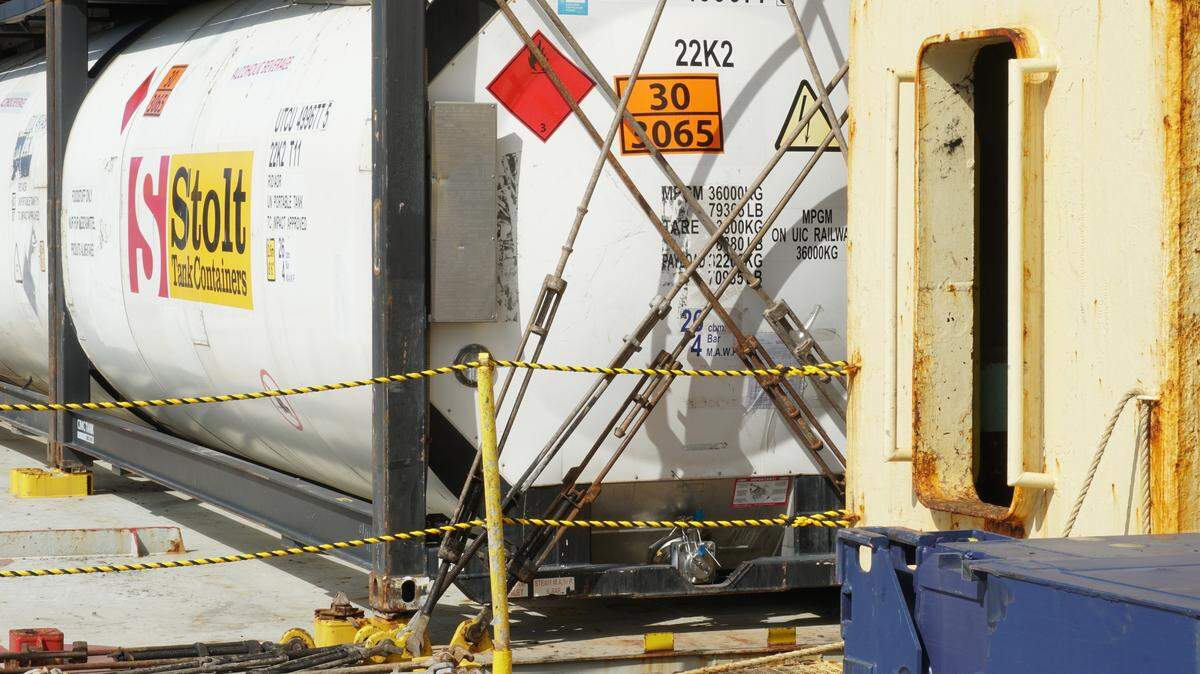
Cuban Americans who have licenses to export food and other goods to Cuba, as well as some private business owners in Cuba, had recently started buying small quantities of diesel to be shipped to Cuba in isolated containers–called ISO tanks– that can be loaded into commercial cargo vessels.
Cimex, a company controlled by the Cuban military conglomerate GAESA, controls the island’s gas stations, and the rest of the energy infrastructure is also in the state’s hands. But as the island’s economy came to a halt, Cuban authorities privately gave private enterprises the green light to import oil from the U.S. to support their operations.
Such transactions were already allowed under U.S. embargo regulations. But with the new guidance, the administration is betting that exports to the private sector, to support their activities but also eventually for resale to the population, might send a signal to the Cuban government about the economic opportunities of improving relations with the United States.
The goal, as a person with knowledge of the plan told the Herald, is to “open the spigot” of U.S. fuel to Cuba so the island becomes dependent on the United States for its energy needs. In the past, Cuba’s communist government was dependent on oil from the Soviet Union and later from Venezuela.
President Trump and the White House has been urging Cuban leaders to negotiate a deal with the United States, and Secretary of State Marco Rubio has started conversations with Raúl Castro’s grandson, Raúl Guillermo Rodríguez Castro. Rubio has said the United States wants to see economic reforms in Cuba taking place.
The decision to allow U.S. oil exports to the private sector is significant, said John Kavulich, the president of the U.S.-Cuba Trade and Economic Council.
“First, it further legitimizes the re-emerging private sector in Cuba to the United States public, and specifically to members of the United States Congress,” Kavulich said. Republicans members of Congress from Miami have watched the emergence of a private sector on the island with suspicion, at times even denying its existence.
“Second,” he added, “it reinforces to the government of Cuba the focus by the Trump-Vance Administration towards the re-emerging private sector in Cuba as a signal about a pathway for negotiations.”
This story was originally published February 25, 2026 at 12:26 PM.