
U.S. official: Cuba resold much of the oil it received from Venezuela
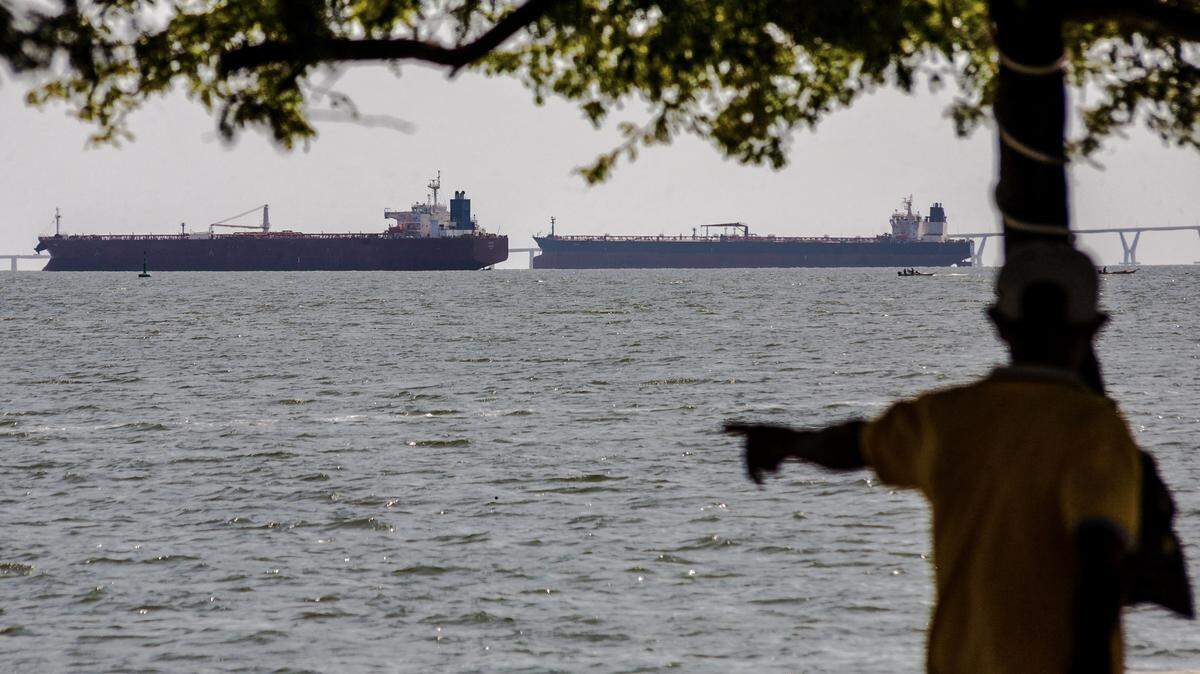
Despite the daily hour-long blackouts and gasoline rationing in Cuba, the island’s government sold most of the subsidized oil it received from Venezuela last year, a senior U.S. government official told the Miami Herald.
Venezuela provided Cuba with about 70,000 barrels per day of crude oil and refined products worth as much as $1.3 billion from approximately late 2024 through late 2025, the official said, citing information from a previously undisclosed analysis by the U.S. government.
Cuba then sent about 40,000 barrels each day — about 60% — to Asia for resale, the official said.
Mexico’s president Claudia Sheinbaum is under increasing pressure over oil shipments to Cuba, which she said involve both paid contracts and humanitarian donations.
The reselling of the oil while the Cuban population endures daily electricity cuts is “further proof that the illegitimate Cuban regime only prioritizes enriching itself all while the Cuban people suffer the consequences of their corrupt nature and incompetence,” a State Department official told the Miami Herald.
“Everyday Cubans deserve the truth as to why the regime hides billions in overseas bank accounts instead of investing in electricity, infrastructure, health, and the daily needs of its people,” the State Department official said.
Previously, a Herald investigation based on leaked secret accounting documents revealed that GAESA, a Cuban military conglomerate, reported about $18 billion in current assets, of which $14.5 billion were deposited in unknown bank accounts as of March 2024.
Experts long suspected that Cuba was reselling some of the oil from Venezuela for hard currency. In December, U.S. forces off the Venezuelan coast seized a shadow fleet tanker, the Skipper, that had transferred a portion of oil cargo to a smaller tanker bound for Cuba and continued its route to Asia, likely to China.
The 70,000 barrels figure is more than double what Reuters and other experts estimated the Venezuelan government was sending to Cuba.
Based on public tanker tracking data, Jorge Piñón, a senior research fellow at the Energy Center at the University of Texas who closely tracks oil shipments to Cuba, estimated that Venezuela exported an average of 30,000 barrels of oil per day to the island during 2025, filling about 50% of Cuba’s oil deficit. Reuters also reported a similar figure, 27,000 barrels per day, based on PDVSA data.
Much of the sanctioned vessels transporting oil from Venezuela to Cuba are part of the so-called “dark fleet” that turn off transponders and spoof location signals to avoid being detected. It is also possible that some of the oil destined to Cuba was not recorded on PDVSA records.
Since the 2000s, Cuba has received subsidized oil from Venezuela thanks to an agreement between Hugo Chavez and Fidel Castro, and continued under Nicolás Maduro, the Venezuelan strongman who was captured in a U.S. military raid earlier this month.
In exchange for the oil, Cuba provided Venezuela with doctors. It also helped Chavez and Maduro hold on to power by infiltrating several Cuban advisers into the Venezuelan army and security agencies and providing software and telecommunications services to the Venezuelan police and several other government agencies and companies, including the state oil company PDVSA. Albet, a Cuban company linked to Cuba’s University of Information Sciences, was involved in the creation of the system that issues the IDs Venezuelans need to vote, Venezuelan investigative outlet Armando Info reported at the time.
The Cuban government confirmed that Cuban officers were providing personal security to Maduro on the day the U.S. special operations Delta Forces raided Fort Tiuna in Caracas and apprehended the couple. Thirty-two died, according to Cuban authorities. Cuban state media also reported the return of additional officers who were injured during the raid but did not say how many.
The relationship amounted to colonization, Secretary of State Marco Rubio said soon after the military operation to capture Maduro and his wife Cilia Flores.
That alliance seems to have been upended after President Donald Trump said Cuba won’t be receiving more oil from the South American nation. The Trump administration has also pressed the Venezuelan interim government led by Maduro’s former vice president, Delcy Rodriguez, to cut ties with U.S. adversaries, including Cuba.
The administration is also looking at how to exert further pressure on Cuba, which is going through its worst economic crisis in many decades, to hasten regime change. Among the options being considered is a complete naval blockade to stop oil shipments to Cuba, Politico reported.
Cuban leader Miguel Díaz-Canel said on X that in a phone call last week with Rodriguez — the first publicly disclosed since Maduro’s ouster — he “expressed our support and solidarity with the homeland of Bolívar and Chávez, its people, and the Bolivarian government; as well as our decision to continue strengthening our historical relations of brotherhood and cooperation.”
He did not mention the oil shipments nor the fate of the thousands of doctors and Cuban “collaborators” in the South American country, two issues likely high on the call’s agenda.
Rodriguez did not provide details of what was discussed other than thanking Díaz-Canel for a call that she said “strengthens our self-esteem as Venezuelans, and it encourages us to continue together in this process, which is unavoidable and inevitable: the unity of our peoples.”
The halt of oil shipments from Venezuela has already caused an islandwide gasoline shortage and daily blackouts that in places like Perico, Matanzas have lasted up to 32 hours, Cubans in a WhatsApp group sharing their hours without electricity said.
Cuba’s electricity company said that nine units inside the island’s power plants are out of service or receiving maintenance and that the country’s distributed generation of power, through small-scale units connected to the grid, was null due to the lack of diesel. Cubans reported widespread blackouts lasting several hours during the weekend, including in Havana. On Monday, over 60% of the island was expected to be in the dark at peak demand at night.
This story was originally published January 27, 2026 at 5:30 AM.