
Cuban spies’ failures in Venezuela led to Maduro’s capture by U.S. forces, experts say
Hours before he was snatched by U.S. Delta Force commandos and taken to New York City to face trial on charges of narcoterrorism, Venezuelan strongman Nicolás Maduro told journalists he had “a foolproof bunker.”
Despite a U.S. armada off the coast of Venezuela, he wasn’t overly concerned about his security, which he had entrusted for years to Cuban security and intelligence services.
His sense of protection, it turns out, proved entirely illusory: Cuba spectacularly failed to deliver the one thing it was richly paid for in oil.
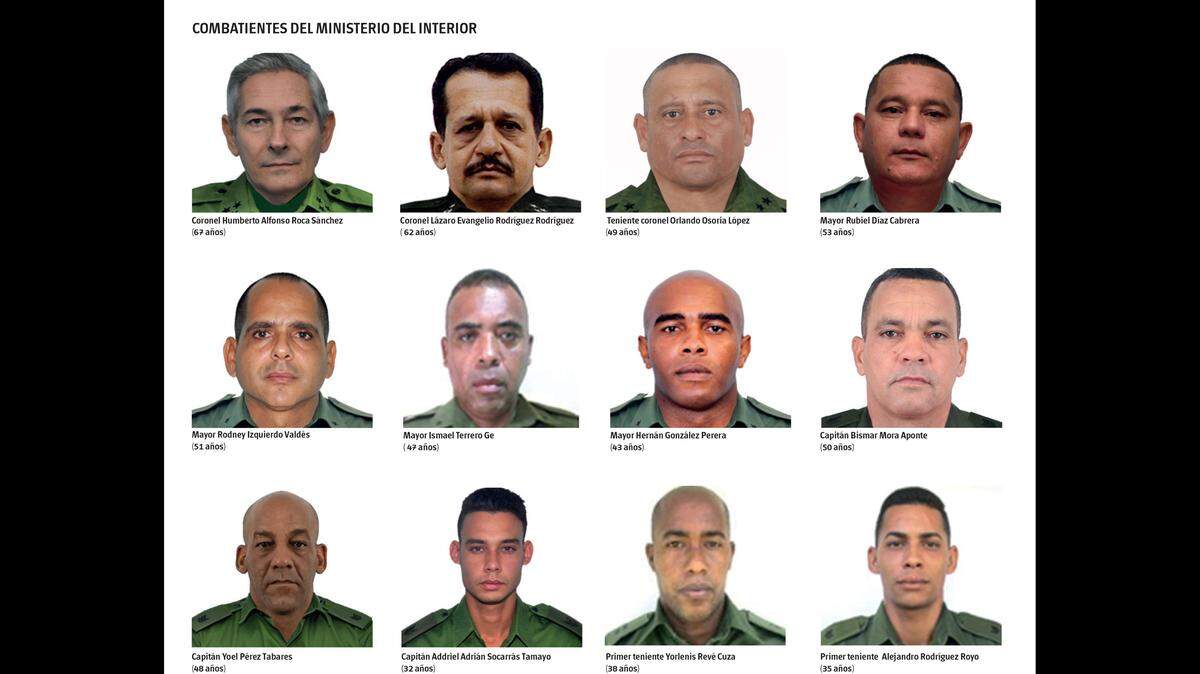
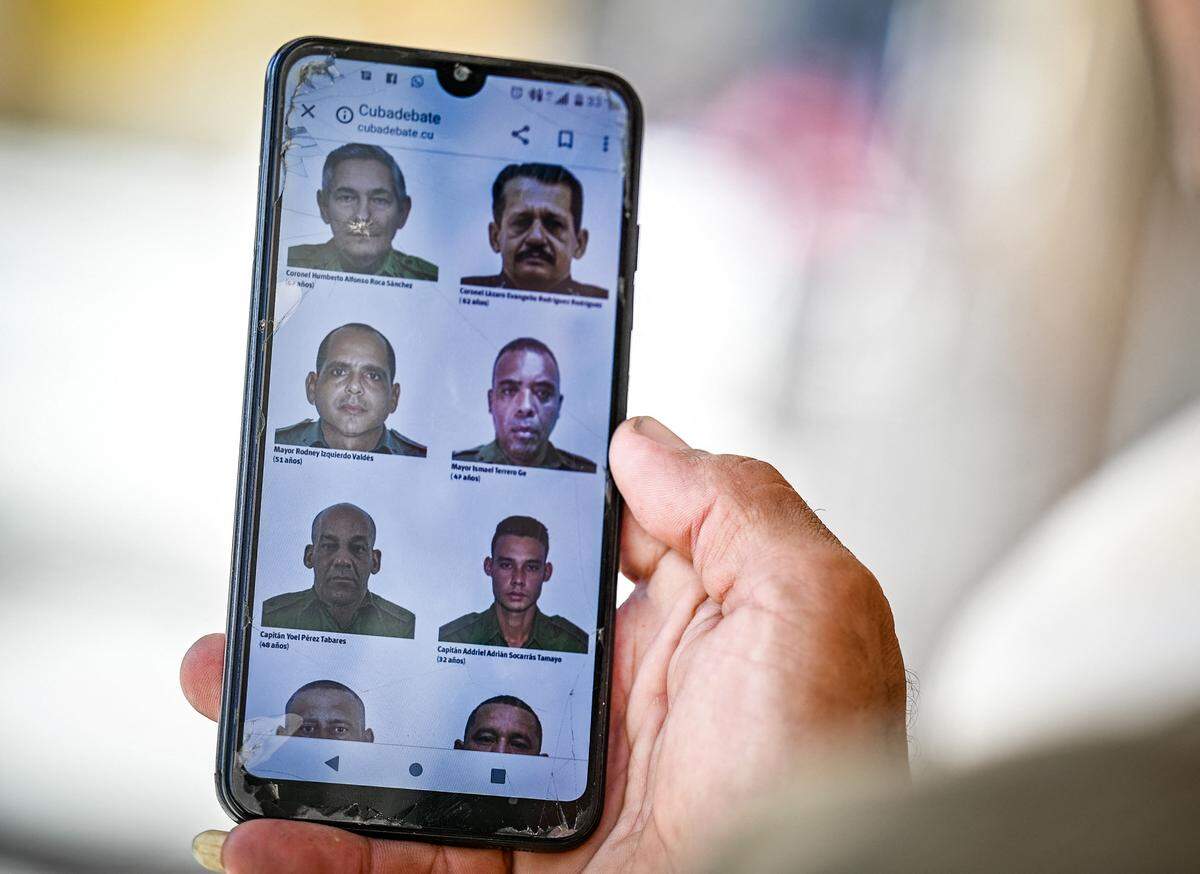
Cuban authorities revealed Tuesday the names of 32 Interior Ministry and armed forces members, including high-ranking officers, who they said died protecting Maduro during the U.S. raid early Saturday.
It was the first time Cuban authorities acknowledged what was already widely known: that Cuban officers had been providing personal protection to the Venezuelan strongman.
Cuban protection for Venezuela’s leader goes back to 2002, after then President Hugo Chavez was briefly detained during an attempted coup in 2002. Fidel Castro sent Cuban military and intelligence officers as bodyguards and advisors to take over Chavez’s security and revamp the Venezuelan army and spy agencies.
Providing personal security and intelligence assessment to the Venezuelan leader was part of a grand bargain that led to Venezuelan oil flowing to Cuba. The agreement continued under Maduro.
Most of the high-ranking Cuban officers killed in the raid, including two colonels – Humberto Alfonso Roca Sánchez, 67, and Lázaro Evangelio Rodríguez Rodríguez, 62– were members of the Interior Ministry, which runs Cuba’s spy agencies and has a department in charge of personal protection services.
The list also identified 11 members of the Cuban Revolutionary Armed Forces.
The men, the Cuban government said, “fell, after fierce resistance, in direct combat against the attackers or as a result of the bombing of the facilities.”
They proved no match for the U.S. forces conducting the operation. There were no casualties among U.S. forces. The Pentagon said Tuesday that seven service members were injured and five were already back on duty.
The capture of Maduro was the culmination of a chain of glaring mistakes made by Cuba’s intelligence agencies, which had previously gained a reputation inside the U.S. intelligence community for its capacity to infiltrate the U.S. government and run spy networks around the world.
“They’ve been so good for so long, and then how do you miss this?” said Chris Simmons, a retired lieutenant colonel with the U.S. Army and former career counterintelligence officer who helped catch Cuban spy Ana Belén Montes in the Pentagon.
In Venezuela, Cuban intelligence advisers missed the presence of the CIA, whose agents slipped into the country months before the raid to compile information about Maduro’s daily routine. And the Cubans likely provided Maduro with a flawed assessment of the situation, intelligence experts said.
It was no secret that the U.S. was amassing a large naval force and deploying armed assets to the region, which most experts regarded as a precursor to military action. But Cuban intelligence likely assessed that President Trump was not going to try to remove Maduro by force — the sort of risky, complex operation he ended up greenlighting.
Cuban intelligence’s “exceptional knowledge and understanding of our tactics, techniques and procedures has historically made us very predictable,” Simmons said. “One of their biggest errors was failing to recognize that Trump is more unpredictable than they ever imagined.”
Cuban intelligence might have gotten too complacent in believing that Trump’s threats against Maduro were just that, an empty threat, comparing them with similar talk from other presidents against Cuba for more than six decades, experts say.
But Cuban spies, accustomed to studying U.S. military movements and analyzing their patterns, were also caught off guard by the clandestine operation itself, Simmons said.
Surprisingly, he noted, Cuban spy agencies seem to have lacked an understanding of how the Delta Force — officially known as 1st Special Forces Operational Detachment-Delta — operates. The Delta Force is a Tier 1 Special Mission Unit, the most elite type of unit in the special forces, tasked with highly sensitive missions, usually at night and with a minimal footprint.
“If they want to become invisible, you’ll never see them coming,” Simmons said. “Secrecy standards and practices surrounding Tier One Units exceed anything else in the U.S. military. And the slow but steady buildup of military forces in the Caribbean provided a window to discreetly move Tier One assets under the guise of conventional special operations forces units.”
Simmons, who served along with some of those special-missions units in Iraq and Afghanistan, said Cuban intelligence might have been fooled into believing that the U.S. was only deploying regular special forces units to conduct strikes on drug boats and interdictions of oil tankers in the Caribbean.
“Unless you are on the vessels or have access to daily satellite photographs of our naval vessels, you wouldn’t know that the Tier One were there. By the time they flew in on Saturday, it’s too late,” Simmons said.
During the Operation Absolute Resolve to capture Maduro, U.S. forces launched a cyberattack that cut off electricity and shut down digital communications, took out radars, and bombed Venezuelan air defenses to clear the path for the helicopters carrying the special missions unit.
Whatever technology Venezuela has acquired in recent years from Russia, China and Iran, three U.S. adversaries with interests in the South American nation, didn’t work.
The U.S. military “actually made corridors of essentially digital darkness, where these otherwise invisible forces actually stayed in their black zone,” Simmons said. “So they really were, for all intents and purposes, invisible.”
Ultimately, Cuban intelligence failed to tell Maduro that, in case of a U.S. attack, they could not effectively protect him.
“The American operation was so perfect that no security service in the world could have stopped it,” said Enrique García, a former Cuban intelligence agent who is now living in Miami.
“If Cuban security had been functioning properly and were up to date, they would have understood a long time ago that the Americans’ capabilities far surpass theirs from a technical standpoint,” he added.
“The big mistake comes from the Cubans, from selling Maduro the idea that they were going to guarantee his security,” García said. “Cuba is the one that led Maduro astray.”