
Cuba’s ‘partial dollarization’ of economy aims to control private-sector hard currency
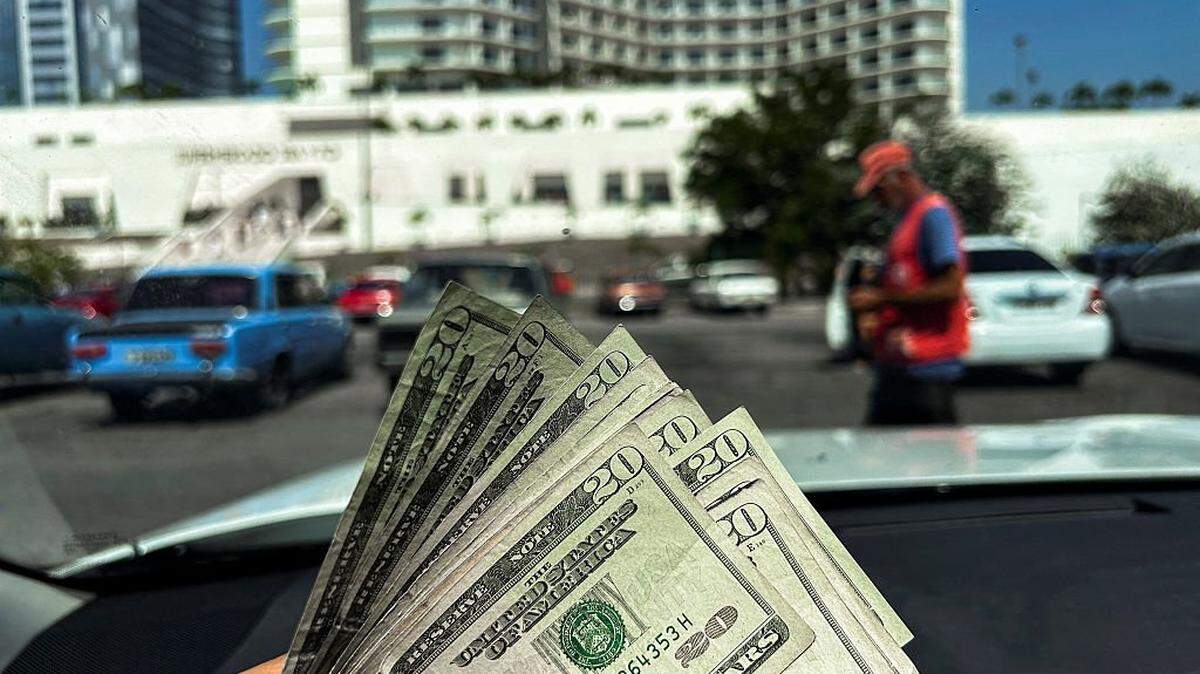
Amid an economic crisis of devastating proportions, the Cuban government is making official a “partial” dollarization of the country’s economy, allowing the private sector and other entities to once again open dollar bank accounts and use the U.S. currency under strict regulations that aim to redirect hard currency flows from the informal market to the state banking system.
The recipe was already tested in the 1990s, when for many years dollars were allowed into the hands of the population. More recently, the government had already begun using dollars in stores and for other transactions amid a galloping peso devaluation that it has been unable to control.
The new regulations, published Thursday in the country’s Official Gazette, expand the use of the dollar, and potentially other foreign currencies, as legal tender almost five years after the government embarked on a monetary reform that restricted dollar operations and sought to unify the dual-currency system in place at the time.
The new rules, which Cuban officials defended as “temporary,” establish a new centralized mechanism to allocate and sell hard currency to state enterprises and specify which entities may open bank accounts and operate in dollars–all under the watchful eye of the government.
Exporters, foreign companies, firms based at the Mariel special development zone, religious organizations, and, crucially, the small and medium private enterprises that have emerged in recent years in Cuba, among others, will be allowed to maintain the accounts to make payments abroad and “authorized” payments to local businesses.
Still, many private businesses will not be able to benefit from the rule because only those with sources of hard currency considered “legitimate” in the regulations–for example, from exports or e-commerce “with payments from abroad”--will be allowed to open the accounts.
Central to the new policy is an effort to regain control of the dollars flowing through the private-sector economy and crack down on the informal dollar exchange market that exists mainly because the government does not sell foreign currency.
“The goal is to shift dollar flows, primarily from remittances that currently pass only through the informal market, to formal channels,” said Pavel Vidal, a Cuban economist and professor at the Pontificia Javeriana University in Colombia. “Once this happens, the government will have control, and the main losers in this future formal foreign exchange market could be the private enterprises.”
The measures tighten control over private companies, which are expected to conduct their dollar-denominated operations through the state’s banking system. Previously, private enterprises could only officially operate in Cuban pesos, which they had to exchange for dollars in the informal market to pay suppliers abroad.
“Today, there are economic actors who are struggling to pay for their supplies,” the Economy Minister Joaquín Alonso said on television on Thursday evening speaking of the regulations. “So, they look for alternative mechanisms and solutions, and sometimes resort to illegal activities. What we are doing is precisely making it possible for these processes to become a natural economic process.”
Even though the government has imposed several restrictions on small and medium enterprises, the private sector has become a major importer and supplier in the country. But the dollars have been flowing mainly outside the government’s control. Remittances sent through “mules” — travelers from abroad paid to carry money — and other informal channels have helped finance these enterprises. The private sector’s demand for dollars has also fueled an informal exchange market that the government wants to replace with an official floating dollar-to-peso exchange rate.
Still, the government faces significant hurdles to establish an official exchange rate that does not further devalue the peso. This year is likely to end with a 5% contraction of Cuba’s GDP, Vidal estimates. After years of recession, the government faces severe liquidity problems and has even told foreign companies they cannot repatriate their hard currency earned on the island.
The new regulations indicate that Cuban authorities intend to use the private sector as a source of dollars for the official exchange system. The rules establish that private enterprises and other entities can only “retain” 80% of the dollar revenue from authorized transactions and must sell the remaining 20% to the Central Bank. The bank will then use those funds to sell dollars in a future currency exchange market.
There is little indication, however, that the measures are going to fix the problems at the core of the current economic crisis, nor that a measure marketed as positive for the private sector might end up being entirely beneficial for these enterprises, Vidal noted.
“The government is after the dollars that private companies buy on the informal market. When those dollars enter the banking system, the regulations indicate that it won’t be a competitive market,” Vidal said. “If there’s a state-owned company that needs the dollars, and there’s a small or medium-sized enterprise that needs the dollars, who do you think they’re going to give them to? To the state-owned company.”
Looming large is the Cuban government’s long record of backtracking and not honoring dollar bank deposits, which may make private business owners think twice before depositing their dollars in a Cuban bank.
Then there’s the issue of how to pay suppliers abroad, especially in the United States, which has become a big market for Cuban private businesses.
Because of the U.S. embargo, the two countries have no direct banking relationship. The Biden administration authorized U.S. banks to open accounts for Cuban private entrepreneurs living on the island, but banks remained hesitant to do so, fearing sanctions. As a result, depositing dollars in a Cuban bank is unlikely an attractive option for private owners seeking to move their money abroad to pay U.S. suppliers.
So the informal dollar exchange market is likely to continue alongside the official one, Vidal said.
“Informal markets take time to eliminate,” Vidal said. “It requires significantly strengthening the formal market, building trust, and addressing the root causes of inflation, imbalances and the economic problems that fuel the informal market. They want to eliminate the informal market with a single stroke, but international evidence shows that this is not possible.”