
Cuba’s former minister of economy charged with espionage, money laundering amid secrecy
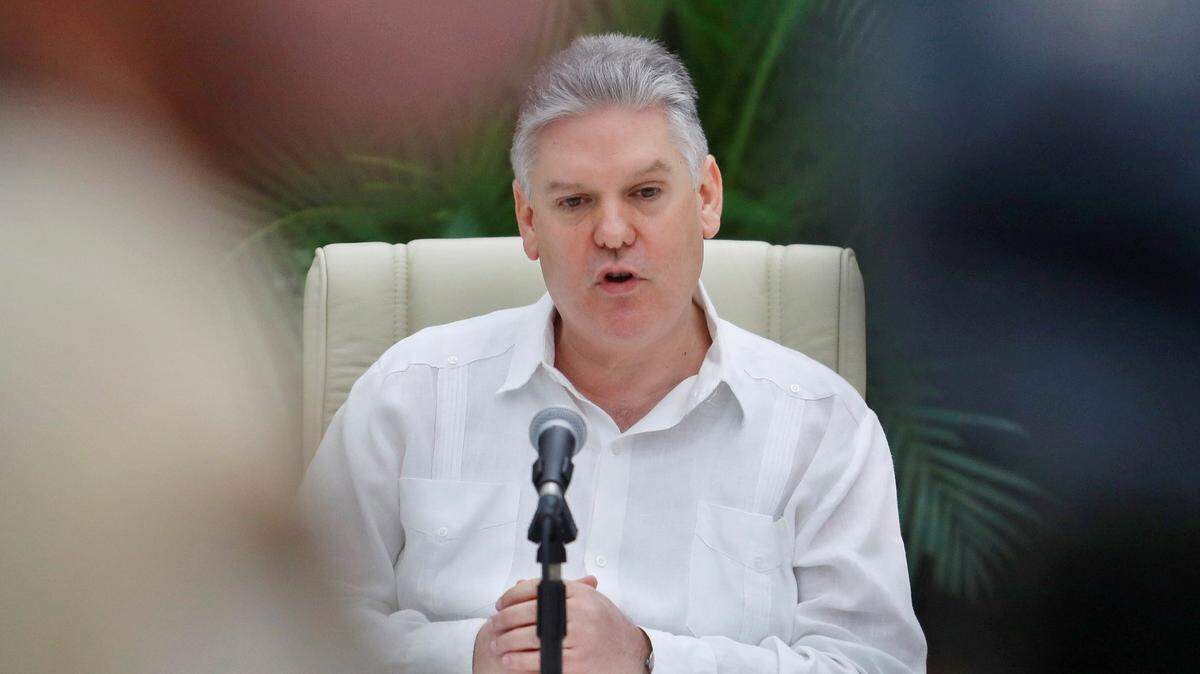
With public attention focused on recovery from Hurricane Melissa, Cuban authorities recently announced that former minister of economy and deputy prime minister Alejandro Gil is set for trial and faces espionage charges, though they provided few details, bringing little clarity into a case that has puzzled Cubans for over a year.
In a statement written in obscure legal jargon, the Office of the Attorney General said it “oversaw the criminal investigation conducted by the organs of the Ministry of the Interior against Alejandro Miguel Gil Fernández, who served as deputy prime minister and minister of Economy and Planning, and other defendants.”
The brief statement published late evening on Friday does not say how many people had been arrested along with Gil, nor the specific charges each faces. Instead, its says the attorney general’s office “requested responsibility for the crimes of espionage, acts detrimental to economic activity or contracting, embezzlement, bribery, falsification of public documents, tax evasion, influence peddling, money laundering, violation of the rules for the protection of classified documents, and theft and damage of documents or other objects in official custody.”
The statement adds all defendants face time in prison.
Gil was suddenly dismissed in February 2024 and arrested days later and has been held in an undisclosed facility. A statement by Cuba’s leader, MIguel Díaz-Canel, announcing he was under investigation suggested a corruption inquiry. Though it did not explicitly say what Gil has been accused of, the statement said the Communist Party “have never allowed, nor will they ever allow, the proliferation of corruption, simulation and insensitivity.” But for months, rumors that he was accused of espionage have been swirling inside Cuba.
Cuba observers say that espionage charges should be taken with a grain of salt, since Cuban leaders have a history of making such claims to purge the military and the government from rivals, people perceived as not loyal enough or too close to foreign businessmen, and potential reformers that could lead the country into a democratic transition.
Sometimes, the fallen fit into all of those categories.
Raúl Castro led one such purge in 2009, after taking over his ailing brother Fidel, in an effort to consolidate power away from his brother’s aides. He ordered the removal of then vice president Carlos Lage and foreign minister Felipe Pérez, both younger officials, from their government positions and the national assembly. They were linked in a secret video shown to Party members to a Cuban businessman accused of spying for Spain, though they were never charged. Instead, they were accused by Fidel Castro in a letter published in state media of having been seduced “by the honey of power,” suggesting they were vying for leadership positions in a post-Castro Cuba.
Both continue residing on the island in what Cubans jokingly call, “plan pajamas,” perhaps in reference to the low profile dismissed officials must maintain, at times even kept under house arrest. Gil, however, is facing harsher punishment and so far it is not clear why, his daughter said.
In a carefully worded statement in which she says she is merely exercising her constitutional rights to express freely, Laura María Gil asked for transparency.
“Regarding the issue of espionage, I appreciate that they mentioned it, since it has been the cornerstone of this investigation,” she said in a Facebook posting. “However, I believe the people would greatly appreciate a broader explanation of the news, clarifying small details such as: what he did, what country or countries we are referring to, since when, what were his means of communication, what he received in exchange, where he held his meetings, in what settings, with whom, under whose direct orders he was acting, what information he revealed, what measures he proposed to the country by express order of another state, what evidence they have, what was his pseudonym?”
She said her father was requesting a televised public trial, open to foreign media.
As minister of economy and the public face of unpopular government policies that ended up impoverishing the population further – including a botched monetary reform in 2021 that fueled unprecedented levels of inflation – Gil’s demise was cheered by many inside Cuba. But the secrecy around the case has fueled speculation about the motives behind his arrest.
He was a supporter of private enterprises, whose expansion has been resisted by the Cuban military and party hardliners. Cuban authorities detained Fernando Javier Albán, owner of AgroIndustrial Media Luna, a successful private business in Ciego de Ávila in connection with the case, Herald sources said at the time.
Gil’s detention at first seemed to have caught Díaz-Canel by surprise. Just days before, Díaz-Canel had sent Gil a congratulatory message on social media on his birthday. Later, Díaz-Canel changed his tune and accused Gil of having committed “grave errors.”
This story was originally published November 3, 2025 at 5:49 PM.