
Héctor Palacios, founder of an opposition movement in Cuba, dies in Miami
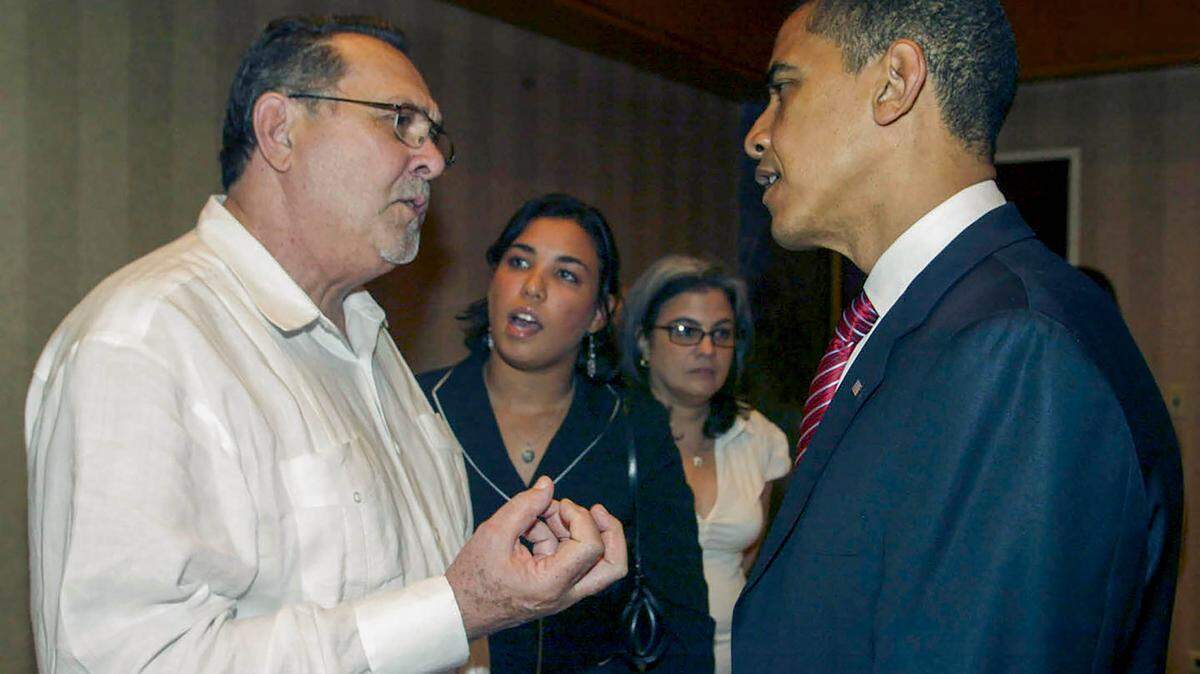
Héctor Palacios Ruiz, a prominent former political prisoner and one of the first dissidents who broke with Fidel Castro’s revolution to create an opposition movement in Cuba, died in Miami on Saturday. He was 82.
For years, Palacios had battled cancer and several other illnesses – including several strokes and heart disease – stemming from his time in prison due to his political activities in Cuba, including months of isolation in a tiny walled-up cell, relatives said.
He was one of the 75 well-known dissidents who were incarcerated during a government crackdown in 2003 known as the Black Spring, accused of treason. He was sentenced to 25 years, but was released in 2007 due to mounting international concern for his poor health.
At a time when publicly opposing the Cuban government was perceived as quixotic and dangerous by most of the population, Palacios, along with other prominent figures like the late Oswaldo Paya, the late Vladimiro Roca, and Martha Beatriz Roque, embarked on what would be decades of trying to foster an opposition movement inside the island.
“Palacios is part of the original group of founders of the civic and political opposition in Cuba, with an immense level of prominence,” said opposition leader Manuel Cuesta Morúa from Havana. “For several years, he was president of the Democratic Solidarity Party, the largest Liberal-leaning party in the country, with representation in almost every province. For a long time, he played an important role in [opposition] projects such as Concilio Cubano in 1995 and Todos Unidos in 1999, and, along with Oswaldo Payá, he was one of the driving forces behind the signature collection for the Varela Project.”
After leaving the Communist Party and his position as director of a state music agency in the late 1980s, Palacios headed the Democratic Solidarity Party and was one of the leaders organizing Concilio Cubano, Cuban Council, a coalition of about 140 dissident groups and human rights organizations that showed Cuban authorities that opposition was gaining momentum.
Along with the “Homeland is For All” declaration penned by Roca, Roque and the Varela Project, the plebiscite initiative spearheaded by Payá, Concilio Cubano was one of the most serious efforts by Cuban dissidents to coalesce early on around a platform of political goals, including a general amnesty for all political prisoners, free and direct elections and economic freedoms.
But the government arrested many participants, including Palacios ahead of their planned big gathering on Feb. 24, 1996. That day, the Cuban government shot down two civilian U.S. planes flown by members of Miami-based Brothers to the Rescue that flew that day from South Florida.
Palacios said the Concilio leadership attempted to have the gathering later that year, but he was arrested in November and then again in January 1997. He was imprisoned while awaiting trial for charges of contempt of the authorities. He was sentenced to 18 months in prison for criticizing Castro – using the word “crazy” to describe him – in an interview with a foreign media outlet. He was released early, thanks to the mediation of Pope Jean-Paul II, who visited Cuba in January 1998.
Palacio’s efforts faced the same challenges that members of the opposition in Cuba experience today: how to unify dissident groups, connect them to the broader population, build alliances with exile organizations and navigate shifting U.S. policies, all in an effort to mount a successful opposition to the six-decade communist rule on the island.
Palacios served as the secretary of Todos Unidos, All United, a coalition of dissident groups created in 1999. A sociologist, he also founded the independent Center for Social Studies and turned his Vedado apartment into a library where activists were exposed to the political writings and other books by Czech dissident and late President Vaclav Havel, Morúa said.
None of those organizations were allowed to function legally, as the Cuban government bans independent civic or political organizations, and state security agents were at times able to infiltrate them.
An affable six-foot tall “guajiro” — Cuban slang for peasant — “he was a full time activist. You could count on him at any time,” said Juan Adolfo Fernandez, one of the 75 dissidents imprisoned in 2003 who knew Palacios well. María Elena Alpizar, an independent journalist and one of the founders of the Ladies in White movement, a group of female relatives of political prisoners, called him “a great anti-communist Cuban patriot,” in a publication lamenting his death.
But he also took positions that made him unpopular at times and created controversy among peers and exiles in Miami, such as supporting President Barack Obama´s policy of engagement with Cuba. “We must engage in dialogue; this policy of isolation is what the Cuban government wants,” he wrote in a letter he sent to Obama. He also told U.S. legislators that the amount of U.S. foreign aid reaching dissidents on the island was minimal.
He met with then-Senator Obama during a campaign stop in Miami in 2008, after Cuban authorities let him travel to seek medical treatment in Spain. Palacios told the Miami Herald at the time that he welcomed Obama’s ideas to ease travel and remittances to Cuba, which he advocated for in a congressional hearing that same year.
“What Obama intends to do about Cuba includes many things that I share,” Palacios said. “This is not the moment to fence in the people of Cuba. This is the moment to open the doors so Cubans and Americans can go there. We cannot subject the people of Cuba, after 50 years of war, to one more war and we cannot continue killing each other. Changes in Cuba are taking place and people have not realized this. Fidel Castro is no longer there but the people are and the people are stronger than ever.’’
Palacios resisted pressure by the Cuban government to go into exile and returned to the island after having received medical treatment in Spain and after visits to Miami and European countries, where he advocated for the release of political prisoners and democratic change on the island.
He told el Nuevo Herald at the time: “I’m returning to Cuba first because I’m Cuban, and second because I’ve earned the right. I’ve fought and suffered enough for my homeland.”
He continued his opposition work and remained a spoken critic of the Raúl Castro government, warning that the Cuban ruler couldn’t bring meaningful reforms to the island.
After a life under constant surveillance and harassment by Cuban state security, he finally went into exile in 2014. He became a U.S. citizen and lived a quiet life in Miami, his liberal views at times unpopular among Cuban exiles who have increasingly aligned with the Republican Party and its hawkish Cuba policies.
“Palacios advocated for more avenues for exchange and more opportunities between Cuba and the United States as a way to foster a democratic transition, especially a peaceful one,” Morúa said. “Once the idea of doubling, tightening, and increasing sanctions and making them more radical began to gain much more traction, this led to his losing media coverage in the United States and presence among others in Miami who advocate for this same approach.”
In 2014, Palacios told el Nuevo Herald that the dissident movement’s main challenge remained the same: forging a broader “connection with the Cuban people, the only one who can change the situation on the island. Until those people have faith in the opposition, and at the same time, the opposition educates them for change, it won’t happen.”
Born in a humble family of farmers in El Escambray, the mountainous enclave in central Cuba, he wanted his ashes scattered there in a free Cuba, his relatives say. He is survived by his three children, Frank, Héctor Mario and Odalys Palacios, and two grandchildren.