
Rubio says Cuba failed to cooperate with U.S. on counter-terrorism efforts last year
Secretary of State Marco Rubio blacklisted Cuba on Tuesday as a country that did not fully cooperate with U.S. counterterrorism efforts in 2024 and blasted the government in Havana for its refusal to discuss the return of people residing on the island who are charged in the U.S. for various crimes.
The State Department said in a statement there are 11 wanted fugitives harbored in Cuba, some facing terrorism-related charges, and the Cuban government “made clear” it was not willing to discuss their return to face justice in the United States.
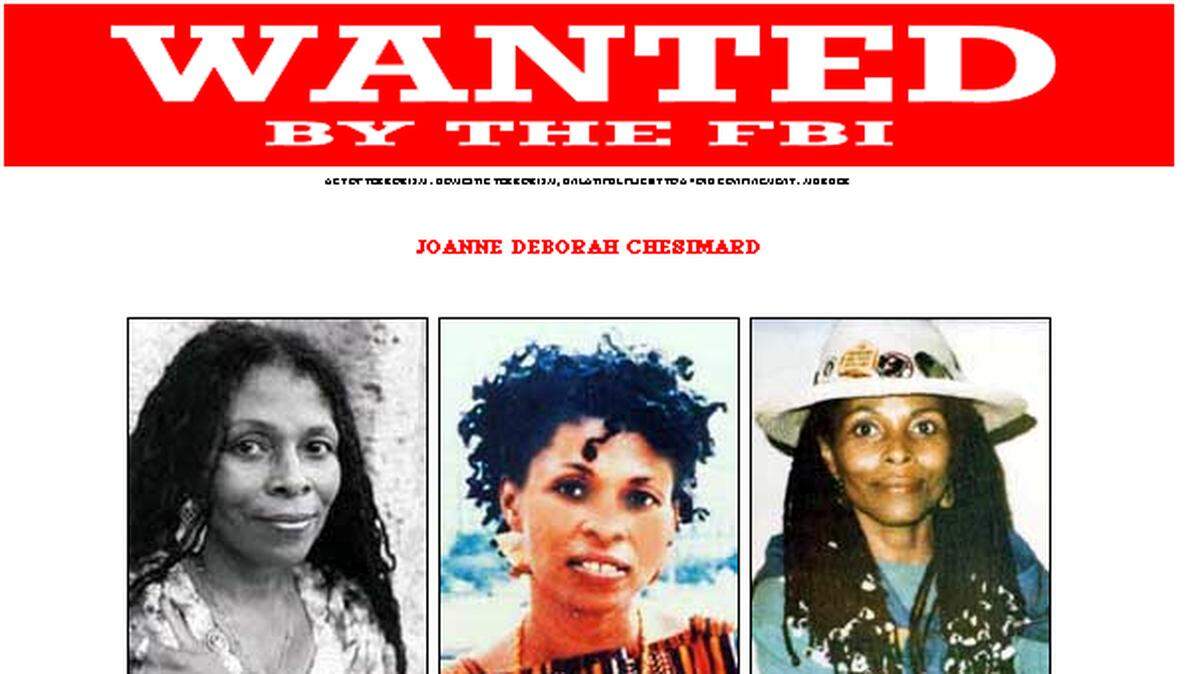
Among those are William Morales, a bomb maker for a militant Puerto Rican group that bombed a New York tavern in 1975, killing four, and Joanne Chesimard, known in Cuba as Assata Shakur, convicted for killing a New Jersey state trooper in 1973. They both escaped from prison in the U.S., eventually fleeing to Cuba, where Fidel Castro gave them refuge.
The State Department said that Cuba’s refusal to engage on the issue and unspecified “other recent circumstances” indicating non-cooperation on law enforcement matters related to terrorism made efforts to cooperate with Cuba on counterterrorism issues “futile” in 2024.
“As Secretary Rubio stated, the regime in Cuba is an enemy of humanity,” a senior State Department official said. “Today’s certification that Cuba is not fully cooperating with U.S. counterterrorism efforts is further proof that the Trump Administration will not turn a blind eye on countries that provide safe haven to U.S. fugitives of law.”
The secretary of state’s annual certification to Congress of a list of “not fully cooperating countries” on counterterrorism efforts prohibits the sale or license to export defense articles and services to such nations.
Even if they are two separate designations, the certification of Cuba as “not fully cooperating” signals the country is also likely to remain designated as a state sponsoring terrorism in the foreseeable future.
On his first day in office, President Donald Trump rescinded his predecessor’s last-minute decision to remove Cuba from the State Department’s list of states that sponsor terrorism. President Joe Biden delisted Cuba as part of a deal brokered by the Vatican in exchange for Havana freeing dozens of political prisoners. That deal has since falled apart after Trump took office and Cuba stopped releasing political prisoners. Cuba also recently sent back to prison two prominent dissidents.
Cuba’s brief removal from the list of state sponsors of terrorism was preceded by a May decision last year to no longer blacklist Cuba as “not cooperating fully” with anti-terrorist efforts.
In taking such a step, Biden administration officials said Cuba’s “refusal to engage” with Colombia on extradition requests for National Liberation Army, or ELN, guerrilla members who were in Havana for peace talks had “supported” Cuba’s certification in 2022. But in August 2022, Colombian President Gustavo Petro ordered his country’s attorney general to suspend the arrest warrants against 17 ELN commanders, including those in Cuba. “Moreover, the United States and Cuba resumed law enforcement cooperation in 2023, including on counterterrorism,” a State Department spokesperson said at the time.
Rubio, then a U.S. senator, criticized the administration, declaring at the time, “President Biden is making it abundantly clear he wants to remove the Cuban dictatorship from the list of state sponsors of terrorism.” As secretary of state he has vowed to implement “a tough Cuba policy.”
In addition to Cuba, Rubio has also determined that North Korea, Iran, Syria, and Venezuela do not fully cooperate with the United States on counterterrorism measures.
This story was originally published May 13, 2025 at 10:01 AM.