
Giménez calls for sanctions against countries that do not pay Cuban doctors directly
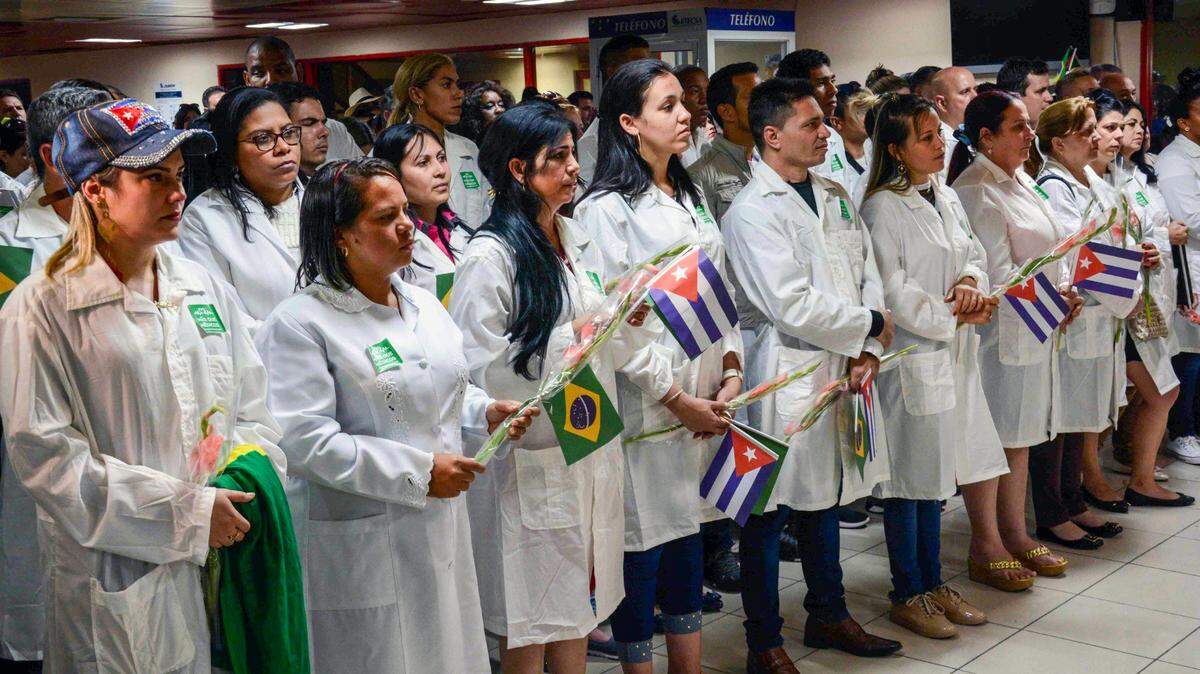
Florida U.S. Rep. Carlos Giménez has asked Secretary of State Marco Rubio to impose financial sanctions on foreign governments that have hired doctors from Cuba in official medical missions, as part of a renewed effort to cut the island government’s revenues.
“I strongly urge you to take immediate action by working with officials in the Trump administration to impose additional financial sanctions on countries that continue to engage with the Cuban dictatorship in these forms of exploitative medical missions,” he wrote in a letter sent Monday. “These countries are complicit in supporting a regime that practices slavery.”
Medical missions are one of Cuba’s largest sources of foreign revenue because the government is believed to keep most of what other countries pay for the doctors’ services, in a system controlled by Comercializadora de Servicios Médicos Cubanos, SA, a company under the Ministry of Public Health, and to a lesser extent, Antex S.A., a company controlled by the Cuban military.
Cuba has more than 26,000 doctors and nurses working in 55 countries “while the Cuban regime pockets over $4.9 billion a year,” the State Department’s Bureau for Western Hemisphere affairs recently said.
Echoing the complaints made by Cuban doctors in lawsuits and media accounts, Giménez said the healthcare personnel on these missions face “exploitative working conditions” while the Cuban government pockets much of what the foreign governments pay in salaries.
“I understand some countries face healthcare challenges,” Giménez wrote in his letter, but he added that nations already relying on those missions should pay the doctors directly “or otherwise face the full weight of U.S. tariffs and sanctions.”
Cuban doctors who have defected from missions in Brazil and Venezuela said that they did not know how much the foreign government paid for their work at the time because they were not paid directly but through Cuban entities working as intermediaries. These entities paid the Cuban doctors a small fraction of what the foreign government paid Cuba. During their time overseas, doctors have said those in charge of the mission withheld their passports and restricted their movements. A fraction of what they were paid was deposited in Cuba, out of reach unless they completed the mission and returned to the island.
Some critics have also said the doctors were used in propaganda and voter mobilization efforts to boost the chances of Venezuela’s socialist government and were pressed by superiors to inflate patients’ treatment numbers.
The U.S. State Department has found those practices problematic and, since 2020, has labeled the missions as “forced labor” in its human-trafficking report.
Last month, Rubio expanded visa restrictions on Cuban and Venezuelan officials involved in the Cuban medical missions overseas to include foreign officials. The move prompted push-back from Caribbean nations that have relied on the missions during the COVID-19 pandemic, and to fill the gaps in their healthcare system.
In a joint press conference during Rubio’s tour to the Caribbean last month, Jamaica’s prime minister praised the Cuban doctors, which he said had been helpful to fill a lack in health personnel.
“We are, however, very careful not to exploit the Cuban doctors who are here. We ensure that they are treated within our labor laws and benefit like any other worker. So any characterization of the program by others certainly would not be applicable to Jamaica,” Prime Minster Andrew Holness said.
While avoiding antagonizing the prime minister standing beside him, Rubio stressed the United States does not have a problem with Cuban doctors providing medical assistance to other countries.
“Every country operates their program differently, and obviously, because of our relationship with Jamaica we’re going to engage with them on that and have a better understanding,” he said. “Perhaps none of this applies in the way it’s handled here. But generally that’s the problem with the program. It’s not that they’re Cuban doctors; it’s that the regime does not pay these doctors, takes away their passports, and basically it is in many ways forced labor.”
The contracts between foreign governments and the Cuban entities handling the missions are not public, and neither are the contracts between those entities and the Cuban doctors themselves, making it difficult to assess whether the doctors are being paid fairly on each case. The State Department has been pushing for more transparency and the publication of contracts.
In Brazil, Cuban doctors in the defunct Mais Medicos program were paid less than a third of what was paid to doctors of other nationalities in the same program, according to documents obtained by the Brazilian press. Only a fraction of the money was paid directly to the doctors, who had to return to the island to get paid the rest. Cuban authorities also denied doctors the right to have their minor children with them even though Brazil granted them temporary residency.
The Cuban government contends that all the allegations are false and that the revenue brought by the missions is reinvested in the public health system. But Cuba’s once-praised healthcare system has crumbled in recent years after the government diverted investments from social services to build hotels, and shortages of medical supplies, medications and specialists have significantly diminished the standard of care.
In a recent publication on X, Cuban leader Miguel Díaz-Canel said: “The U.S. State Department should explain to Americans and the international community how much the attack on Cuban medical services, on which the health of millions of people in dozens of countries depend, aggrandizes their country.”
This story was originally published April 7, 2025 at 2:30 PM.