
Cuba frees prominent dissident leader José Daniel Ferrer as part of deal with the U.S.
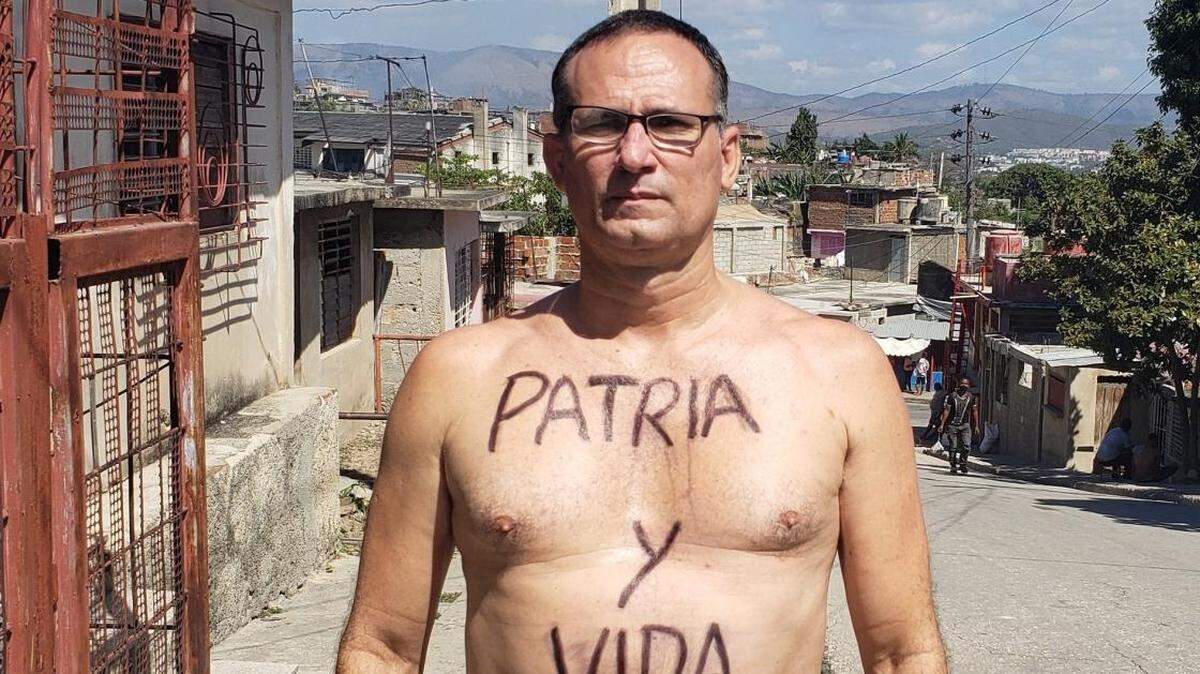
Cuban authorities on Thursday released prominent opposition leader José Daniel Ferrer, who had been in prison since 2021, as part of a deal cut with the Biden administration and the Vatican.
“I feel pretty good despite having spent years in truly terrible conditions, suffering beatings, extreme situations, illnesses and isolation,” Ferrer told the Miami Herald from his home in Santiago de Cuba, the island’s second-largest city.
“I am fired up with courage to continue fighting, to continue giving my humble but firm and determined contribution to the cause for freedom, democracy, respect for human rights and the end of hunger, misery, extreme poverty in which the tyranny has engulfed our country,” he added.
Ferrer said a group of officials and judges who told him he was about to be freed presented him a document listing the terms for his conditional release that he refused to sign. He was sent home anyway.
His released was confirmed earlier Thursday by Cuban activist Rosa María Payá, who first spoke to him on his way from the prison to his home on Tuesday morning.
READ MORE: Rubio says Cuba belongs on list of sponsors of terrorism a day after Biden removed it
Ferrer told Payá he was concerned about the fate of other opposition members who were still imprisoned and that the Cuban government was playing both the Biden administration and the Vatican by using the prisoners to get political concessions.
On Tuesday, the White House said it had taken Cuba off the list of countries that sponsor terrorism and lifted sanctions on Cuban military companies to facilitate a deal brokered by the Vatican with the Cuban government to release political prisoners. The Cuban government said it would release 553 prisoners as a gesture to Pope Francis.
“I am very embarrassed by the attitude of the Biden administration and the Vatican,” Ferrer told the Herald. “Once again they allow themselves to be used by the tyranny.
“Giving oxygen to a regime complicit in what is happening in Venezuela, in Nicaragua, that publicly supports Putin’s invasion of Ukraine, that openly sympathizes with Hezbollah, with Hamas, with the Iranian regime, with North Korea, that should not have happened,” he added.
Without mentioning the political prisoners, Cuban Foreign Minister Bruno Rodríguez said Wednesday that the Biden administration had taken the measures because “the vision to provoke a collapse of the Cuban economy has failed.”
Ferrer said he was concerned the Cuban government was using the prisoners’ release for propaganda.
“It’s shameful because they now want not only applause because they are going to release 553, which I don’t believe is even half of the total number of political prisoners who suffer in extreme conditions and who are about to die at any moment,” he said. “They also want the United States to continue removing [punitive] measures.”
Ferrer, the leader of the dissident organization Patriotic Union of Cuba, was one of the most prominent prisoners the Cuban government had been holding as a political bargaining chip. He had previously been in prison as one of the members of the group of 75 dissidents arrested during the so-called Black Spring in 2003.
In what activists say was a fabricated case because of his political activities against the Communist government, he was confined to house arrest since April 2000, after being accused of allegedly attacking a man. When he got out of his house to join the historic anti-government protests on July 11, 2021, he was immediately arrested. A judge then revoked his conditional release and ordered Ferrer to serve 4 years and 14 days in prison, a time he had already completed last year.
His wife, Nelva-Ortega Tamayo, said he was kept in dire conditions at the Mar Verde prison in Santiago de Cuba. He was held incommunicado for several months at a time. Privately, U.S officials had warned Cuban authorities of consequences if they let Ferrer die in prison.
Groups that monitor political prisoners said authorities have released 44 political prisoners so far, most of them convicted for joining anti-government demonstrations on July 11, 2021. Luis Robles, 32, who was arrested in 2020 and sentenced to five years for walking alone on a Havana street holding a sign that said “No more repression,” was released Thursday, according to the group Justicia11J.
Activists have expressed concerns that the people had not been pardoned but were granted parole and given several conditions to meet, or they could be sent back to prison.
There have been fears that authorities could include ordinary prisoners in the group of those released or backtrack on the deal if the incoming president, Donald Trump, re-imposes the measures Biden lifted.
On Wednesday, in his confirmation hearing for secretary of state, Florida Sen. Marco Rubio said he had “zero doubt” that Cuba should be included in the list of countries that sponsor terrorism and that the new Trump administration was not “bound” by Biden’s last-minute deals.
But Ferrer’s release Thursday suggests the Cuban government is trying to seize an opportunity and send a signal to the new administration that it is serious about improving relations, as the island’s economy continues to collapse. It also suggests that, like other governments around the world, Cuban leaders are fearful of what a Trump administration packed with hardliners and a Cuban American as its top diplomat could do.
“The Trump administration and Marco Rubio are just about to be in office. The dictatorship is scared,” said Ferrer’s brother, Luis Enrique Ferrer. “It’s a day of happiness, but the happiness is not complete until the other political prisoners are released and we end the dictatorship.”
This is a developing story. It will be updated.
This story was originally published January 16, 2025 at 12:49 PM.