
Cuba’s Communist Party fires another senior official close to leader Díaz-Canel
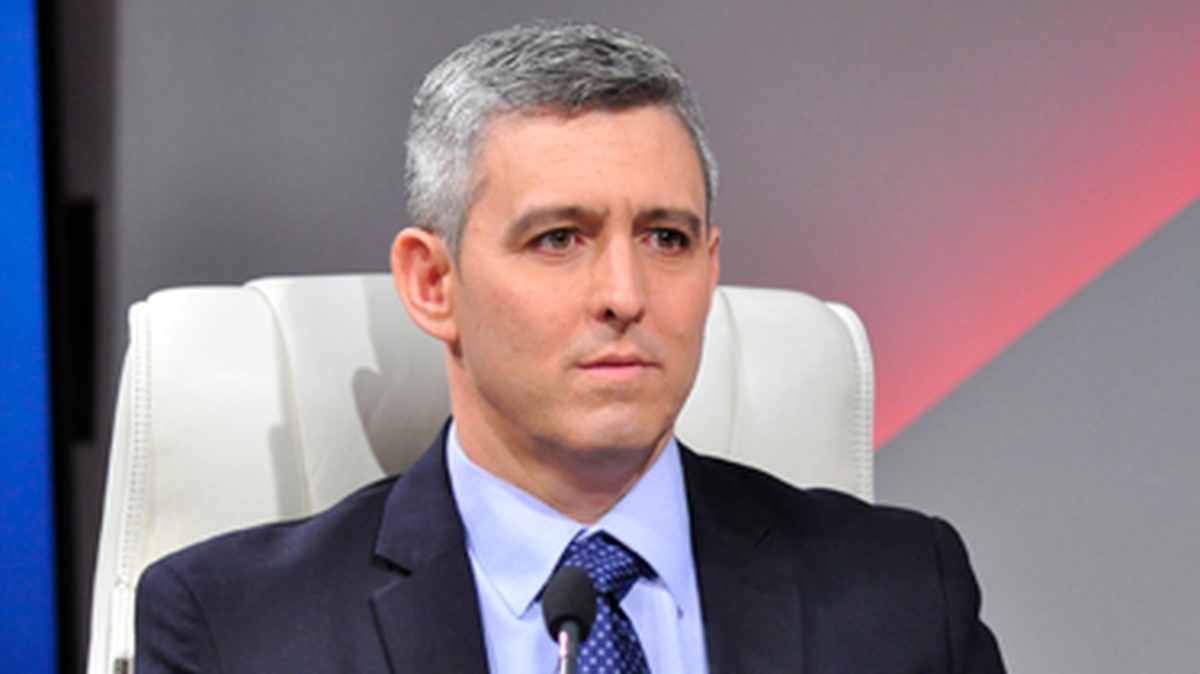
Cuba’s Communist Party sacked Vice Prime Minister Jorge Luis Perdomo Di-Lella, a close ally of Cuban leader Miguel Díaz-Canel, amid an anti-corruption campaign targeting private businesses.
According to a brief note published in the party’s newspaper Granma, Perdomo Di-Lella, appointed in 2021, was demoted because he made “mistakes in performing his duties.” The government named Eduardo Martínez Díaz, the minister for Science, Technology and Environment, as his replacement.
The decision seemed to have been taken swiftly, likely surprising the vice prime minister, who on Monday morning had been posting the typical propaganda content that regularly appears on the social media accounts of Cuban government officials.
At 53, Perdomo Di-Lella, an engineer like Díaz-Canel who previously headed the Ministry of Telecommunications, was one of the youngest senior government officials on the island, where Raúl Castro, 93, still rules despite having no official title.
According to the note, Cuba’s Council of State made the decision “at the proposal of the President of the Republic and with the prior approval of the Political Bureau of the Central Committee of the Communist Party of Cuba.”
Perdomo Di-Lella is the second senior government official close to Diaz-Canel who has been fired due to alleged questionable links with private business. The influence of Diaz-Canel, Cuba’s handpicked president and first secretary of the Communist Party, is widely believed to be limited by old-guard hardliners and the country’s powerful military.
In March, the government announced an investigation of Alejandro Gil, who had been “released from his duties” as economy minister a month before. Without providing concrete legal charges, Díaz-Canel suggested in a statement that Gil, another close friend, was accused of corruption. There has been no public information about Gil’s fate, but the Herald reported at the time he had been detained in connection with the arrest of a private entrepreneur who owned a successful business in the city of Ciego de Ávila.
Perdomo Di-Lella’s fall might also be tied to the government’s crusade to rein in the private sector, which the country’s prime minister has accused of tax evasion and other illegalities.
The backdrop of his dismissal is a months-long investigation of the business deals of his brother, Yoel Perdomo Di-Lella, with the company Frutas Selectas and other enterprises belonging to the Ministry of Agriculture, a source who asked for anonymity to discuss details of the case told the Miami Herald.
Yoel Perdomo Di-Lella, who previously worked in several profitable state enterprises, according to an investigation published by independent news outlet Cubanet, runs an online supermarket, Tuambia.com, to deliver food in Cuba. Tuambia.com, which is registered with the Cuban Ministry of Economy as a private enterprise, appears to be the focus of the investigations, the source said.
Perdomo’s dismissal adds to Díaz-Canel’s troubles. His leadership took another hit last week when Cubans questioned the government slow response to help residents affected by Hurricane Oscar in western Cuba. In a tour of the affected areas that aimed to show Díaz-Canel in charge and caring for the victims, he dismissed a woman who said she had had no water to drink for days, saying “what happened here was nobody’s fault.
The setback came just days after the entire country’s electrical grid collapsed, adding a total outage to his record in office, already marked by the worst economic crisis in several decades, the mass migration of more than a million people and the imprisonment of hundreds of anti-government protesters.
Over the weekend, social media accounts linked to the Cuban government published content to prop up the profile of Ines María Chapman, another vice prime minister who was the first high-ranking official to tour Guantánamo, the eastern province affected by the hurricane.
But Cuban longtime opposition leader Martha Beatriz Roque told the Herald from Havana that she didn’t believe the failure of the electrrical grid would be the final straw that would prompt the Communist Party to remove Díaz-Canel.
“’Imperialism is to blame for what happens here.’ That’s what they say,” said Beatriz, referring to the main excuse, the U.S. embargo, used by the government to justify the problems on the island. “Here, all leaders are exempt from being responsible for what happens in the country.”
This story was originally published October 29, 2024 at 5:06 PM.