
Did U.S. let Cuban pilot linked to Brothers to the Rescue shoot-down move to Florida?
A former Cuban air force MiG pilot allegedly linked to the 1996 shoot-down of two civilian planes over the Florida Straits that killed four Miamians used a humanitarian parole program to settle in Florida recently, stirring controversy and calls on U.S. authorities to investigate how he was allowed to come to the U.S.
Luis Raúl González-Pardo, a retired colonel from the Cuban air force who ran one of Havana’s airport terminals, was granted parole under a program set up by the Biden administration last year to benefit migrants from Cuba, Venezuela, Haiti and Nicaragua. He arrived in the U.S. in April and currently lives in Jacksonville, said Luis Domínguez, a researcher who regularly tracks the whereabouts of former members of the Cuban government.
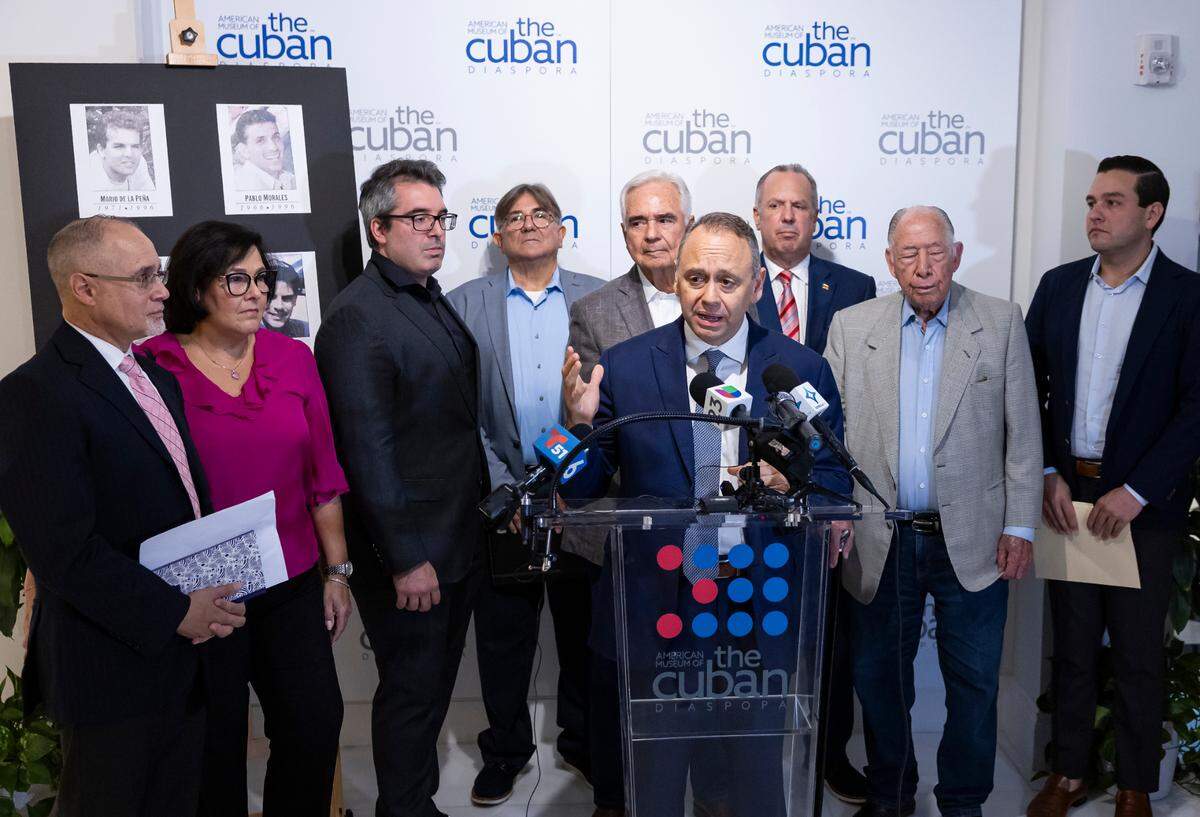
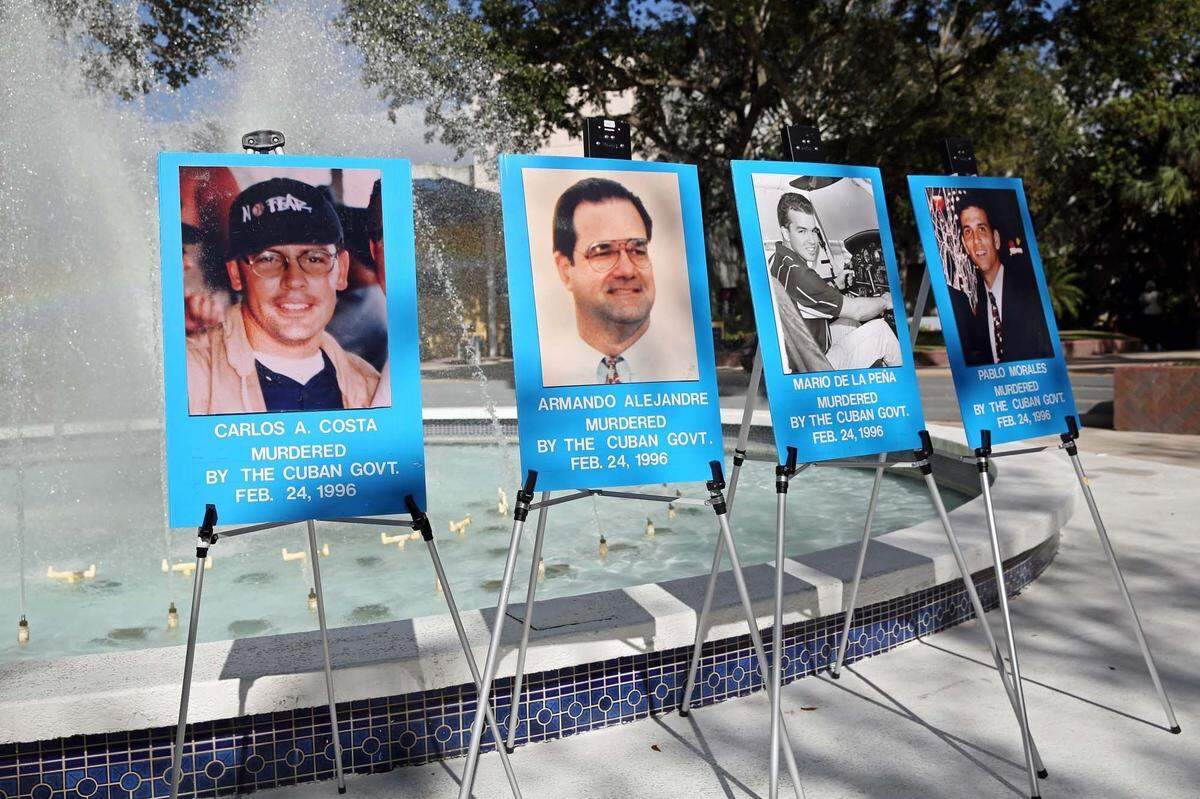
Activists and survivors of the incident suspect González-Pardo was one of the pilots of two Cuban MiGs that chased three small civilian aircraft belonging to the Cuban exile organization Brothers to the Rescue on Feb. 24, 1996. The MiGs eventually shot down two of the planes, killing American citizens Carlos Costa, Armando Alejandre, Mario de la Peña and a U.S. resident of Cuban origin, Pablo Morales.
Republican U.S. Sens, Marco Rubio and Rick Scott of Florida and U.S. Reps María Elvira Salazar and Carlos Giménez from Miami-Dade wrote a letter Tuesday asking Secretary of State Antony Blinken and Homeland Security Secretary Alejandro Mayorkas to “immediately review and revise the procedures used” by those agencies to determine who would be granted humanitarian parole or visas.
“We write with serious concern about the Biden-Harris Administration’s decision to grant parole to Cuban Revolutionary Air Force Colonel Luis Raúl González-Pardo Rodríguez,” who is “notoriously linked” to the Brothers to the Rescue incident in 1996, the letter said. Calling the decision a “negligent oversight,” the members of Congress said that “former Cuban regime officials involved in the oppression of innocent Cuban citizens or the transnational persecution of Cuban-Americans… should not be allowed to continue to remain in the United States.”
A State Department spokesperson said “visa records are confidential under U.S. law; therefore, we cannot discuss the details of individual visa cases.” The Department of Homeland Security did not immediately reply to a Miami Herald request for comment.
In 1998, two years after the attack, federal authorities arrested several members of a Cuban spy network operating in the U.S. The network’s leader, Gerardo Hernández, was convicted for conspiring to kill the Brothers to the Rescue pilots. He was returned to Cuba in 2014 as part of a prisoner swap.
In 2003, a U.S. grand jury indicted Gen. Ruben Martínez Puente — who headed the Cuban air force at the time of the incident — and the two pilots of one of the Cuban MiGs, Lorenzo Alberto Pérez-Pérez and Francisco Pérez-Pérez, for the murder of the four men. Raúl Castro told Cuban reporters he had given the order to shoot down the planes.
But the identity of the pilot of the second Cuban aircraft has remained in doubt.
Cuba claimed that the civilian planes had been shot down over Cuban airspace. On previous flights Brothers to the Rescue, which said it monitored the Florida Straits for rafts and small boats carrying Cubans headed to the U.S., had released leaflets over Cuba.
But an investigation by the International Civil Aviation Organization commissioned by the United Nations concluded that the shootdown happened in international waters. Dominguez, the researcher, believes González-Pardo chased the aircraft piloted by Jose Basulto, the leader of Brothers to the Rescue, the only plane that escaped that day. That pilot was only identified with a number, 22, in transcripts of the Cuban planes’ communications. Domínguez declined to say how he learned of González-Pardo’s involvement.
Orestes Lorenzo, a former Cuban military pilot who deserted to Florida in 1991 and later flew back to Cuba to rescue his family, told the Herald that González-Pardo, a former classmate, told him on a WhatsApp message earlier this month that he was one of the Cuban pilots involved in the incident.
“I asked him if he was the one chasing Basulto and he replied yes, that he was the one who had chased him that day,” Lorenzo said.
The Herald did not independently verify the allegations. González-Pardo’s previous phone number has been disconnected. He did not reply to a message sent through Facebook.
In a brief phone conversation reported by Martinoticias, a U.S. government media outlet, González-Pardo denied the accusations, calling them “false.” His arrival in the U.S. was first reported by Cuban news outlet Periódico Cubano.
González-Pardo had previously visited the United States in 2017 and 2019. Lorenzo said he asked the State Department to extend González-Pardo’s visa so he could attend a gathering of Cuban pilots he hosted at his home in July 2017. According to Lorenzo, González-Pardo said during that gathering that the pilots who downed the Brother to the Rescue’s Cessnas “were just following orders.”
“That was a big disappointment,” he said.
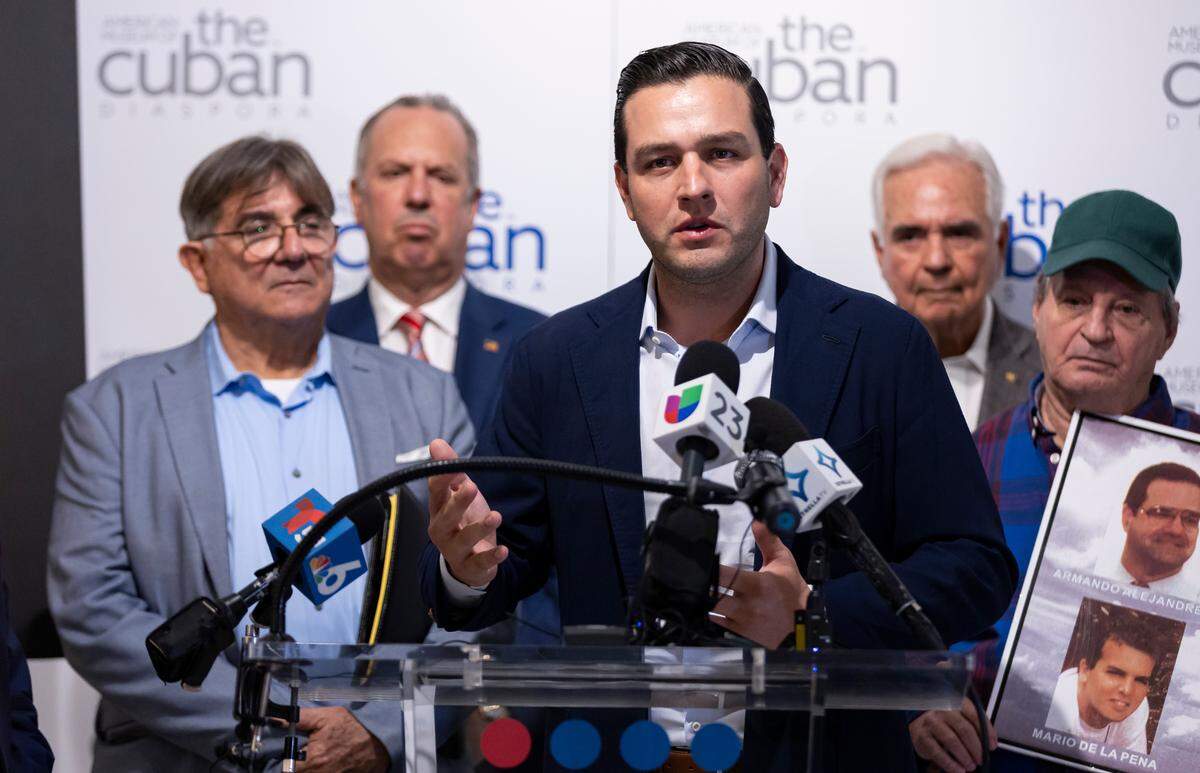
Basulto told the Herald he also was “disappointed” with the U.S. government’s decision to allow González-Pardo to come to the United States. He said he did not previously know of his alleged role in the Brother to the Rescue incident.
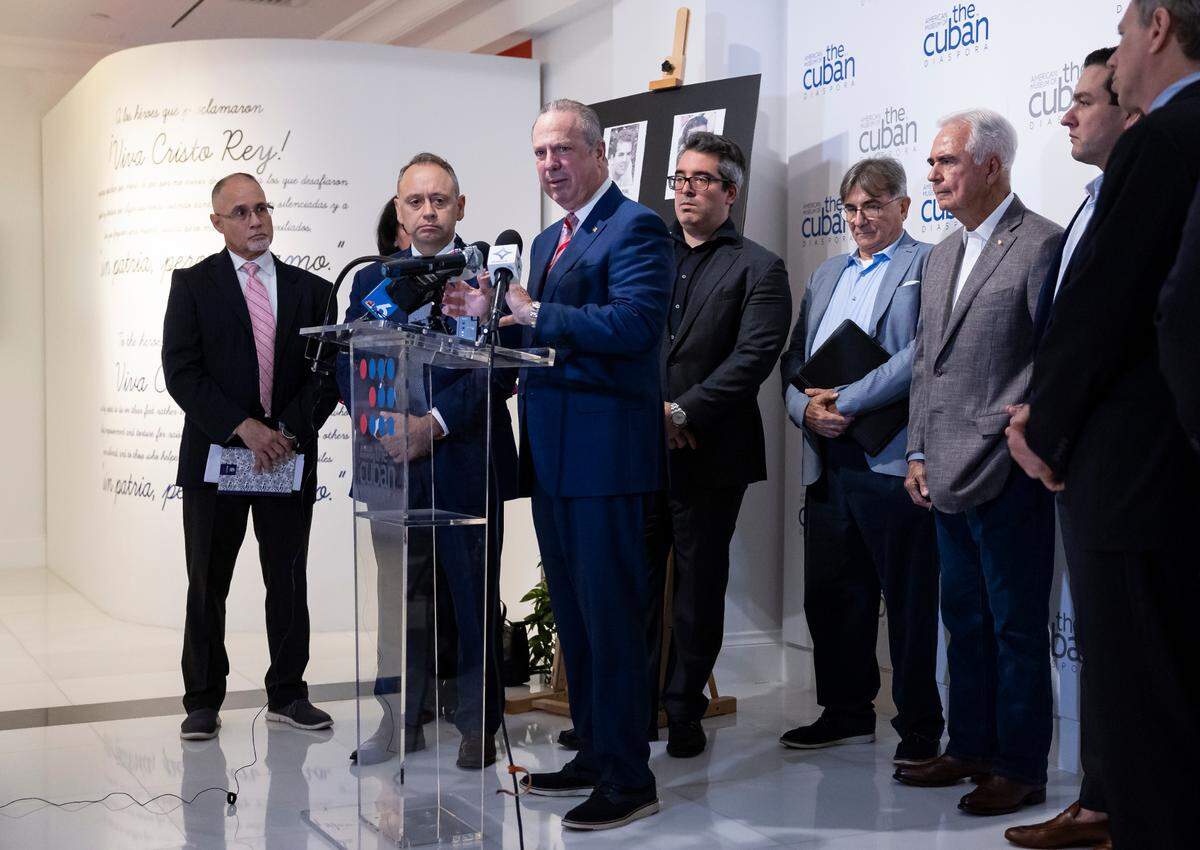
Basulto and two other survivors who were on the plane that day, Sylvia G. Iriondo y Arnaldo Iglesias, also urged Blinken and Mayorkas in a letter to open an investigation into how González-Pardo was allowed into the country and “whether his connection with the Brothers to the Rescue attack was fully disclosed.”
A group of Cuban American lawyers is urging Florida state attorneys to open an investigation into González-Pardo’s role in the Brothers to the Rescue incident or hold him as a witness in an probe targeting Raúl Castro.
“We’re not calling for anybody’s conviction. This is not Castro of Cuba,” said Marcell Felipe, one of the lawyers involved and the leader of the organization Inspire America. “We’re calling for an investigation so that he can answer these questions under oath.”
This story was originally published September 24, 2024 at 1:49 PM.