
People who repressed dissidents in Cuba are moving to the U.S., human-rights group says
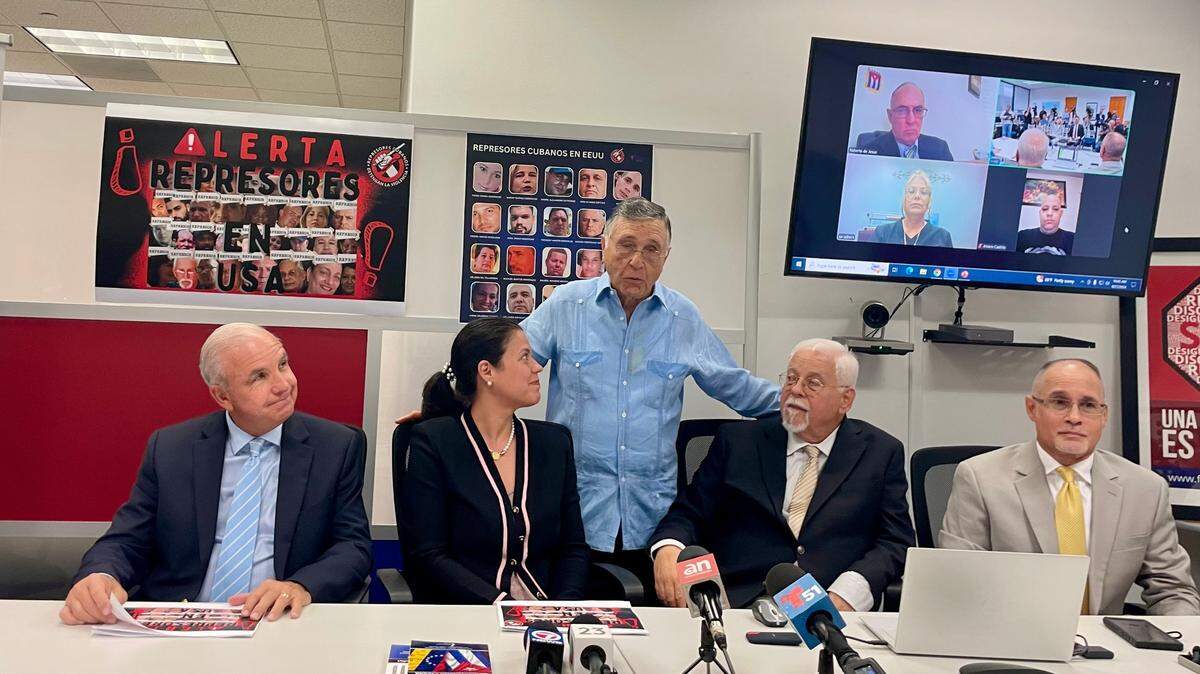
Former members of the Cuban regime who have been involved in repressing dissidents on the island have abused the immigration system to come to the United States amid a large exodus from the island, activists with a Miami-based human-rights group said Tuesday.
Cuban exile Tony Costa, the director of the Foundation for Human Rights in Cuba, said in a media conference that the organization has built a database of 1,015 members of the Cuban regime who have surveilled, harassed, bullied and imprisoned dissidents, government critics and peaceful demonstrators. Of those, 115 are already living in the U.S., said Rolando Cartaya, one of the organization’s researchers.
Former high-ranking officials in the Communist Party, members of the feared Cuban Interior Ministry, police officers, government attorneys and judges are among the people the organization says have recently arrived in the U.S. and have been identified on the website represorescubanos.com.
They are among the estimated 18% of Cuba’s population that has fled the island in recent years.
The arrival of former high-ranking government officials and members of the state security forces in the U.S. is evidence of the economic debacle on the communist island and could be read as a sign of the regime’s failure to buy political loyalty.
But victims of government repression in Cuba spoke during the media conference in personal terms about what they felt when they encountered some of their former tormentors in the United States.
“These people who repressed us, who beat us are living and enjoying freedom in this great country,” said Elixir Arando, who said two of the people identified by the foundation harassed him during so-called “acts of repudiation” against government critics when he was living in the eastern Cuba province of Guantánamo.
Journalist Roberto Quiñones, whom the Cuban government imprisoned for attempting to cover a trial of a religious couple who wanted to home-school their children, said a judge who denied his appeal is also currently living in the United States.
Deserters from the Cuban government and military have been a common presence in Florida over the years, but the people included in the list compiled by the foundation have not distanced themselves from the Cuban government and might pose a “national security” threat for the United States, some of the victims said during the event.
“These people are infiltrators from the Cuban government to influence opinions, and they are going to be voting to destabilize this country,” Arando said.
Cartaya said the foundation has built the list by investigating tips given by victims of repression, who must sign a notarized statement with the allegations.
Some of the people involved in repression in Cuba have arrived using legal migration pathways, including a new parole program created by the Biden administration that is currently paused due to allegations of fraud.
Santiago Alpizar, an immigration lawyer who spearheaded a similar project to identify people living in the United States who were involved in suppressing dissent in Cuba, said the new parole program is rife for abuse because the people who benefit from it are not asked to disclose involvement in human-rights violations or membership in totalitarian parties when they apply to come to the U.S.
People involved in “oppressing the Cuban people” should be deemed “inadmissible,” according to U.S. laws, said Florida U.S Rep. Carlos Giménez, who was at the press conference. Giménez added he will share the information compiled by the foundation with federal agencies for further investigation.
Giménez and other fellow Florida Republicans complained to the Department of Homeland Security and the State Department for having authorized the arrival of Manuel Menéndez Castellanos, a former member of the Cuban Communist Party’s central committee who flew to Miami earlier this month to join his family.
“If these people have been fighting so long for the regime, they should stay in Cuba,” Giménez said. “We don´t need you here.”