
In rare gesture, Cuba frees imprisoned journalist but forces him into exile in the U.S.
Lázaro Yuri Valle Roca, a Cuban independent journalist who had been imprisoned in Cuba since 2021 because of his reporting, was released Wednesday on the condition that he leave the island for exile in the United States.
Valle Roca arrived at Miami International Airport Wednedsay morning, Normando Hernandez, the director of the Cuban Institute for Freedom of Expression and the Press, told the Miami Herald. He was expected to continue traveling to Philadelphia to reunite with family members after immigration authorities at the airport process his case, Hernandez added.
Valle Roca was arrested in June 2021 after reporting on a protest in Old Havana in which human rights activists threw leaflets with phrases by Cuban independence leaders José Martí and Antonio Maceo. He was sentenced to five years in prison, accused of disseminating “enemy propaganda” and “resisting authorities.”
Hernandez said Valle Roca arrived in the U.S. with a humanitarian parole after Cuban state security officials informed his wife that the authorities would be willing to release him if he left the country for good.
“The negotiations took several months, and the U.S. embassy in Havana facilitated his departure,” Hernandez said. “It was difficult because Yuri didn’t want to leave at first. We are deeply happy about his release; he was a journalist who was unjustly imprisoned, but we repudiate the conditions for his release. It is an exile.”
Hernandez said Valle Roca suffered degrading treatment and isolation at the notorious Combinado del Este prison in Havana and that his health had deteriorated.
The U.S. State Department cited his detention in its 2022 report on the situation on human rights around the world.
“Valle Roca had no communications with his family or lawyer for more than 100 days, and he went on a hunger strike but stopped due to kidney failure,” the State Department report says.
Human-rights organizations estimate that Cuba is holding about 1,000 political prisoners. The United States, the European Union and the Catholic Church have all made diplomatic efforts to convince the Cuban government to release at least some, to no avail. It is unclear if Valle Roca’s release is an isolated event or a signal that Cuban authorities are changing their calculus on the matter. In the past, they have used political prisoners as bargaining chips to negotiate better relations with the U.S. or the EU.
U.S. diplomats have said Cuba’s reluctance to release the political prisoners is the most important obstacle to better relations between the two countries.
“We are aware of media reports indicating the Cuban government released well-known political prisoner Lazaro Yuri Valle Roca today. Immigration records are confidential, and we do not comment on specific cases,” a State Department official said. “As we have stated many times, we strongly urge Cuba to release all unjustly detained political prisoners immediately and without conditions.”
Valle Roca comes from a prominent family whose members first supported Fidel Castro’s revolution but later soured on it after witnessing the mismanagement and human-rights violations committed by Castro’s government.
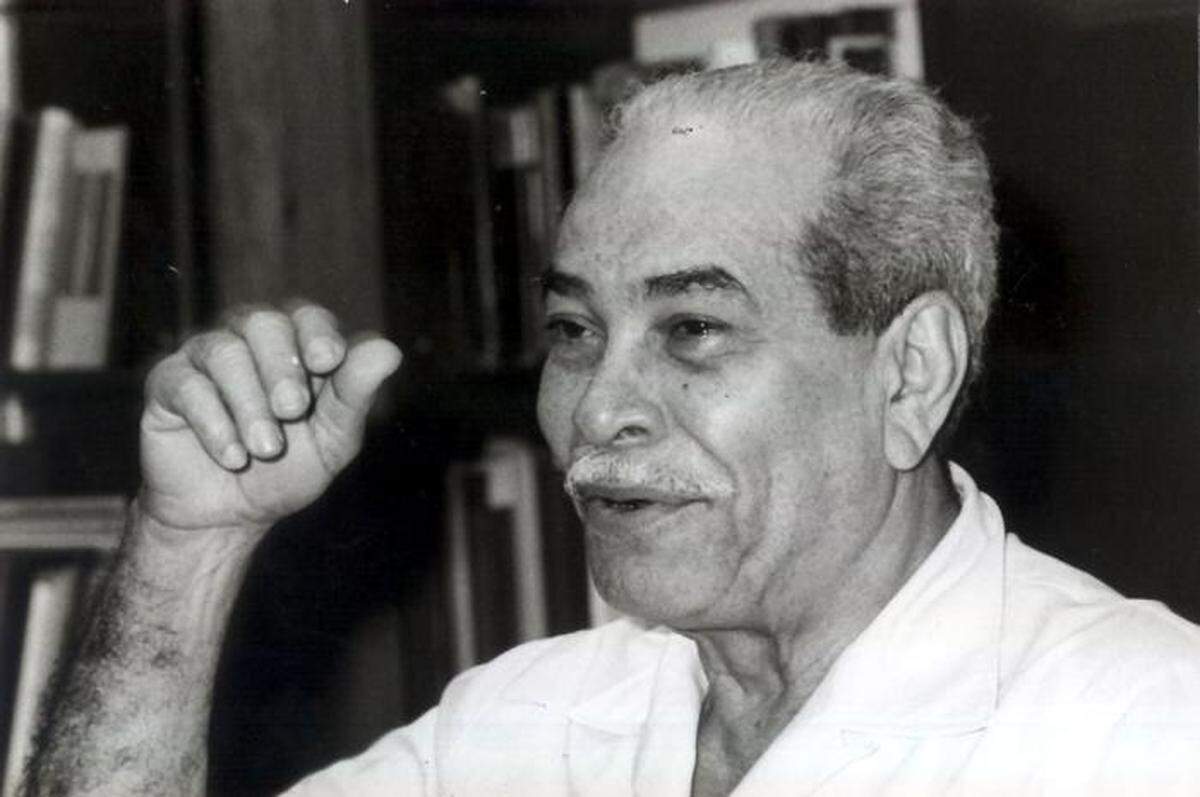
The independent journalist is the grandson of Blas Roca, who had been the leader of the Popular Socialist Party, the communist party founded during the years predating the Cuban Revolution in 1959. After Castro rose to power Blas Roca became the head of the National Assembly and the lead writer of the 1976 constitution.
Vladimiro Roca, Blas Roca’s son and Valle Roca’s uncle, went on to become one of Cuba’s leading dissidents and Castro’s fierce opponent. He died on the island last year.
Valle Roca’s cousin Tania Quintero, also a Cuban journalist who had to seek political asylum in Switzerland in 2003 because of her reporting, said she and her son, independent journalist Iván García, who still lives in Havana, were surprised to hear of their cousin’s exile.
“We would have preferred if they had released him and let him decide if he wanted to leave or stay in the country where his grandparents Blas Roca and Dulce Antúnez and his mother, Lydia Roca, rest. But in a dictatorship like Cuba’s, you can’t always do what you want,” she said. “We hope that Yuri and his wife Eralidis can recover their health and start a new life as exiles in Miami.”
This story was originally published June 5, 2024 at 3:18 PM.