
Biden administration refutes Cuba’s claim that the U.S. ‘supports’ Miami ‘terrorists’
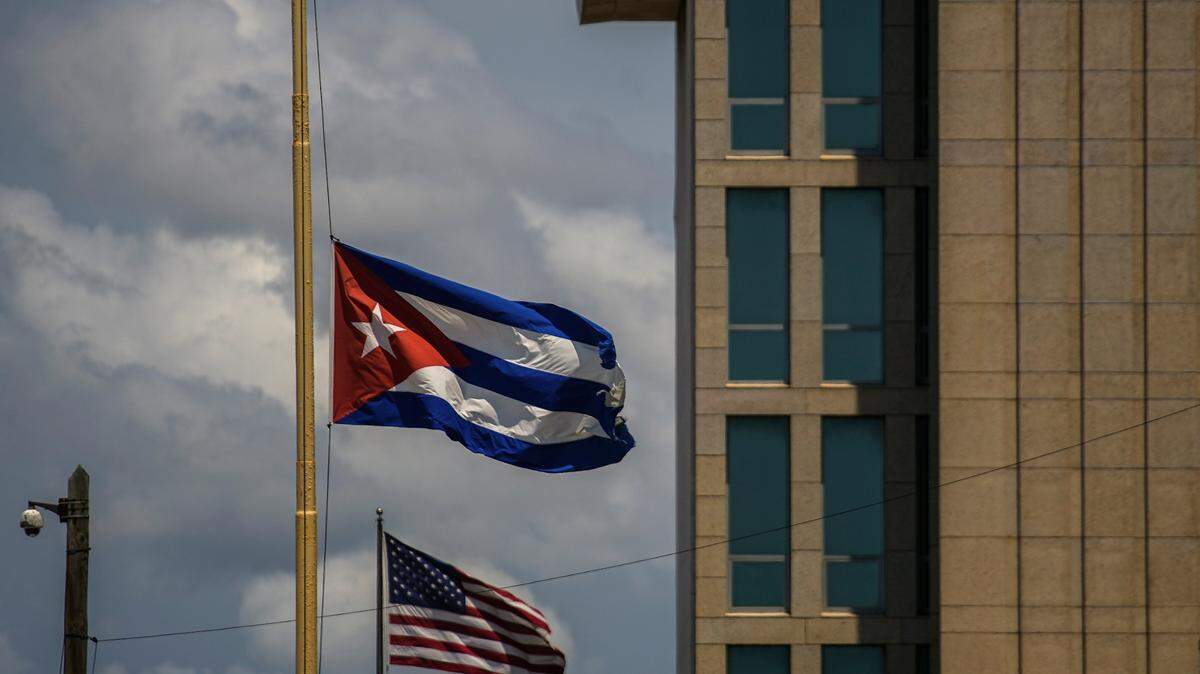
Biden administration officials rejected claims by Cuban authorities that the United States is supporting people in Miami plotting “terrorist” actions against Cuba after Cuban officials again raised the issue during a meeting centered on law enforcement cooperation between the two countries that took place in Washington D.C. earlier this week.
In a statement, the Cuban Ministry of Foreign Affairs said island officials had provided the U.S. with “information…on the activities of people living in the United States, identified by their links to terrorism.”
Last December, the Cuban government published a list of so-called “wanted terrorists,” which includes the names of well-known Miami-based Cuban activists, media personalities and influencers who are critical of the government. At the time, Foreign Minister Bruno Rodriguez accused the Biden administration of being “complicit” in “giving shelter, supporting and protecting” the people they included on the list.
Granma, the Communist Party daily, also accused the U.S. State Department and U.S. intelligence agencies in a December story of plotting violent acts against the communist regime.
A State Department official told the Miami Herald the accusations are baseless.
“We are aware of the list released by the Cuban government,” the official said. “Allegations that the United States is encouraging violent actions against the Cuban government are absurd.”
The list was published soon after the State Department published its Country Reports on Terrorism for 2022, naming Cuba as one of the countries still included on the U.S. list of states that sponsor terrorism.
The State Department official said the list produced by Cuba and the recent allegations are “the newest iteration of Cuban authorities’ efforts to belittle emigrants exercising their freedom of expression, including their freedom to criticize Cuba’s abysmal human rights record and relentless repression.”
Officials from the departments of State, Homeland Securit and Justice, and from the U.S. Embassy in Havana met with representatives from Cuba’s Interior Ministry, the Attorney General’s office, Customs and the Foreign Ministry on Wednesday for the sixth time since 2015 for the U.S.-Cuba Law Enforcement Dialogue.
Those regular meetings have been criticized by human rights advocates who believe they help “normalize” a repressive regime.
“In Cuba there is no rule of law,” said John Suarez, executive director of the Washington-based Center for a Free Cuba. “To keep power, the dictatorship maintains a repressive security apparatus that murders nonviolent dissidents extrajudicially. This is not ‘law enforcement.’ The Cuban dictatorship is a transnational threat, and legitimizing it does not enhance U.S. advocacy for human rights.”
Despite the political frictions, successive U.S. administrations have stressed the value of the talks for U.S. national security, though the two countries put out statements with an emphasis on different aspects of the discussion.
While Cuba used its statement to highlight “the commitment of the Cuban government in the fight against terrorism,” the U.S. version of the meeting paid more attention to the issue of human rights.
“Establishing and increasing channels for law enforcement cooperation to address transnational threats also enhances U.S. advocacy for human rights,” the State Department said in a statement. “The United States integrates advocacy for human rights and human rights protections into all interactions with the Cuban government.”
The State Department official told the Herald the administration is “focused on urging the Cuban government to release the approximately 1,000 unjustly detained political prisoners it holds and to allow its citizens to exercise the full range of human rights as outlined in the Universal Declaration of Human Rights, which Cuba signed.”
This story was originally published February 9, 2024 at 3:29 PM.