
Woman caught at airport with $100,000 from Cuba said she was paid to bring cash to U.S. often
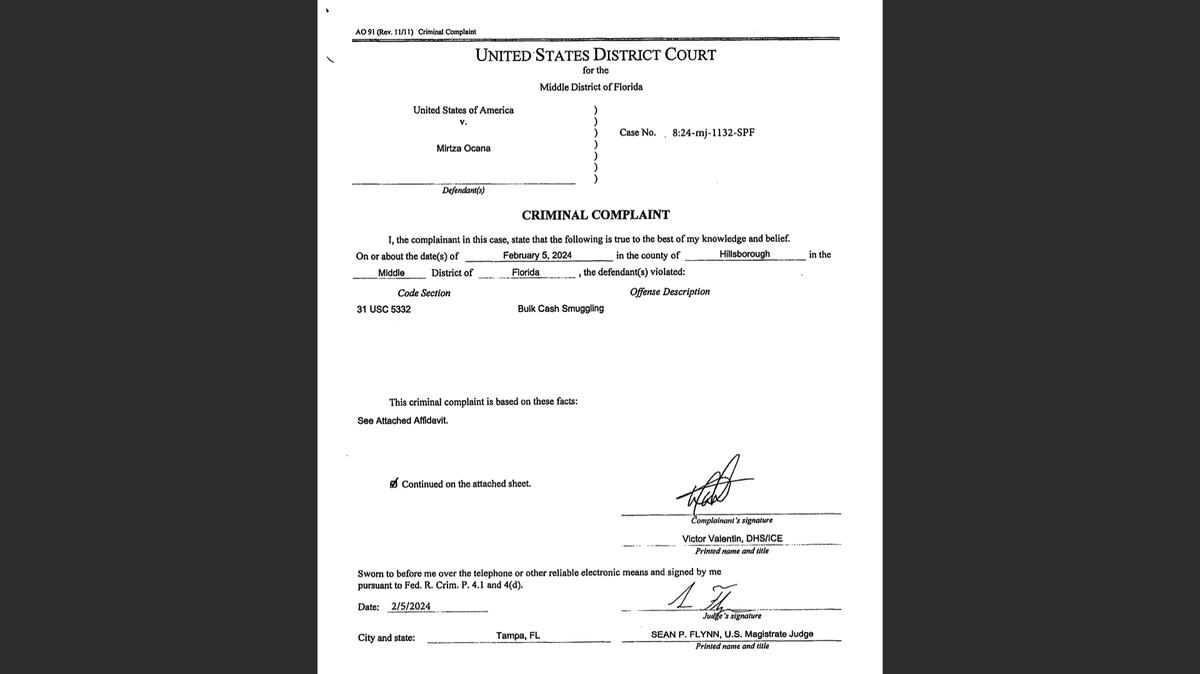
A Cuban-American woman who was arrested at Tampa International Airport and charged with smuggling $100,000 from Cuba earlier this week said she had been paid to bring cash from the island to the United States several times a month, according to a federal criminal complaint.
Mirtza Ocana, 38, a U.S. citizen and Tampa resident who had previously been living in Hialeah, was arrested on Monday at the airport when returning from Cuba after she failed to declare she was carrying more than $10,000 during a routine inspection. It is legal to bring cash into the U.S., but failure to declare quantities over that threshold can result in the seizure of the money, fines and even criminal charges.
Ocana told Homeland Security Investigations agents at the airport that she was carrying about $10,000 from a sale of a house in Cuba, the complaint says. But they recovered $30,000 from three wrapped packages. She told the agents she had been traveling to the island two or three per month since June 2023 to bring dollars to the United States, the criminal complaint says. She also admitted that she knew it was illegal to bring bulk cash into the United States without reporting it.
“She was paid between $1,000 to $2,500 per trip,” the document adds. Ocana had flown 45 times to Cuba since May 2023, according to flight records cited in the complaint.
She told the federal agents she wasn’t carrying any more money than what they had already found, but “during a search of her person” agents recovered another $70,000 in cash hidden in her clothes, the document says.
According to the court records, she was unemployed and does not speak English. Last September, she created a company, Ocana & Paradise, LLC.
Federal Magistrate Judge Sean P Flynn ordered Ocana released Tuesday with an electronic monitoring device. The judge also ordered her to seek psychiatric treatment, seek employment and surrender her passport.
Ocana advertised air and sea shipments of food and medicines to Cuba on her TikTok account, suggesting she might have acted as a “mula,” a term describing people who are paid to take goods and money to relatives on the island.
But the case has received unusual attention because of the large amount of cash she was carrying into the United States, prompting questions about the origin of the money and why Cuba authorities failed to spot it. Cuban regulations prohibit travelers from taking more than $5,000 out of the country. For quantities exceeding that amount, travelers need to show authorization from Cuba’s Central Bank.
Cuba observers consulted by the Miami Herald said the money could be from private enterprises in Cuba that need to pay providers abroad, or from Cubans on the island who want to deposit dollars from the sale of homes into foreign bank accounts. Currently, two-way, direct banking relations between the United States and Cuba are prohibited by the U.S. embargo on the island.
A staff member at the federal Public Defender’s Office in Tampa, which appointed attorney Stephen Consuegra to represent Ocana, said, “We don’t take calls from reporters.”
The U.S. Attorney’s Office for the Tampa area declined to provide more details on the case. Amy Filjones, an office spokesperson, said the court has not yet scheduled Ocana’s next hearing.
This story was originally published February 8, 2024 at 3:54 PM.