
Cuba fires its ministers of economy and food industry amid prolonged economic crisis
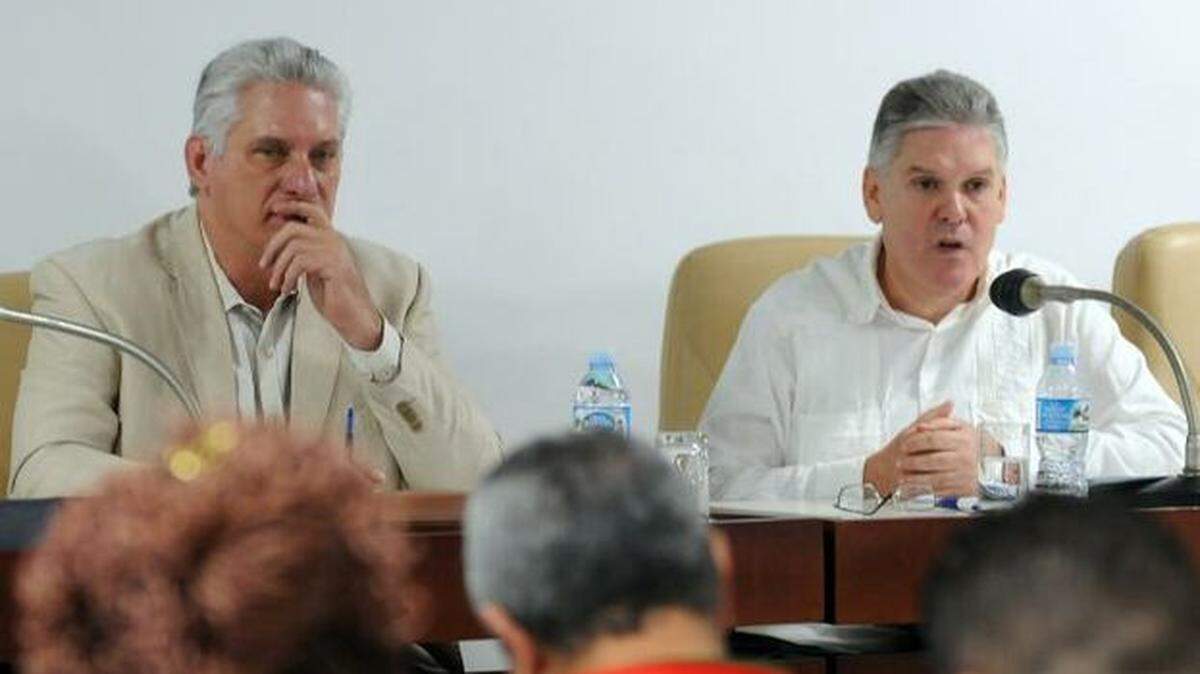
The Cuban government suddenly fired its ministers of economy and food industry on Friday, after days of angry public response to an austerity plan rolled out last month that, among other things, planned to hike the price of gas five-fold in the midst of the island’s most severe economic crisis in decades.
Without going into much detail, Granma, the Communist Party newspaper, reported that Economy Minister Alejandro Gil, who also served as the country’s first vice prime minister, and who implemented a failed currency reform that fueled galloping inflation in the past two years, was “released from his duties.” Also dismissed: Manuel Santiago Sobrino Martínez, the top food industry official.
The sudden nature of the announcement and the fact Granma only briefly added a line at the end of the story about the government “recognizing” the efforts of the two men, suggest the officials are not likely to land in similar high-profile jobs.
The island’s economy has been in freefall under the officials who were fired, though because of the centralized nature of the Cuban government and the overarching authority of the Communist Party, some decision dealing with food production and the economy in general were above the ministers’ pay grade.
Gil, 60, an engineer by training who during his tenure had been promoted to first prime minister in 2019, has been seen as the architect of several failed policies, from currency reform, to attempts to control the price of the dollar sold on the streets, to imposing banking restrictions on the growing private sector.
Inflation has shrunk the value of the Cuban peso so much that most state pensioners now receive the equivalent of $8 a month in the local currency.
Despite Gil’s promises of an economic recovery in 2023, Cuba’s GDP shrank by as much as 3%, he said in December, following years of deep contractions during the pandemic and a weak recovery in 2022.
But nothing has fared worse than agriculture and food production. In recent years, Cuba’s sugar production plummeted to its lowest level in a century, the food rations distributed by the government have been reduced, and accounts of hunger and malnutrition have become commonplace on social media. Cuba has been forced to import most of the food the population eats.
It is unclear yet if the dismissals means the government wants to try to do things differently or is just looking for scapegoats to blame for the mismanagement of the economy.
But people in Miami were already reading the tea leaves.
“Changes are coming because they are necessary for Cuba. They have to restructure their economy because there is no other alternative,” said former congressman Joe Garcia, who is involved in efforts to support independent private entrepreneurs in Cuba.
The dismissals happened just a day after the government had to postpone a controversial gas price hike that was deeply unpopular, which was part of a larger austerity plan Cuban officials said aimed at “correcting distortions” and stabilizing the economy.
This story was originally published February 2, 2024 at 4:13 PM.