
Proposed policy changes to help the private sector in Cuba face opposition in Congress
Biden administration officials were readying to announce last month new regulations to support an emergent private sector in Cuba. But a month after the planned date in September, the official announcement has yet to come, and the proposed policy changes face opposition from Miami Republicans in Congress.
The regulations, as earlier described by U.S. officials to the Miami Herald, would allow private Cuban entrepreneurs to open bank accounts in the United States to facilitate their operations, since Cuba is cut off from most of the international banking system because of the U.S. embargo on the island.
The regulations would also allow U.S. banks to clear dollar transactions originating in third countries that involve Cuban nationals, a restoration of so-called U-turn transactions previously suspended by the Trump administration.
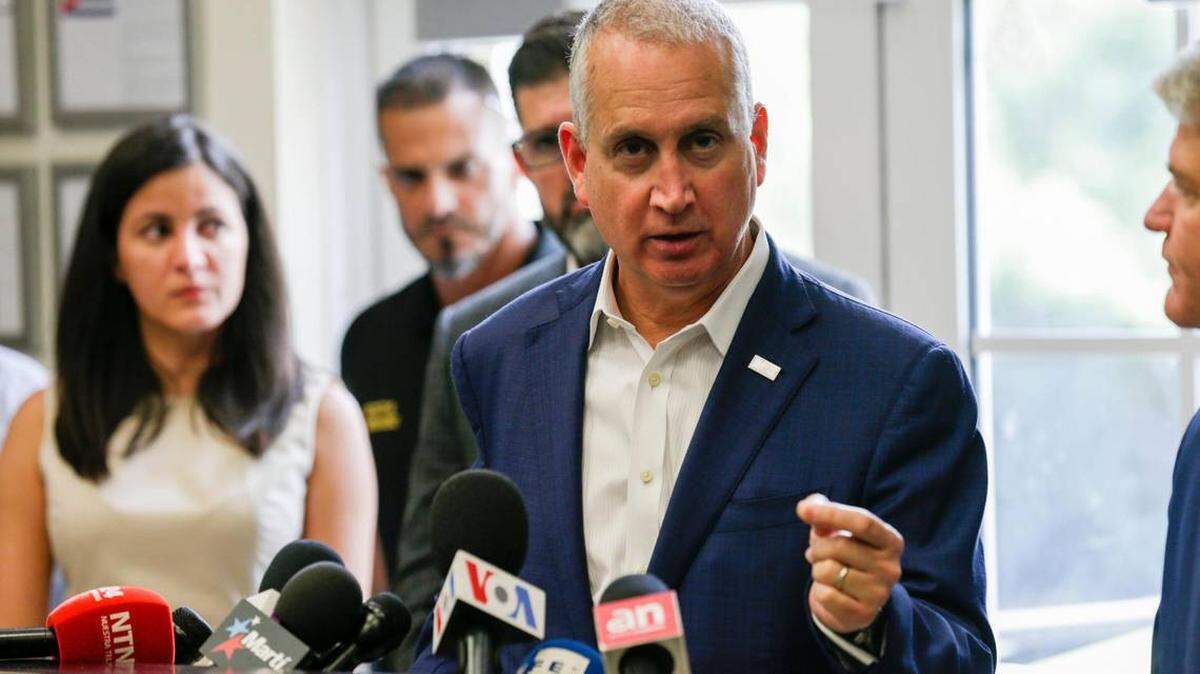
But those changes face fierce opposition by Florida Republican Rep. Mario Díaz-Balart, who has said both in public and in meetings with administration officials that he is against providing any aid to the Cuban government, a congressional staffer with knowledge of the matter told the Herald. The staffer asked for anonymity to speak about the closed-door discussions.
Díaz-Balart, a Cuban American from Miami with a longstanding position in favor of sanctions against the Cuban regime, is the chairman of a House subcommittee that makes decisions on the State Department budget, at times wielding his power to make cuts on foreign aid and funding to international organizations like the United Nations over policy disagreements. And he has hinted he might do it again over Cuba, questioning the rationale for continuing to aid Ukraine while at the same time making policy changes that he said would benefit the Cuban government, a close Russian ally.
“The congressman supports aiding Ukraine, though he believes the Biden administration has not made a good case as to why,” the staffer said. “But in private meetings and publicly, he has been very clear that he doesn’t see how it makes sense to approve funding for Ukraine and at the same time channel funding to Cuba, which is one of the closest Russian allies in the region.”
The congressional aide fell short of saying that Diaz-Balart’s opposition might be why the Cuba regulations have not been announced yet. “It’s not a direct line, but they might probably wonder what he would do,” the staffer said, referring to Biden administration officials.
At the center of the controversy are clashing views about what constitutes a private sector in an authoritarian Marxist system, and its potential role.
After years of allowing very limited self-employment, the communist government allowed Cubans to own companies for the first time in decades in 2021, amid a worsening economic crisis and island-wide protests. Since then, more than 8,000 private enterprises have been created, employing a large number of workers. They have also become significant importers of food and basic necessities.
But they do operate under government restrictions, including, for example, the activities they are allowed to take part in and how many employees they may hire. And Cuban authorities are adamant that these businesses — which they avoid referring to as private, calling them instead non-state enterprises — are part of Cuba’s centrally planned socialist economy.
The Biden administration believes supporting these enterprises is key to helping Cubans become independent from the state, earn decent wages and stay on the island, which is becoming a large source of migrants — more than 400,000 Cubans have fled the deteriorating conditions in the past two years to come to the United States. These companies are also helping put food on the table at a time of great scarcity, though Cubans complain of their high prices.
“Longstanding U.S. policy supports Cuban entrepreneurs and the growth and independence of Cuba’s private sector to maximize benefit to the Cuban people while minimizing benefit to the Cuban government,” a State Department spokesperson told the Herald.
“We have seen encouraging signs that the Cuban government is opening more space for the private sector, and we believe its continued growth provides a window of opportunity to introduce the Cuban people to a different societal model, one fueled by market economics rather than government control,” the U.S. official added.
But Díaz-Balart doesn’t believe some market reforms under communist rule would create a truly independent private sector or lead to democratic changes, remarking last year on social media that “the Biden Administration’s claim that relaxing sanctions will support ‘private enterprise’ and ‘independent entrepreneurs’ within communist and totalitarian #Cuba is completely false.”
“Look at China,” the congressional staffer said. “We let them enter the World Trade Organization, and that led China to become more powerful and more able to suppress dissent. There is no genuine private sector in closed societies.”
In particular, the U-turn transactions would facilitate banking for the Cuban government, not just the entrepreneurs, the staffer added.
Already, the disagreement has spilled over into the budget bill that Díaz-Balart helped pass in the House to fund the State Department and other foreign aid programs. The bill, which still needs to be reconciled with the Senate version, says that the $30 million for democracy promotion programs in Cuba cannot be used “for business promotion, economic reform, entrepreneurship, or any other assistance that is not democracy building.”
As for the regulations, they are still waiting to get the final green light.
The State Department spokesperson said there were “no updates to Cuba’s economic regulations at this time.”
This story was originally published October 20, 2023 at 4:04 PM.