
Cuba’s embassy in D.C. attacked Sunday night, hours after island’s leader left the U.S.
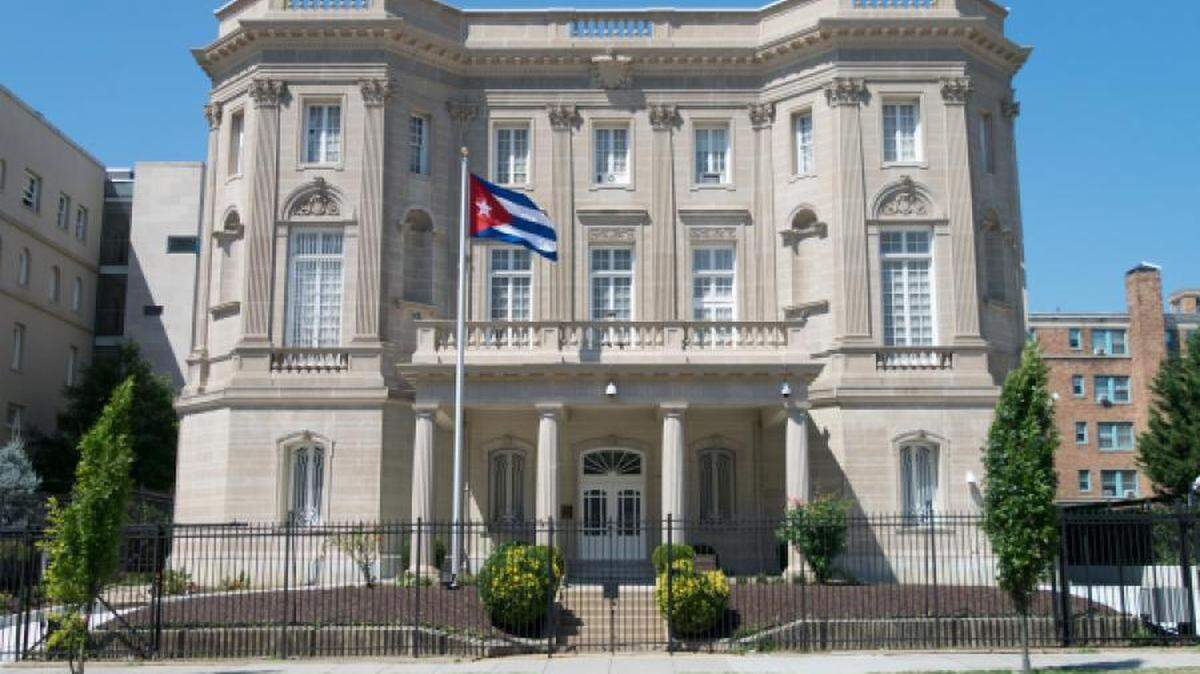
The Cuban embassy in Washington was attacked on Sunday evening, just hours after Cuban leader Miguel Díaz-Canel, who attended several events at the United Nations in New York last week, returned to the island, Cuba’s foreign minister said.
“The Cuban embassy in the U.S. was the target of a terrorist attack by an individual who launched 2 Molotov cocktails,” minister Bruno Rodríguez said on X. “The staff suffered no harm. Details are being worked out.”
Rodríguez said this was “the second violent attack against #Cuba’’s diplomatic mission” since April 2020. On April 30, Alexander Alazo, a man born in Cuba who was struggling with mental health problems, opened fire at the embassy with an AK-47 assault rifle.
At the time, Rodríguez called on U.S. authorities to investigate the case as a terrorist act, saying Alazo attended a church in Doral that he accused of being a gathering spot for people known to promote “aggression, hostility, violence, and extremism against Cuba,” though he did not provide evidence of his allegations.
Rodríguez did not provide any details about Sunday night’s attack but said it was politically motivated and blamed those opposing his government.
“The anti-Cuban groups resort to terrorism when feeling they enjoy impunity, something that #Cuba has repeatedly warned the US authorities about,” he wrote.
The U.S. State Department’s Bureau of Diplomatic Security’s Office of Foreign Missions is responsible for the protection of foreign embassies and consulates in the United States.
The attack happened just hours after Díaz-Canel arrived in Havana around noon, after attending the United Nations General Assembly and several other events on the sidelines in New York City. His presence sparked peaceful protests by Cuban exiles, who said authoritarian leaders should not be welcomed by the international community.
He condemned the attack, saying it was a “hate” crime and that he expected “action” from U.S. authorities.
On Monday, the Cuban foreign minister said U.S. authorities were immediately contacted after the attack and that the U.S. Secret Service was allowed into the Cuban embassy to take samples of the remains of the Molotov cocktails.
Cuba’s ambassador in the U.S., Lianys Torres, posted some photos on social media showing what appeared to be debris from the Molotov cocktails. The pictures did not show apparent damage to the building.
This story was originally published September 25, 2023 at 12:34 AM.