
Regional human-rights group will weigh in on the death of Cuban dissident Oswaldo Payá
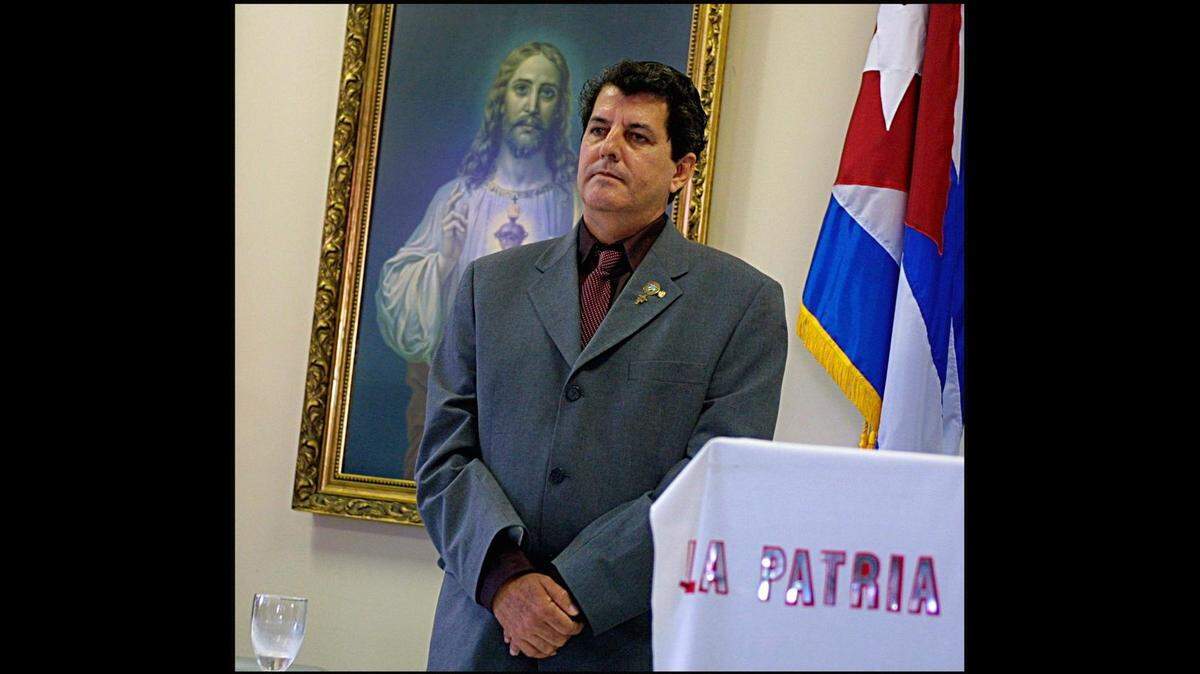
The Inter-American Commission on Human Rights is getting ready to release a much-anticipated, decade-long investigation into the death of Cuban opposition member Oswaldo Payá, who was killed in a 2012 car crash that family members and activists suspect was initiated by Cuban state-security agents.
The U.S. ambassador to the Organization of American States, Frank Mora, told the Miami Herald the commission, an autonomous branch of the regional organization, is about to publish the report as part of renewed efforts to address the human-rights situation on the island.
“The work done by the Inter-American Commission on Human Rights is important; they are going to release the report on the killing of Oswaldo Payá,” Mora said.
A commission official investigating freedom-of-expression issues in the region also said last week the report was expected to come out soon.
“The Payá case is deemed of the highest level of importance within the commission, and I hope that we can give public information soon,” Pedro José Vaca said at an OAS event exposing the crackdown on journalists, artists and dissidents on the island.
The commission did not provide a date for the report’s release. While not an active member, Cuba is a signatory of the OAS charter, and commission officials argue that the Cuban government should comply with its recommendations.
At the time of his death, Payá, 60, was the Christian Liberation Movement leader and one of the most prominent members of the Cuban opposition. He challenged Fidel Castro by gathering enough signatures to support a vote that would have allowed citizens to change the island’s political system. Castro reacted by ordering the imprisonment of many of Payá’s fellow opposition members and a swift change of the country’s constitution to make socialism “irrevocable.”
Ángel Carromero, a member of the youth branch of Spain’s Popular Party, was in the driver’s seat and was blamed for the crash that killed Payá and movement member Harold Cepero near the Cuban city of Bayamo on July 22, 2012. Carromero was convicted in Cuba of vehicular homicide. But after Spain secured his extradition, he said the crash was the result of an attack by state-security agents, who were following them in another vehicle and forced Carromero’s car off the road.
Cuban authorities, who have said the two opposition members died after Carromero lost control of the vehicle and hit a tree, did not provide Payá’s family with his autopsy results. Family members also said Cuban authorities destroyed key evidence. In 2013, Payá’s family members and the Robert F. Kennedy Human Rights organization petitioned the Inter-American Commission to open an independent investigation into his death.
The commission held its first public hearing on the case several years after, in December 2021. In March, a bipartisan group of senators wrote to the commission’s executive secretary, Tania Reneaum Panszi, to request an update on the investigation.
In 2015, an independent investigation by the Human Rights Foundation concluded the Cuban government had “direct responsibility” in the deaths of Payá and Cepero.
This story was originally published April 28, 2023 at 4:32 PM.