
In controversial effort to aid Cuba, Mexico will hire more Cuban doctors — and buy rocks
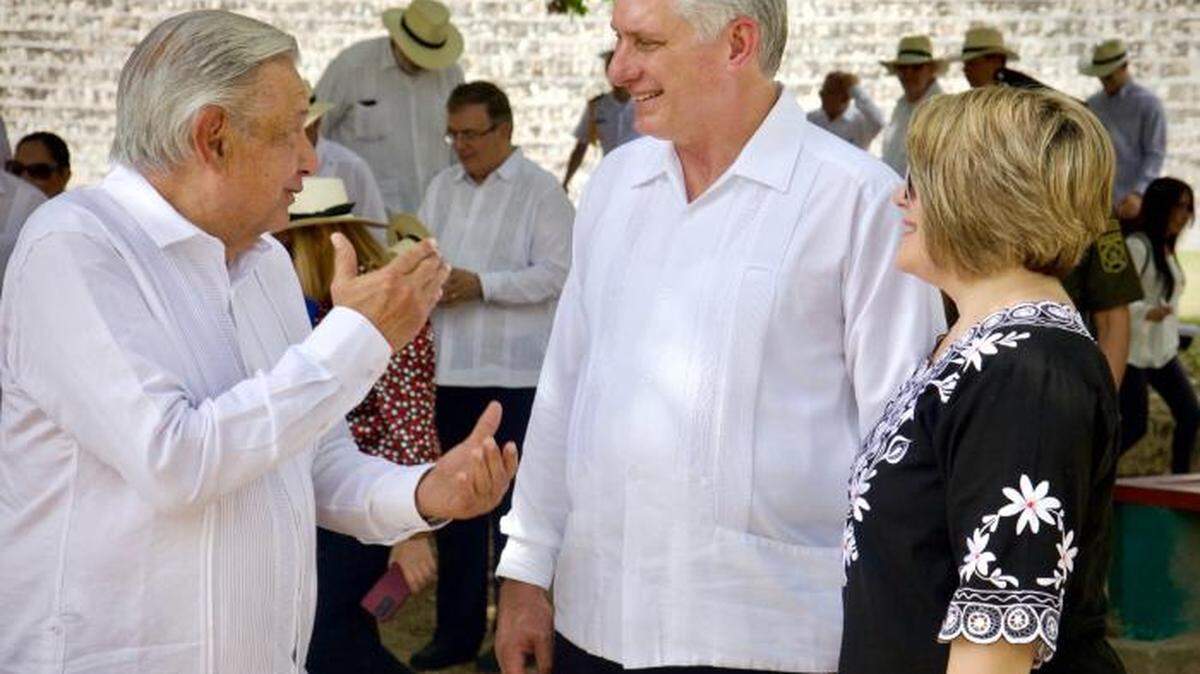
In an effort by the left-leaning government in Mexico to throw another lifeline to financially stressed Cuba, President Andrés Manuel López Obrador is going to import rocks from the island.
The Cuban rocks will be used as track ballast to cover more than 15 percent of the more than 900 miles of the controversial Maya Train project, Cuban state media reported during a high-profile visit of Cuba’s leader Miguel Díaz-Canel to Mexico’s state of Campeche over the weekend. Track ballast forms the bed on which railroad ties and rails sit.
The stones come from a mine in the central Cuba province of Cienfuegos, and port workers there started loading the first 25,000 tons for shipping in January, Cuban News Agency reported. The Maya Train project has been under scrutiny for its impact on archaeological sites and protected natural areas.
During Díaz-Canel’s visit, Mexican authorities announced they will hire another 100 Cuban doctors on top of the 610 already working in remote towns in Mexico. And López Obrador said he will lead a campaign against the U.S. embargo on Cuba.
“We are going to continue demanding that the blockade on Cuba be lifted; it is inhumane,” López Obrador said. “I offer President Miguel Díaz-Canel that Mexico is going to lead a more active movement so that all the countries unite and defend the independence and sovereignty of Cuba.”
The two countries’ leaders have bonded over five meetings since both came to office in 2018. On Saturday, López Obrador gave his Cuban counterpart the Medal of the Aztec Eagle, the highest distinction to foreign dignitaries, a gesture deemed “deplorable” by the opposition party PAN. A group of politicians, academics and activists from the left also penned a letter condemning the decision, writing that “there are no acceptable left-wing dictatorships” and calling Díaz-Canel “a dictator.”
The alliance with López Obrador has proved helpful to Díaz-Canel at a time that Cuba is facing a grim economic outlook and increased international pressure over the imprisonment of hundreds of peaceful protesters.
The Mexican government has already clashed with the Biden administration over its Cuba policies and the long-term U.S. economic sanctions known as the embargo. On Monday, the Mexican foreign affairs minister, Marcelo Ebrard, played down that the issue would create friction with the United States.
“It is not an effort to bother the United States or have friction with the United States; it is not the idea,” he said. “You have a progressive majority in Latin America: Brazil, Colombia, Bolivia, Mexico, Chile, Honduras, Cuba, and Venezuela, which is now in a negotiation process. So, we say that we are going to start dialogues.”
During a press conference attended by Díaz-Canel and Cuban doctors working in Mexico under a Cuban government program that the United States has criticized as human trafficking, López Obrador also blasted Cuba’s inclusion in the list kept by the U.S. State Department of countries that sponsor terrorism, calling the Cuban government “profoundly humane.”
Cuba is going through its worst economic crisis since the end of the Soviet Union. Díaz-Canel’s visit to Mexico and later Belize on Sunday aimed at expanding the medical services program under which Cuban doctors are sent to foreign countries, which has become a significant source of revenue for the government.
According to a lawsuit against the Pan American Health Organization filed by doctors who defected from the official missions, the Cuban government restricts the doctors’ movements in foreign countries and pockets most of their salaries.