
Cubans said yes to same-sex marriage, but referendum results sent a message to the government
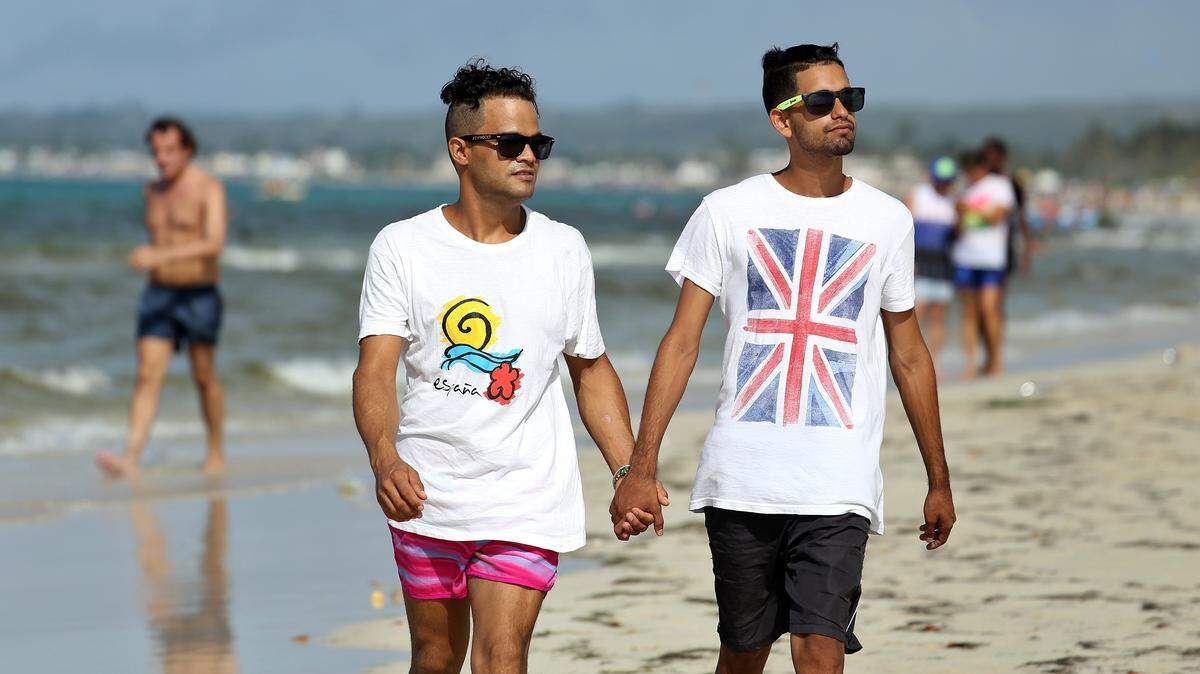
Six decades after Fidel Castro imprisoned gay men in forced labor camps and later sent them to Florida during the Mariel boatlift, Cuban same-sex couples will be able to marry and adopt children, after voters on the island ratified a new family code with 67 percent of the vote in a controversial referendum Sunday.
The new code was ratified with only 47 percent of eligible voters casting a Yes vote, or 3,936,790 ballots out of the 8,447,467 eligible voters. Total participation, the government said, was 74 percent, an unusually high abstention rate for Cuba, where the government traditionally pressures citizens to vote.
While widely perceived as a victory by LGBTQI activists, the results also carry a stark message of disapproval for the current government headed by Miguel Díaz-Canel, who repeatedly said a Yes vote was a show of support for the revolution and socialism.
The new family code expands the rights of same-sex couples, who can now marry and adopt children. It includes several other measures, such as recognizing children and teenagers’ “progressive autonomy” and the possibility of expanding a family through a surrogate mother.
“I’m thrilled,” said Maykel González Vivero, an LGBTQI activist and editor of the independent magazine Tremenda Nota. “I think that a new, important phase began in which we are going to have the chance to not only live in equal conditions with the rest of the citizens but also to access practical benefits that we have demanded for so long, that people in the past didn’t have and died without them.”
González Vivero said activists would continue working to ensure the new family code is enacted and to promote a much needed gender violence law as well as obtain protections for the transgender.
Ahead of the referendum, Díaz-Canel acknowledged the new family code clashed with the machismo still alive in Cuban society and said he didn’t expect it to be approved “in a unanimous vote.”
Religious groups and the Catholic Church actively opposed the referendum. And some of the proposals unnerved parents worried about the substitution in the new code of the patria potestad principle (legal parental custody) for “parental responsibility,” a more vaguely defined term that some say could be used by the government to retaliate against dissidents and take away their children.
But the political use of the family code vote by government officials and state media, all trying to present the referendum as a democratic exercise — and a Yes vote as a sign that the public supports the government — put off many other Cubans who either voted No or just stayed home.
Almost two million people voted against it, 33 percent of the 5,892,705 valid ballots cast, the National Electorate Council said on Monday.
Many activists and critics of the government had called on social media for voters to abstain, using the hashtag #endictaduranosevota (You don’t vote in a dictatorship), arguing the referendum was a sham. But other critics of the government questioned that strategy.
Daniel Triana, an LGBTQI activist and artist, lamented on Twitter that the political opposition in Cuba “has no viable proposal,” yet wanted “to block the code just to go against the government.”
He said he had been campaigning for the Yes vote precisely to break free from the experiences of the past, like the forced confinement of gays in labor camps known as UMAP in the 1960s by Castro.
“The Yes campaign has been lying, and it has been excessive; there are more than a thousand political prisoners; the country is broken,” he wrote. “Still we have to snatch that Yes.”
This story was originally published September 26, 2022 at 5:29 PM.