
Fresh details about Cuban handlers of convicted spy Ana Belén Montes revealed in new book
On Feb. 24, 1996, a Cuban military jet shot down two small civilian planes operated by the Cuban exile organization Brothers to the Rescue, killing three Americans and one U.S. resident over the Florida Straits in international airspace. The next day, Ana Belén Montes, the most senior intelligence analyst on the Cuban military at the U.S. Defense Intelligence Agency, was called to the Pentagon to provide intelligence support in the aftermath of the international crisis.
For days, Montes helped craft the U.S. response to the shoot-down. But, every night after she left her Pentagon office, she would meet in person with her Cuban handler, who went by the code name “Germán,” to pass details of those plans to the island’s government. Montes, who was later discovered and convicted as a spy for Cuba, is scheduled to be released from a federal prison in January after serving more than 20 years.
The story about Germán, a Cuban intelligence undercover agent whose real name is Evelio Guerra Pereda, has never been made public until now and will be part of the forthcoming book, “Queen of Cuba,” by retired FBI agent Peter Lapp. It will be published following Montes’ release.
“I don’t know if she had advance knowledge of the shoot-down or not, but what I do know is that every night she met with an illegal officer and told him what the Pentagon was doing and what she knew about what the U.S. response was going to be,” said Lapp, the FBI special agent who handcuffed Montes during her arrest at her DIA cubicle on Sept. 21, 2001, on charges of conspiracy to commit espionage.
“Every night, the Cubans received that information, and it got back to Havana within a 24-hour period,” he added.
In “Queen of Cuba: The Inside Story on How the Perfect Spy Evaded Detection for 17 Years,” under contract with Post Hill Publications and as an audiobook with Blackstone, the former FBI agent and his co-writer, journalist Kelly Kennedy, reveal the identities of several of Montes’ handlers. The book will also shed new light on how the FBI started suspecting a mole was working for Cuba at the top echelons of the U.S. government.
At the moment of her arrest, Montes was told information from Cuban intelligence officers compromised her, but little else is known.
During the Obama administration, U.S. officials also claimed that a former Cuban intelligence officer who was released in a prisoner exchange with Cuba in 2014, identified first by el Nuevo Herald as Rolando Sarraf Trujillo, provided information that helped catch Montes and other spies working for Cuba. But they didn’t give more details.
At the time, Chris Simmons, a former DIA analyst who helped catch Montes, told the Miami Herald that Sarraf passed Cuban cryptographic secrets to the CIA, helping American intelligence agencies break into high-frequency radio transmissions between Cuban agents in the United States and their spymasters in Havana.
“That original source information was top secret,” Lapp said. “And I believe I can tell that part of the story now because I don’t believe it’s classified anymore.”
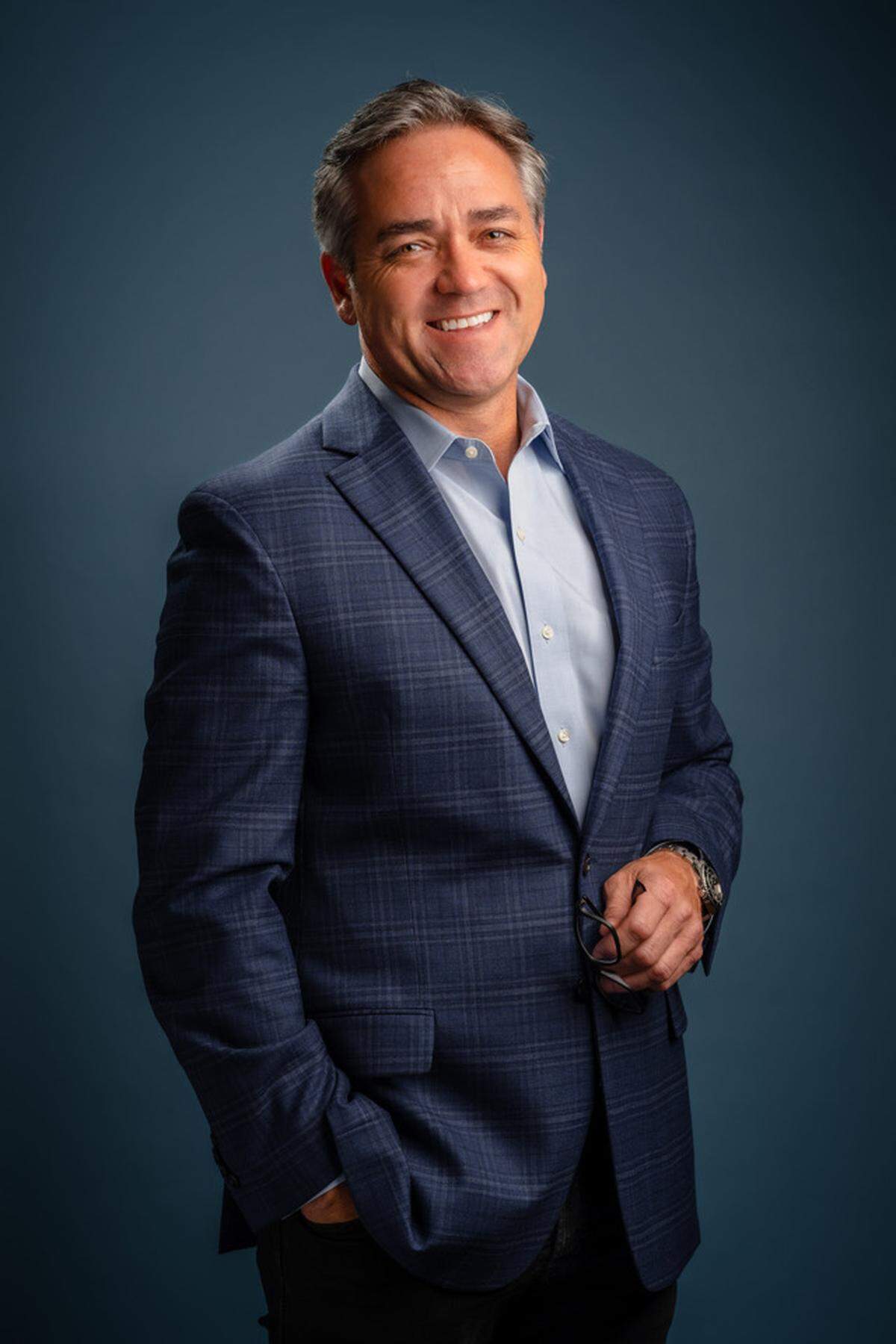
Lapp and his partner, retired Special Agent Stephen A. McCoy, led the FBI investigation that concluded with Montes’ arrest. Lapp also spent several months interrogating Montes in sessions that he said were “torture” for him because of her attitude — ”she was so righteous, pompous and narcissistic,” he recalled. Those interactions served as the foundation for his book.
Fearing charges of treason that could mean the death penalty, Montes pleaded guilty to espionage and agreed to collaborate with the U.S. government and pass information about the Cuban intelligence services, including the identities of her handlers.
Germán was one of several handlers whom Montes worked with while passing top-secret information to Havana. He was a Cuban intelligence agent working undercover in the United States, and Montes told the FBI he was a surgeon by profession. According to public records, a Cuban surgeon with the same name, Evelio Guerra Pereda, graduated from medical school in 1976 — although it is not clear from which one — and worked at the Comandante Manuel Fajardo hospital in Havana, where he was also a professor. He has almost no online presence except for a medical paper that he co-authored and published in a Cuban medical journal in 2010.
Reached by the Miami Herald by phone, Guerra denied having met Montes and acting as her handler.
“Well, I really have no idea what you’re talking about; I just learned about it from you,” he said from his home in Havana. He also denied having been in the U.S. at the time of the events allegedly linking him with Montes.
According to Lapp’s account, immediately after the shoot-down of the Brothers to the Rescue planes, Germán showed up at the corner of Macomb Street and Connecticut Avenue in Washington, D.C., a spot close to Montes’ apartment, waiting for her to drive by and make “eye contact with him,” a method that her Cuban handlers would use when they needed to meet her unexpectedly, Lapp said.
“This illegal officer basically told her, ‘We know you’re going to the Pentagon. Everything that you learn is going to be of interest to us. And we need to meet every night’,” Lapp said. “Every night, she was with her illegal officer handler.”
The last of the handlers whom Montes worked with over the years before getting caught was another undercover Cuban agent whom she knew as Ernest, Lapp said.
On Sept. 11, 1998, a couple of months after the arrests in Miami in connection to a Cuban spy ring known as the Wasp Network, Ernest was waiting at the same corner of Macomb and Connecticut. During that meeting, he told Montes he had been recalled to Cuba and to expect instructions about her new handler via radio communications. Because Ernest had been in contact with some of the Wasp Network spies, Cuba didn’t want to compromise Montes, Lapp said.
Ernest, whose real identity is still unknown, was fired from the Cuban intelligence service after Montes’ arrest, he added.
A new handler never materialized, and from that point on until her arrest three years later, Montes “was pretty much all alone, though she would travel to the Caribbean every six or eight months and go on vacation and meet with the Cubans,” Lapp said.
The perfect spy
Montes’ arrest on charges of conspiracy to commit espionage sent shockwaves throughout the U.S. intelligence community, where she had become known as the “Queen of Cuba” because she was the go-to person at the Pentagon for everything related to the Caribbean island.
Montes was born in 1957 in West Germany, where her father was posted as a U.S. Army doctor. Her parents were Puerto Rican, but she grew up in Maryland. Cuban intelligence recruited her in 1984 when she was working as a paralegal at the U.S. Department of Justice and enrolled in a master’s program in international economics and Latin American studies at Johns Hopkins University in Baltimore. The Cubans trained her during a clandestine trip to the island the following year and encouraged her to apply for a job at the DIA, according to a Department of Defense review of how government agencies handled the case.
The review concluded that she “may have well been the prototypical spy,” acting out of moral righteousness and hostility toward U.S. policies regarding Latin America rather than money. She did not take any for her services, the report says.
For the Cubans, she was more than “prototypical.” She was the perfect spy, deeply embedded in the U.S. intelligence apparatus, with access to the kind of classified information that for years made Fidel Castro look like the clever leader who could always anticipate U.S. actions.
During her almost 17 years at DIA, Montes collected accolades, promotions and awards for her service to the United States. She briefed Congress and senior American officials and shaped U.S. policies toward Cuba.
She also methodically memorized and shared top-secret information with the Cubans, including the identities of four U.S. undercover intelligence agents, details of U.S. military exercises and plans, and what the United States knew about Cuba’s military capabilities, according to the information contained in the FBI affidavit for her arrest, the Department of Defense review and Lapp’s account.
She even received a medal from the Cuban intelligence services during one of her covert trips to the island in 1989 in a ceremony supposed to be attended by Castro himself, whom she admired deeply. But despite reports to the contrary, Castro did not show up.
“She never met Castro,” Lapp noted.
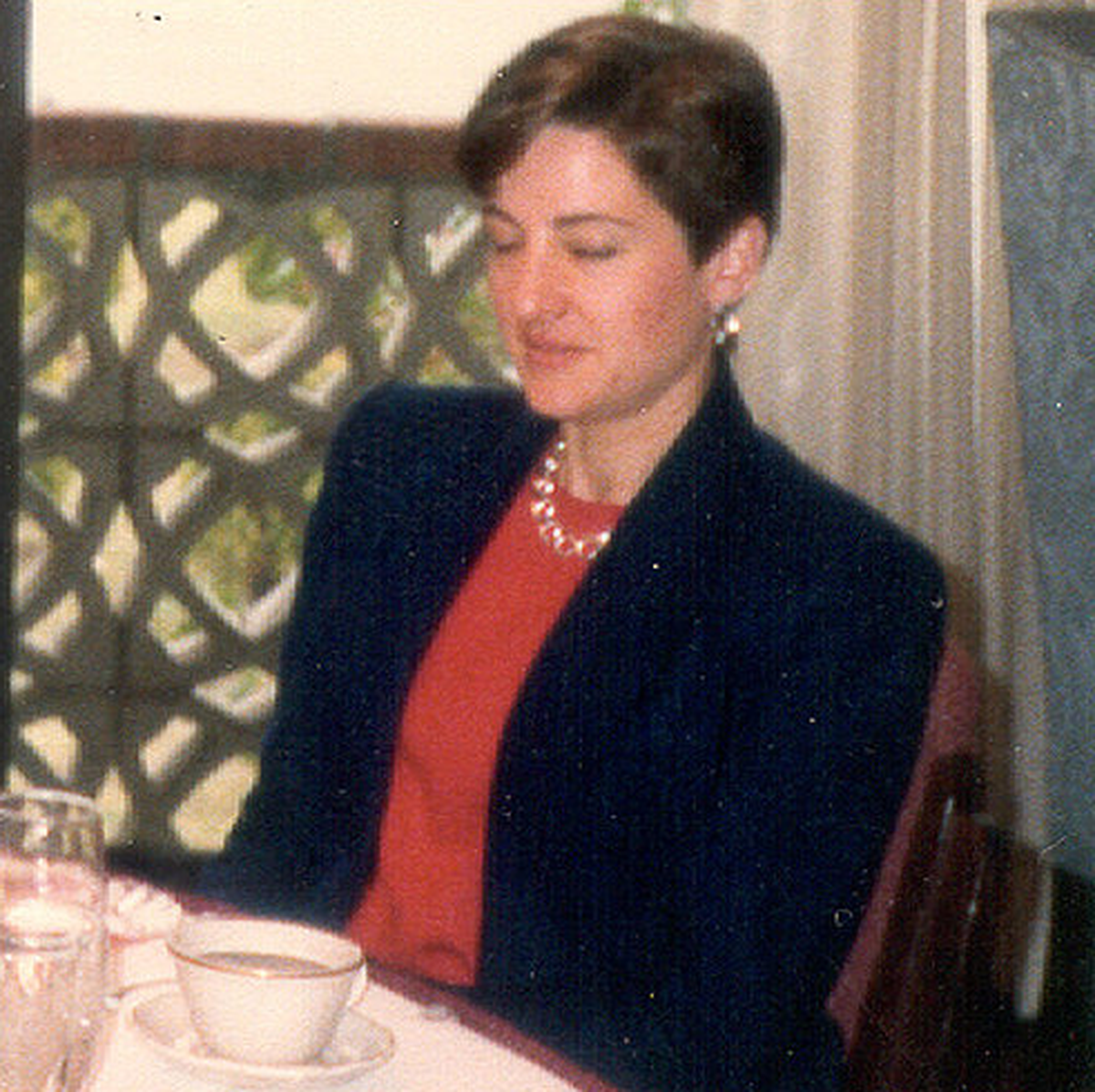
As a typical spy, she communicated with her handlers with numerical codes and encrypted messages but, most surprisingly, also in plain sight in restaurants around Washington.
The valuable secrets, usually encrypted on diskettes, would reach Havana quickly, Lapp said, passing from the handler to an intelligence agent working at the Cuban mission to the United Nations in New York and from there to the island, likely carried by a Cuban diplomat.
“I think the Cuban intelligence service is one of the best in the world,” Lapp said. “What makes the Cubans so good is that they find these individuals who are like-minded, who have this visceral empathy for what Cuba is trying to do. They’re so good at finding these people that don’t want to do it for money.”
“We were not able to punch back in decades; we failed quite a bit,” he added.
Scott Carmichael, a former DIA counter-intelligence agent who helped identify Montes as the Havana spy whom the FBI had been looking for, wrote that she was “one of the most dangerous spies in U.S. history.”
“Fidel Castro himself might as well have dictated our policies and positions concerning Cuba,” Carmichael said in his 2009 book “True Believer.”
And soon, she will walk free, though she will remain under close supervision for another five years as part of her sentence.
What Montes will do after she is released is also a mystery. She is not allowed to talk to the media. Her sibling, Lucy Montes, a former FBI employee, declined to comment for this story.
“She is going to have a big gap on her resume,” said Lapp. “If she decides to one day go to Cuba, it’s a one-way trip. She is not going to be allowed to come back. But I am predicting she will stay in the United States and get a job because I think the only reason she took the plea and betrayed her [Cuban] friends was because of her mother and wanting to spend some time with her before she passes.”
While imprisoned at the high-security unit at Federal Medical Center Carswell in Fort Worth, Texas, she has been allowed to communicate with only a few people, including her mother and other family members. Her cousin, Myriam Montes Mock, who has campaigned in Puerto Rico for her release, has said Montes has endured isolation while in prison and that she survived breast cancer.
Other members of the family, including her mother and siblings, are still reeling from what they felt was a betrayal, Lapp said. Her brother, Tito Montes, also worked for the FBI.
For Ana Belén Montes, 65, who said during a court hearing she had the “moral right” to help Cuba and has not expressed regret for her actions in private letters, her allegiances are again at stake.
“I don’t know currently if she’s had a change of heart or any kind of repentance,” Lapp said. “I think she had to make herself believe that she did the right thing as a coping mechanism. But are you going to have that unrepentant kind of attitude in front of your family members in their kitchen? I just don’t believe that she’s going to fall on that sword.”