
More Cuban kids are showing up at the U.S.-Mexico border without their parents
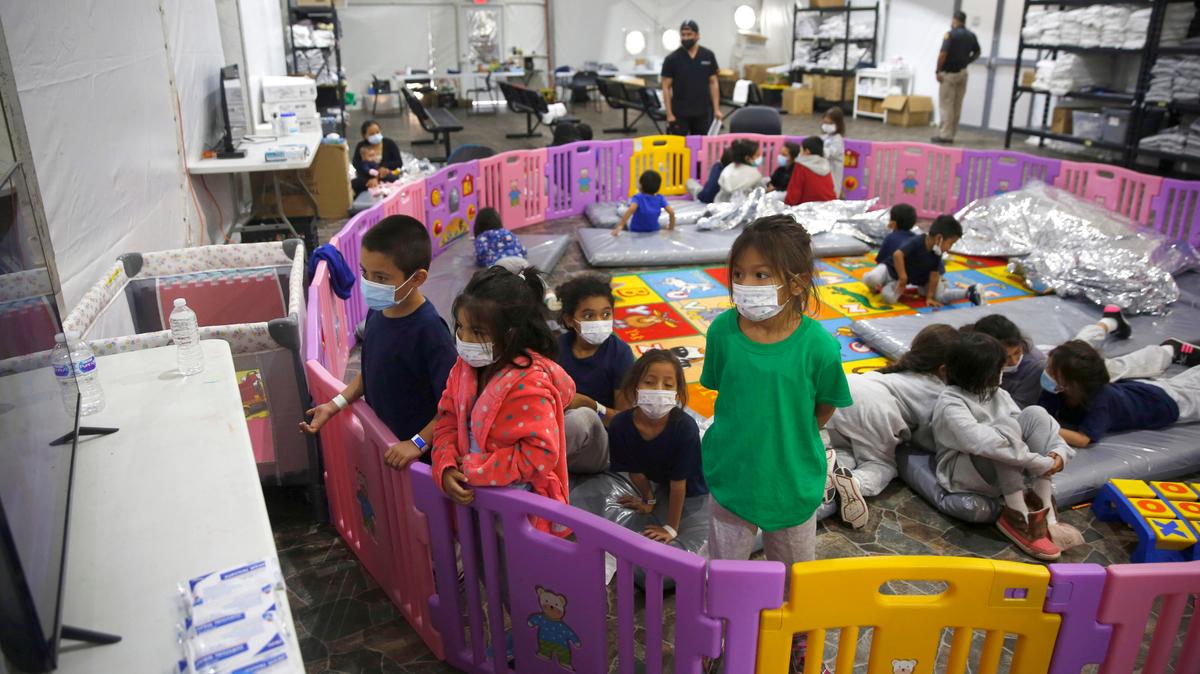
Hundreds of unaccompanied Cuban children have shown up at the U.S.-Mexico border this past year, as more parents appear to be sending their kids away amid deteriorating conditions in Cuba that have already brought a record number of people from the island to the United States.
“The increase in the number of children and adolescents among Cuban migrants suggests an intensification of the desperation felt by many families residing on the island,” said Jorge Duany, director at Florida International University’s Cuban Research Institute, “and that they do not find another way out of the crisis that the country is experiencing than to leave it in search for better life opportunities for the youngest.”
Since October, U.S. Customs and Border Protection has had 662 encounters with unaccompanied Cuban children at the southern border, compared to 32 encounters in the fiscal year 2021 and 57 encounters in 2020. That’s a 1,969% increase between the 2021 and 2022 fiscal years alone.
The agency processed another seven unaccompanied children in Florida this fiscal year, although it is unclear from the data if they arrived by sea.
The number of unaccompanied Cuban minors arriving at the border is tiny compared to the nearly 100,000 Central American minors in the same situation.
But despite the small numbers, the increase of Cuban youth arriving alone is notable, according to South Florida experts, lawyers and care providers.
David Claros, regional director for Church World Services Immigration Legal Services, said the organization has witnessed a “huge increase” in the number of unaccompanied Cuban children, many with relatives in South Florida.
“We rarely had any in the last few years,” he said, “and in the last few months, maybe, we’ve had one every other week.”
Duany, a migration expert, said the arrival of so many children is a new trend in Cuban migration.
“It is probable that many parents have decided that their children have no future in Cuba and therefore decide to send them to Mexico with the intention of crossing the border into the United States,” said Duany. “It seems to be a new migratory pattern, which until now has been dominated by young adults without their children.”
Cuba’s widespread poverty, inflation, power blackouts, basic supply shortages and increased government repression are driving a historic wave of migration that has surpassed in numbers the 1980 Mariel exodus. U.S. Customs and Border Protection has reported nearly 176,000 encounters with Cuban migrants at the southwest land border since October.
READ MORE: Bigger than Mariel: 140,000 Cubans have arrived at U.S. borders since October
Jennifer Anzardo Valdes, director of the Children’s Legal Program at Americans for Immigrant Justice, said the nonprofit law firm has represented more unaccompanied Cuban children this year. They include teenagers between 16 and 18, although they also have younger clients.
Some have come to reunite with family already living in the United States but others are political-asylum seekers.
Anzardo Valdes said that some of the teenage clients were arrested during the anti-government uprising in July last year and targeted in their aftermath. Two independent groups in Cuba, Justicia 11J and Cubalex, have confirmed the arrests of at least 57 youths under the age of 18 in connection to the protests in Cuba.
“Our clients have told us that conditions in Cuba have continued to deteriorate, so they are coming to the U.S. to seek a better life,” she said. “They especially highlighted that they feel that conditions have deteriorated since the protests” last year.
Catholic Charities CEO Peter Routsis-Arroyo told the Miami Herald that the agency’s shelter, Msgr. Bryan Walsh Children’s Village, has received more Cuban minors than usual recently, although in much smaller numbers than Central American children.
He described the Cuban minors the shelter has cared for as mostly between the ages of 15 and 17, many with sponsors in Florida that include family and family friends.
“We’ve gotten no more than a handful at any one time,” said Routsis-Arroyo, “but that’s more than in past years.”
The shelter, known as Boystown, has a long history of caring for Cuban children, including some of the 14,000 kids who came through a Catholic Church-led program in the early 1960s known as “Operation Pedro Pan” after Fidel Castro took power.
Shelters run by nonprofit organizations, like Catholic Charities, have been targeted by Gov. Ron DeSantis as he tries to slow the intake of undocumented immigrants into Florida.
In January, DeSantis directed Florida child care regulators to stop issuing or renewing the licenses of facilities that contract with the federal government to house migrant children and teenagers who are waiting to be reunited with their families or vetted sponsors.
Florida shelters were not allowed to house more migrant children than they did before the rule went into effect in January, a move that could impact the resettlement of hundreds of migrant children.
The rule was one of many policies pushed by DeSantis this year as he attempts to crack down on illegal immigration, including a $12 million state program that aims to bus undocumented people in the state to other parts of the country.
This story was originally published August 31, 2022 at 11:15 AM.