
‘Prison or exile’: Repression in Cuba after protests fueled exodus, rights group says
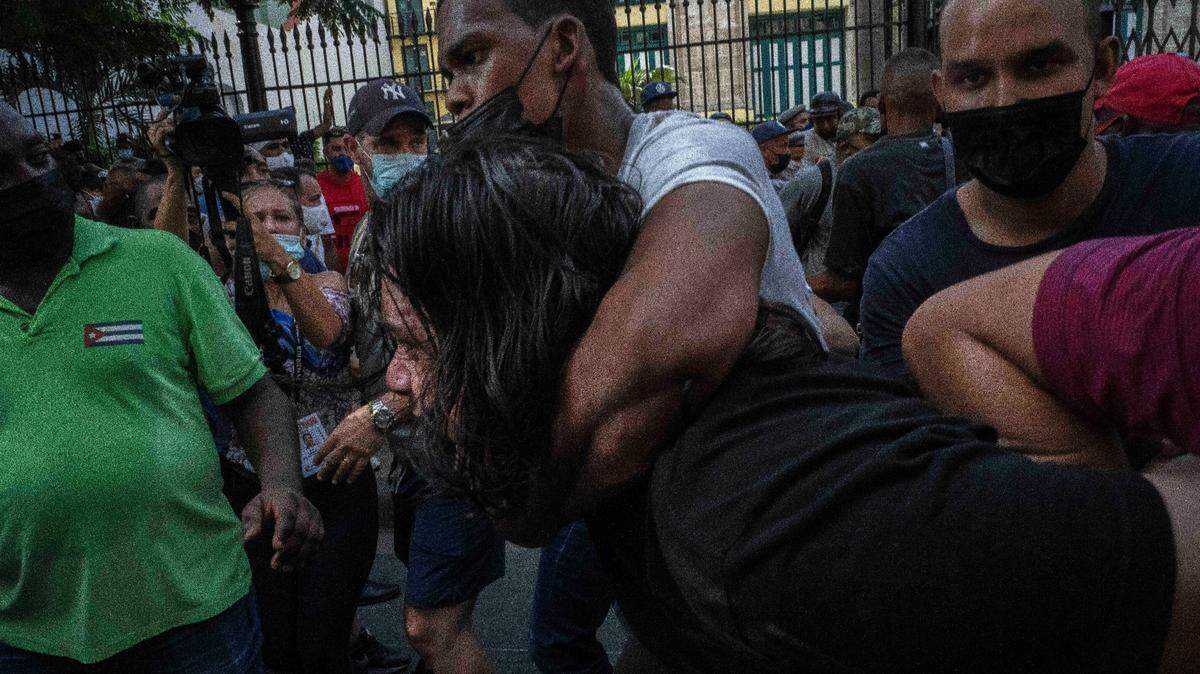
The systematic violations of human rights by the Cuban government in response to the demonstrations in July of 2021 have fueled the largest exodus of Cubans to the United States and other countries in several decades, concludes a Human Rights Watch report published Monday, on the anniversary of the historic protests.
The report documents a wide range of human rights violations committed in the context of the anti-government demonstrations, including arbitrary arrests, trials without due process and torture.
According to the report, the government’s repression and the lack of response to the demands by ordinary Cubans, especially access to food and medicine, have generated “a human rights crisis” that has drastically increased the number of people leaving the country.
Between October last year and May, more than 140,000 Cubans were detained at the U.S. border with Mexico, a figure that exceeds the 125,000 Cubans who left the port of Mariel, near Havana, between April and October 1980.
According to the U.S. Coast Guard, more than 3,000 Cubans have also tried reaching U.S. shores since October.
“A year ago today, thousands of Cubans protested, demanding rights and freedoms, but the government gave many of them only two options: prison or exile,” said Juan Pappier, senior Americas researcher at Human Rights Watch. “Governments in Latin America and Europe should urgently escalate their human rights scrutiny over Cuba and prioritize a concerted, multilateral response before this human rights crisis becomes even worse.”
The report expands on the results of an investigation published last October and is based on interviews with 170 people — including protesters, family members and lawyers in Cuba — and legal documents obtained by Human Rights Watch. The organization also verified photos and videos of the protests.
The group says that some cases of abuse committed against detained protesters amount to torture, and the organization used independent experts to assess the evidence. According to the report, these abuses violate several international treaties Cuba has signed.
Among the cases highlighted in the report was the detention of pastor Lorenzo Rosales Fajardo, 50, and his 17-year-old son, both arrested on July 11 for peacefully protesting in Palma Soriano, a city in the eastern province of Santiago de Cuba.
According to a relative’s testimony, police officers beat Rosales Fajardo and knocked out one of his teeth and several fillings. When his son asked the agents for his whereabouts, they also arrested him.
The son was detained for a week in a cell in a school converted into a prison.
During the son’s detention, he was given rotten food and little to no water,” the relative told investigators. “Officers repeatedly woke him and other detainees during the night, beat them and pushed them down the stairs, with their hands tied. They were stripped of their clothes and forced to squat naked in front of others on several occasions.”
Rosales Fajardo was also detained for a few days in the same school as his son. When he was being transferred to the state security prison in Santiago de Cuba, the police beat him and he lost consciousness; when he woke up, the officers were urinating on him, the relative cited in the report said.
After intense interrogations, Rosales Fajardo and other protesters were sent on Aug. 6 to a maximum-security prison in Boniato, on the outskirts of the city. According to the relative, the ordinary prisoners insulted and beat the demonstrators and forced some of them to perform oral sex.
Rosales Fajardo’s family was able to visit him for the first time on Oct. 16. His family member says he “can’t stop crying.”
Following a closed-door trial in December, Rosales Fajardo was sentenced for “public disorder,” “disrespect” and “assault” to seven years in prison.
You can read the full report here.
This story was originally published July 11, 2022 at 7:00 AM.