
Despite outcry, Cuban court sentences Grammy winner and prominent artist to prison
Despite an international outcry, a Cuban court has sentenced Maykel “Osorbo” Castillo, the rapper who won two Grammys last year for the hit protest song “Patria y Vida,” to nine years in prison, and handed a five-year sentence to visual artist Luis Manuel Otero Alcántara, the island’s Attorney General’s Office said Friday.
Both men are members of the San Isidro Movement, a collective of dissident artists and academics that has challenged the lack of freedoms on the island and inspired peaceful protests against the government. The police arrested Otero Alcántara on July 11 after he announced on social media that he would join the massive protests that day. Castillo had been in jail since last May for participating in another protest in April.
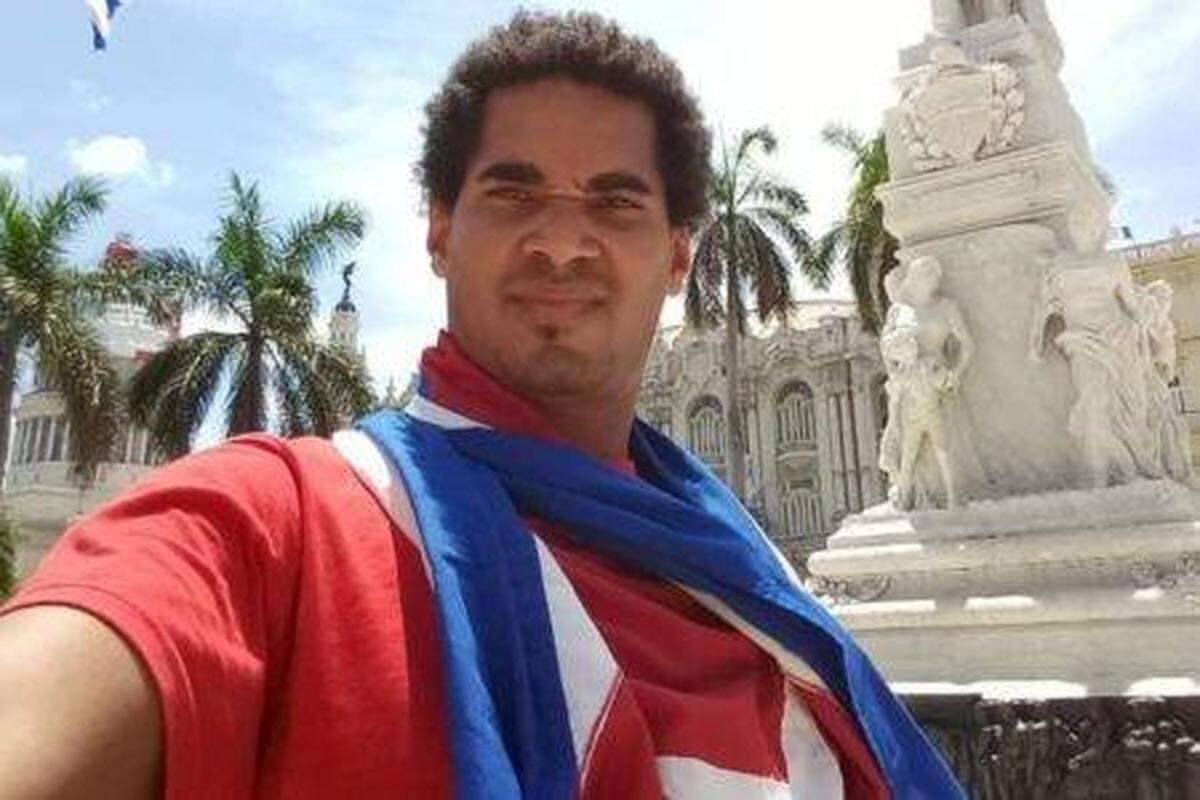
A court in Havana tried Otero Alcántara on charges of contempt, public disorder and disrespect of national symbols. The prosecution revived an old accusation against the artist linked to his 2019 performance with the Cuban flag.
Otero Alcántara had become one of the most visible voices of the San Isidro Movement and had carried out several artistic performances and hunger strikes that had drawn attention to the restrictions on the freedom of expression of artists and Cubans in general. Because of his activism, Time magazine featured him as one of the most influential people of 2021.
The Cuban criminal code, as well as several decrees and regulations approved in recent years, punish criticism of the government, its representatives and socialism.
Carrying a flag on his shoulders while walking through public spaces and sleeping wrapped in the flag was considered a crime by the court.
“The Court, in the case of Otero Alcántara, argued his express intention, sustained over time, of offending the national flag, through the publication of photos on social media where it is used in denigrating acts, accompanied by notoriously offensive and disrespectful expressions, underestimating nationalistic feelings and pride the Cuban people profess to our national flag,” the Attorney General’s Office said in the statement.
Castillo was sentenced for the crimes of “disrespect, assault, public disorder and defamation of institutions and organizations, heroes and martyrs,” the statement says.
The court concluded that Castillo posted “manipulated” images on social media to “affect the honor and dignity of the country’s highest authorities” and “disgraced” police officers in videos posted on his social media, according to the version of the Attorney General’s Office.
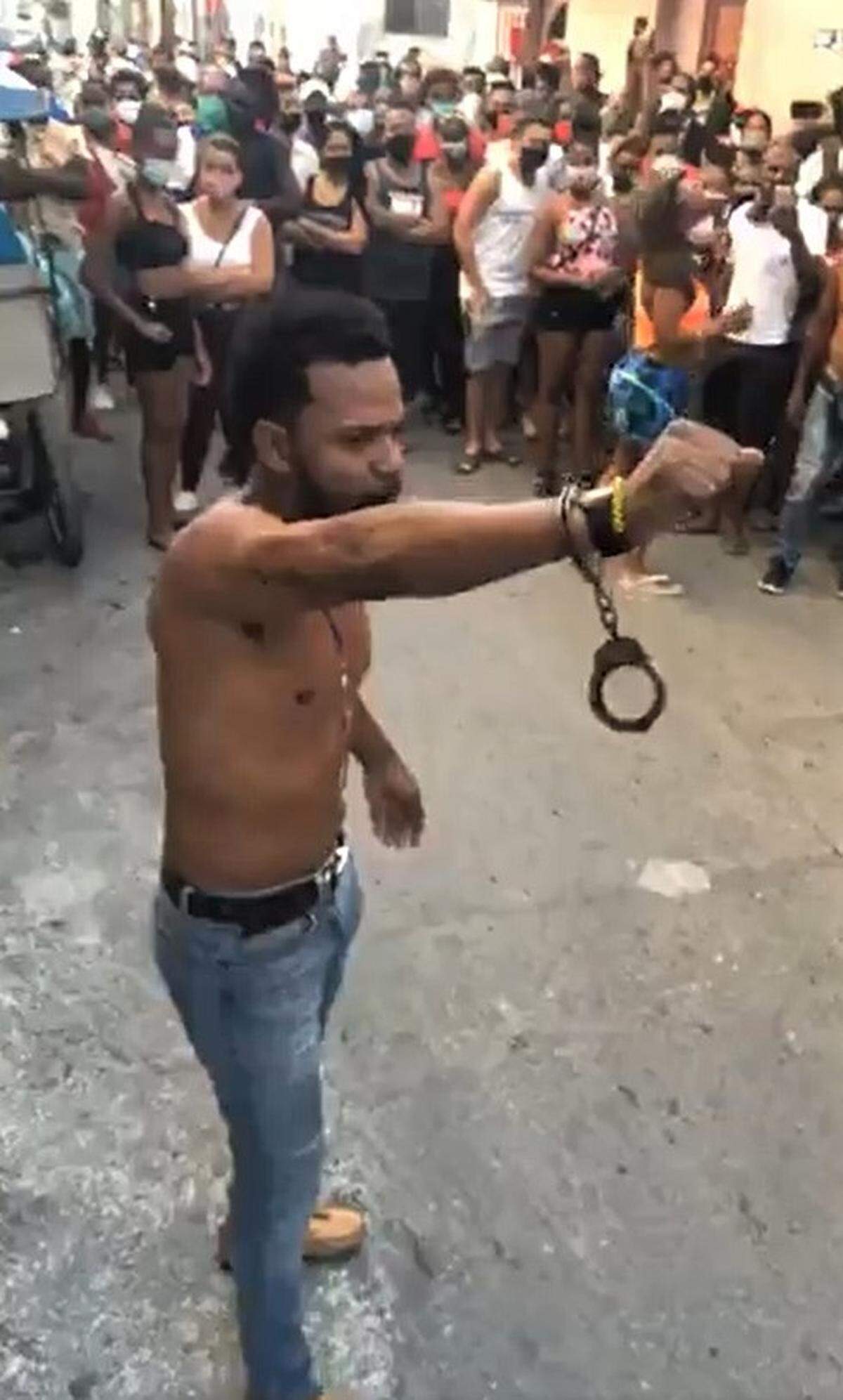
Prosecutors also charged him with resisting arrest during a protest in Havana in April last year. Castillo was unable to attend the Latin Grammys in November because he was in jail. He and the other performers of “Patria y Vida” won the Latin Grammy for song of the year and best urban song. “Patria y Vida” — meaning Homeland and Life, a twist on Fidel Castro’s phrase “Homeland or Death” — became a protest anthem for the July 11 protesters. Otero Alcántara also appears briefly in the video for the song.
Both men were tried in May behind closed doors. Activists close to them told the Herald that the Cuban government had offered to release them in exchange for leaving the country, but they refused.
Several international organizations including Amnesty International, Human Rights Foundation, Freedom House, Pen International, Pen America and Artists at Risk Connection had called for their immediate release. The organizations denounced the criminalization of dissent on the island, the lack of a fair trial and irregularities since they were arrested. They were both named prisoners of conscience by Amnesty International.
“This is a blow to artistic freedom in Cuba and to the artists and activists in Cuba and around the world who have fought for the right to express themselves in the face of a government and state security apparatus that has consistently chosen repression,” said Julie Trébault, director of Artists at Risk Connection at PEN America. “The Cuban government can seek to extinguish independent expression on the island, but it will not be successful.”
Amnesty International also condemned the sentences on Friday.
“The trials of Luis Manuel Otero Alcántara and Maykel “Osorbo” Castillo are a shameful example of the human rights crisis caused by the Cuban government’s decades-long policy of repression,” the organization said. “Amnesty International condemns the criminalization of these prisoners of conscience, who are being held solely for exercising their rights.”
In an interview in December 2020, after having staged a hunger strike that inspired an unprecedented public protest by artists in Havana, Otero Alcántara told the Herald that he felt “like a piece of paper” at the mercy of the Cuban government.
“We live in a totalitarian regime that violates our rights, and they have control of the information,” he said at the time. “We live in a dictatorship. Who can believe in the regime when it abuses you?”
This story was originally published June 24, 2022 at 5:39 PM.