
‘Plantados:’ Cuba’s prison hell comes to Miami movie theaters this week
Director Lilo Vilaplana needed a narrow slit window, so that one of the prisoners in his movie “Plantados could imagine the freedom he would not see for decades, because Fidel Castro had turned him into a hostage.
Through that slit in the walls of La Cabaña, the Spanish colonial fortress guarding Havana that became a horrifying Castro prison, the inmate witnessed the execution of a friend by firing squad.
The prison had a “chapel,” the cell where the condemned were taken before they were executed, and the paredón – the wall before which so many Castro opponents were executed in the 1960s, some as they shouted “Long live Christ the King!” Some were shot in the legs, to force them to kneel, before the were executed.
But Vilaplana could not film in the real place where much of the story told by his movie took place, the story of the plantados – the immovable prisoners – who rejected the reeducation and indoctrination plans offered by the Cuban government with the promise of better treatment and shorter sentences.
“That’s the greatness of the plantados. Even though they were executed and tortured and suffered terrible punishments, they did not give in,” Vilaplana told the Herald.
The director was forced to shoot his exterior scenes at the San Cristóbal fortress in Puerto Rico because he was not allowed to film around the San Marcos fortress in Saint Augustine, a five-hour drive from Miami, despite support from a U.S. Congress member.
The Cuba Prisoners’ drama to the silver screen
The ideals of the men in the movie Plantados, showing in Miami theaters starting March 26, with subtitles, have not been very well known outside the exile community, which recognizes them as heroes who sacrificed their youth for their cause.
Vilaplana filmed the movie in just over 30 days, but the former political prisoners had spent more than two decades trying to tell their stories. Among them: the late Mario Chanes de Armas, a former Castro supporter who was the world’s longest-held political prisoner; and Eusebio Peñalver Mazorra, who suffered the worst treatments during his 28 years in prison because he was Black, and Angel de Fana and José Oscar Rodríguez Terrero, known as Napoleoncito, who served as advisors during the filming, when the interiors of La Cabaña were recreated in a Miami building.
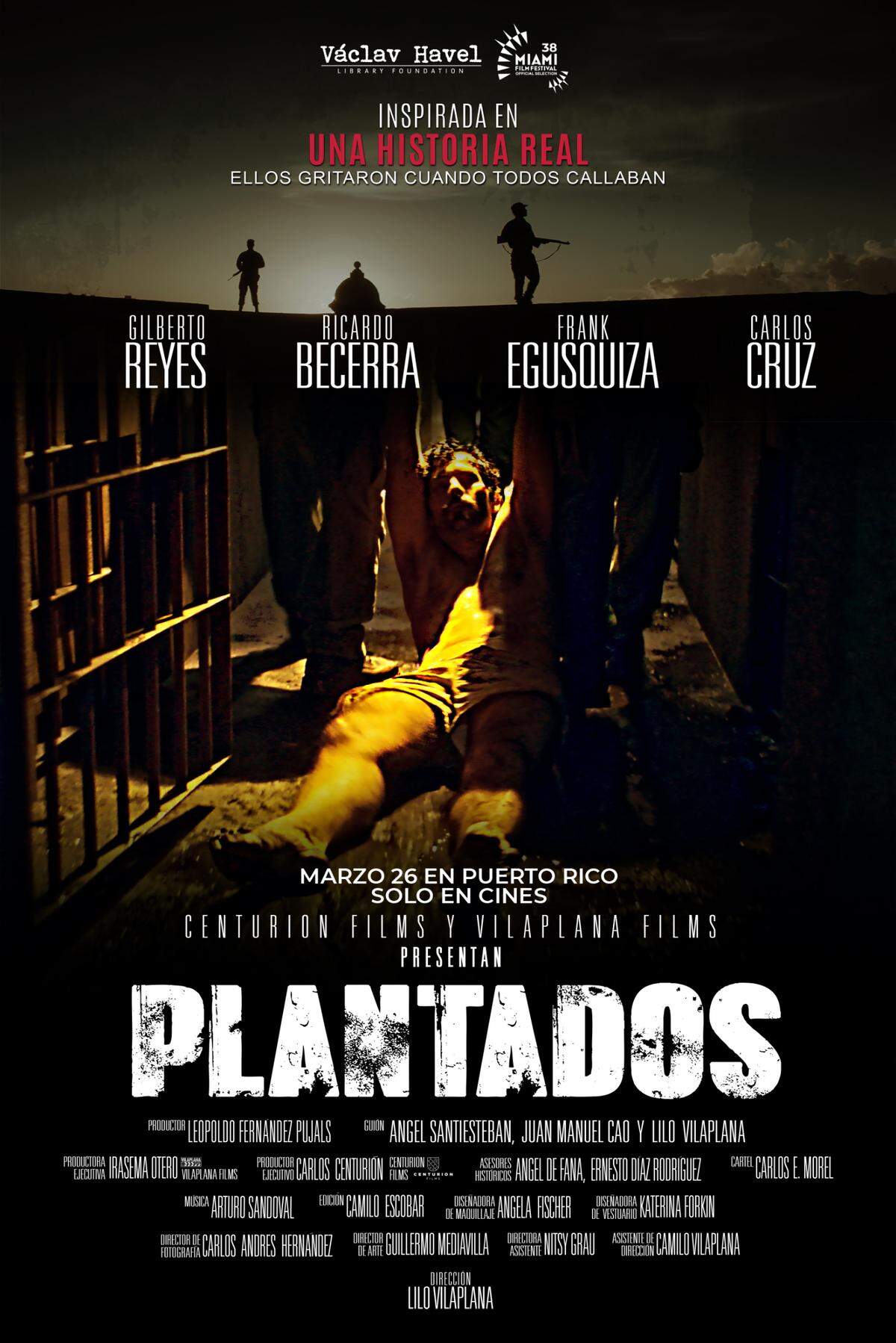
The movie was financed by Cuban businessman Leopoldo Fernández Pujals, wealthy founder of the Telepizza chain in Spain. It was a way to honor his uncle José Pujals Mederos, a plantado who served 27 years of a 30-year sentence. He died in 2019 in Tallahassee. Agapito Rivera, another plantado nicknamed Guapo, died in December.
One plantado present at the movie’s debut March 12 during the Miami Film Festival was Ernesto Díaz Rodríguez, author of the book “Castro’s Hostages,” which Vilaplana used as a guide. The director wrote the script with writers Juan Manuel Cao and Angel Santiesteban, who lives in Cuba.
Extras could not withstand the tough scenes
Napoleoncito was one of the prisoners held in a gaveta, narrow drawer-like cells with up to four naked prisoners who had to remain standing and took turns so that one of them could sleep.
“They were held there for up to three months, relieving themselves right there and eating a disgusting soup,” Vilaplana said. “They wanted to break them, to accept the plan. But it didn’t work, so they didn’t use them with other prisoners.”
The extras in those scenes gave up after four hours in the gavetas, even though they could drink and take bathroom breaks whenever they needed, the director added, illustrating the misery suffered by the real prisoners.
The actor Adrián Mas recalled another scene that made his skin crawl. The prisoners were eating when guards arrived to take away one to be executed by firing squad.
“It was a special moment. For a few minutes we came to believe that all of that was really happening, not in a set. We were so focused on our characters that the sounds of the bullets devastated us,” said Mas, adding that the “steadfastness of these prisoners earned them the respect of all the inmates, including the common prisoners.”
The movie follows two time lines, a current one in which former prisoner Ramon, played by Gilberto Reyes, runs into one of his torturers, played by Carlos Cruz, both living in Miami. The meeting forces Ramon to recall his worst prison experiences in Cuba.
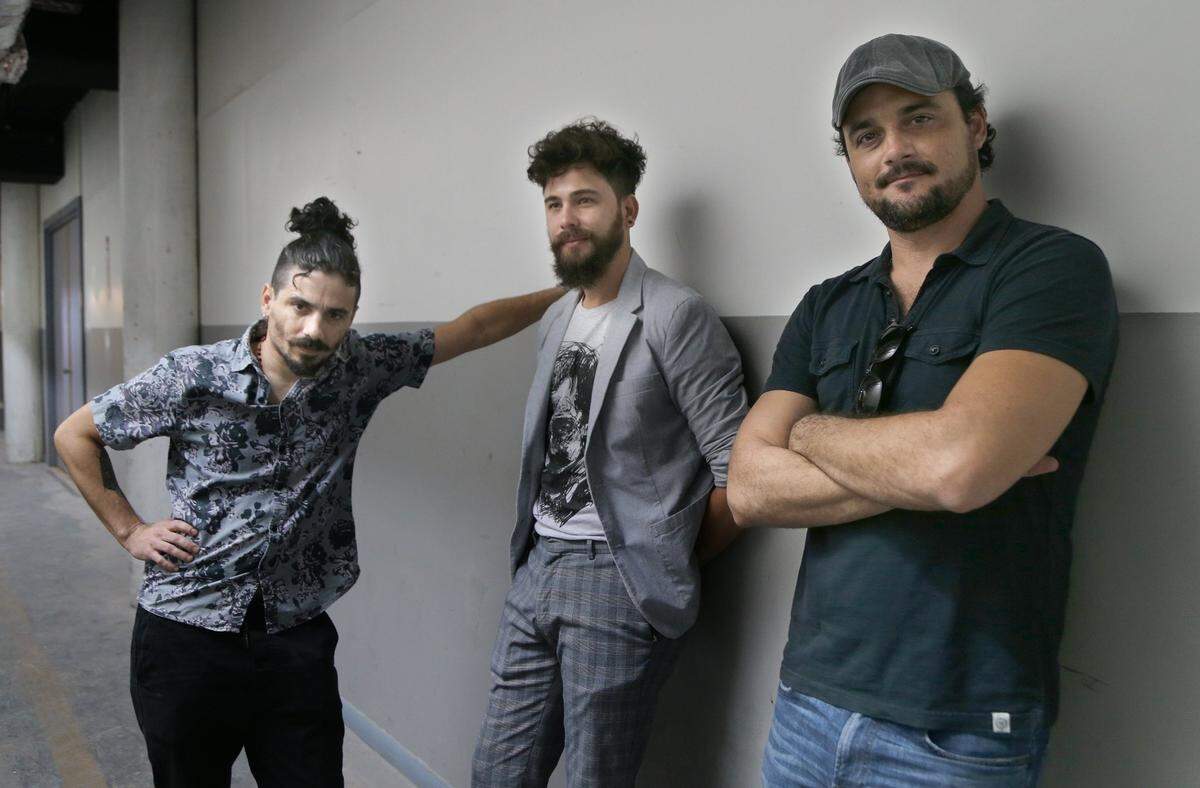
The movie recreates the most terrible punishments, like the windowless cells with metal doors and the sewer trench where prisoners were thrown after beatings at the Isla de Pinos prison.
Reyes explained that his character drives the movie’s drama and in a way sums up the experiences of so many victims.
“When he runs into his torturer in Miami, he has the opportunity to take his vengeance,” the actor said. “But he decides not to do that because it would go against the principles established by the plantados, who demand justice before vengeance.”
The historical part of the movie also reflects the harsh experiences of the prisoners’ relatives. Their daughters and mothers were forced to strip almost naked before entering the prisons, but they continued to visit.
“During our meetings with plantados, before we started to film, we heard the most incredible anecdotes about life in prison. One of them was about the way in which they searched relatives who went to visit, and the shameful treatment of the women,” said actress Vivian Ruiz, who plays the role of a woman barred from visiting her son during his first 13 years in prison.
“It is one of the most moving scenes in the movie. This woman takes his daughters, so he can see them after so many years, and he does not know them,” said the veteran actress. “This gives you an idea that time cannot be recovered, that the damage this regime has done to Cuban families is irreparable.”
Abuses in Cuban Prisons Continue
Vilaplana said that as director, he had to shroud the crude realities of the story with aesthetic beauty and avoid turning the characters into caricatures. Even the torturer shows love for his own family.
The movie Plantados is more relevant today than ever because even though it tells a story from the past, it also reflects Cuba today. Just days ago, guards reportedly paraded from cell to cell a naked Luis Robles, a young man jailed for displaying a protest sign on Havana’s San Rafael Boulevard. The guards at the Combinado del Este prison allegedly not only allow but encourage common prisoners to beat up Robles.
“The movie is a stroke of the sword, to see if we can witness the end of the dictatorship and rebuild the homeland,” the director said.
The movie also comes at an important time. The success of the song Patria y Vida shows Cubans are tired, he added.
“They have to realize that the project they call a revolution is going nowhere and that the dictatorship, in the name of a utopia, is destroying the sons of Cuba,” Vilaplana said. “They believe they have the right to repress the young people in the San Isidro Movement, the dissidents, the independent journalists.”
Cubans are no longer willing to remain silent, like what happened when another Cuban movie director, Néstor Almendros, titled his documentary “Nadie escuchaba” – No one was listening.
On February 26, the singers who recorded “Patria y Vida” and other Cuban artists, among them jazz great Arturo Sandoval, who wrote the music for Plantados, appeared on video before the European Parliament to testify about Cuba. The event was organized by Cuban Prisoner Defenders, a non-government organization based in Spain that lists 135 political prisoners held in Cuba.
“During more than 60 years of dictatorship in Cuba, there’s always been men and women with their hearts in the center of their breasts,” said Vivian Ruiz, summing up the courage of those who protest.
To purchase tickets, go to plantadosfilms.com. The film will be shown March 21 at the Miami-Dade County Fair & Exposition, and starting March 26 at five Miami theaters, including the Tower Theater.
