
U.S. suspends private charter flights to Cuba. Some flights to Havana are authorized.
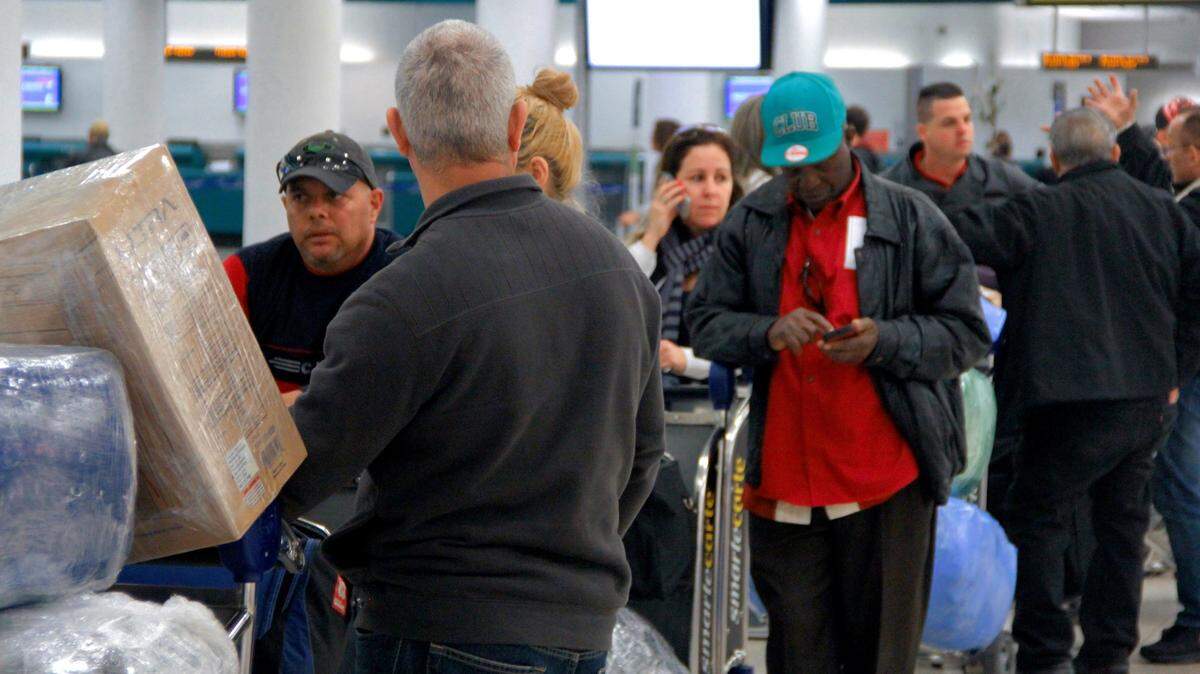
In the middle of a pandemic, the United States suspended private charter flights to Cuba as a measure to increase pressure and cut off funds going to the Cuban government, Secretary of State Mike Pompeo announced Thursday.
“I requested that the Department of Transportation suspend private charter flights to all Cuban airports, including Havana,” Pompeo said in a statement.
“This action will suspend all charter flights between the United States and Cuba over which the Department of Transportation exercises jurisdiction, except for authorized public charter flights to and from Havana and other authorized private charter flights for emergency medical purposes, search and rescue, and other travel deemed in the interest of the United States,” the statement said.
The measure will take effect Oct. 13, according to a document from the Department of Transportation.
Family travel to Cuba has been severely limited under the current administration.
In January, the Trump administration suspended charter flights to nine airports on the island and authorized a reduced number to Havana. According to the statement and the regulations published by the Department of Transportation, those flights will not be affected by the new suspension.
A State Department spokesperson confirmed that “authorized public charter [flights] and scheduled air service to Havana remains.”
Last October, the administration suspended all commercial flights from the United States to Cuba, except those going to Havana. As a result, there are no direct U.S. flights to any Cuban city other than the capital.
“This measure seeks to generate fear and instability so that those who invest in businesses with the Cuban government back off. Things are getting worse for the [Cuban] military,” said a source at an agency that organizes charter flights to Cuba from Miami.
The source, who asked not to be identified for fear of reprisals by the island’s government, said the new measure would directly affect regular flights to Cuba, but will make investors “nervous.”
“The strategy is the same as with the pressure on the banks and the activation of Title III of the Helms-Burton: although there are no significant effects in practice, people are afraid and do not do business with Cuba,” the source said.
Cuba is keeping the Havana José Martí International Airport closed due to restrictions to contain the coronavirus pandemic. The State Department issued a travel warning advising Americans not to travel to the island.
“The Cuban military and intelligence services own and operate the great majority of hotels and tourism infrastructure in Cuba,” Pompeo said. “We urge travelers of all nationalities to consider this and make responsible decisions regarding travel to Cuba.”
According to the top U.S. diplomat, who mentioned the “interference” of the Cuban government in Venezuela, the canceling of flights would deny resources that the Cuban government could use to continue repressing journalists and activists.
El Nuevo Herald reporter Mario J. Pentón contributed.
Follow Nora Gámez Torres on Twitter: @ngameztorres
This story was originally published August 13, 2020 at 1:36 PM.