
Dismissal of Helms-Burton lawsuit against Carnival may prove a defeat for Cuban Americans
A ruling by a Miami federal judge may strip many Cuban Americans of their hopes to seek reparations in court for property confiscated in Cuba by the Fidel Castro government six decades ago.
U.S. District Judge James Lawrence King dismissed on Friday one of the first two lawsuits filed under the Helms-Burton Act, in this case, against Miami-based Carnival Corporation, for allegedly trafficking in confiscated property in Cuba.
Breaking with historical precedent, President Donald Trump last year enacted the right to sue in the controversial Title III of the 1996 Helms-Burton Act, also known as the Libertad Act. That provision allows U.S. citizens to claim compensation in federal courts from any company — American or foreign — that has benefited from the use of confiscated property on the island.
But the judge concluded that a requirement in the Helms-Burton Act excludes lawsuits by U.S. citizens who had inherited claims to confiscated properties after March 12, 1996, when President Bill Clinton signed the law.
If upheld on appeal, the ruling could bar many Cuban Americans from winning compensation.
“The decision will affect not only other Helms-Burton Act cases against other cruise lines, but will stand as a decision that all Helms-Burton litigants will come to know,” said attorneys for Carnival Corporation George J. Fowler III and Luis Llamas in a statement to the Miami Herald.
Javier Garcia-Bengochea, a Jacksonville surgeon, sued the cruise company in May for allegedly benefiting from the use of the Santiago de Cuba port facilities and warehouses formerly owned by his family business, La Maritima S.A. Castro’s government confiscated the properties in 1960.
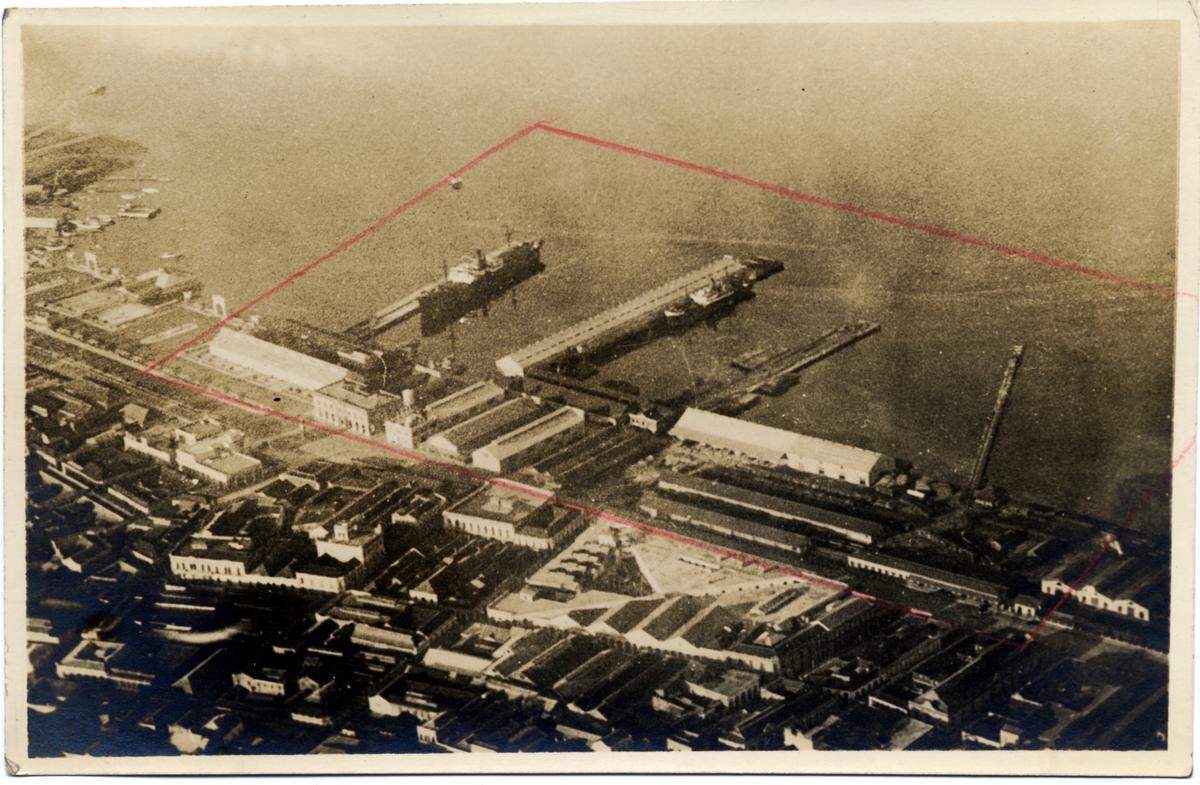
In May 2016, Carnival launched its cruise trips to Cuba — with stops in Havana, Santiago, and Cienfuegos — during a climate of better diplomatic relations under the Obama administration. Cruises to Cuba were banned again by the Trump administration in June last year.
Garcia-Bengochea asked Carnival to pay triple damages under the law. But there were questions involving ownership, underscoring the multiple legal barriers awaiting those who want reparations for what their families lost in Cuba.
According to court documents, in 2000 Garcia-Bengochea inherited all the “assets, property or rights in Cuba that were appropriated by the Communist government of Fidel Castro,” from his cousin Desiderio Parreño, who was not a U.S. citizen and died in Costa Rica. The inheritance included “three thousand three hundred registered shares of ‘La Maritima Sociedad Anónima,’ concessions, dock, and warehouses in the port of Santiago de Cuba,” the documents said.
Parreño had inherited some of those shares from his brother Alberto. Because Alberto was a U.S. citizen at the time of confiscation, his portion of the shares in La Maritima S.A. were certified by the Department of Justice’s Foreign Claims Settlement Commission in 1970. The commission is an independent agency that adjudicates claims of U.S. nationals against foreign governments.
But the transfer of all properties to Garcia-Bengochea, through Parreño’s will, happened after March 12, 1996, the day the law was enacted. The Libertad Act establishes that “a United States national may not bring an action under this section on a claim to the confiscated property unless such national acquires ownership of the claim” before that date.
Carnival asked the judge to dismiss the case citing the cutoff date. Garcia-Bengochea’s lawyers argued that the date requirement was not relevant to the case because “acquiring” ownership involves an “affirmative action to obtain the property,” not a passive action such as receiving an inheritance.
The judge sided with Carnival.
King also cited an earlier ruling in Miami federal court by U.S. District Judge Robert N. Scola, who dismissed a lawsuit against Amazon. Daniel González had claimed that Amazon was selling coal from Marabou trees that grew on land he inherited from his grandfather, Manuel González Rodríguez. The Castro government expropriated the lands in 1959 without offering proper compensation, the lawsuit claims.
But González inherited the lands, located in the current province of Granma, in eastern Cuba, after 2016. Judge Scola also concluded that he failed to present a valid claim because the transfer of property happened after the 1996 cutoff date.
Citing a congressional report of the writing of the Libertad Act, Scola said that Congress included the date requirement to prevent foreign nationals from coming to the United States or transferring claims to U.S. citizens to take advantage of the law.
In an interview earlier this year, former U.S. Rep. Lincoln Díaz-Balart, one of the Helms-Burton Act’s authors, said it was not Congress’ intention to exclude those inheriting their claims after 1996.
“You do not have to clarify something that is so clearly established by law. The concept of inheritance is so well established in American law that it is a matter of elemental logic,” he said. “What does not show any common or legal sense is eliminating the right [to sue] in the future if the original owners have died.
“To make that legal argument is preposterous,” he said.
Carnival attorneys Fowler and Llamas said the company did not violate the Helms-Burton Act because its cruises to Cuba “were authorized and encouraged” by the U.S. government under an exception in the embargo to allow “lawful travel.”
“Moreover, even if the Act were applicable, the Court correctly applied the requirement in section 6082 of the Helms-Burton Act that a plaintiff suing on property confiscated before March 12, 1996, must have acquired his/her claim before that date,” they wrote. “We felt it was vital to focus the argument on this straightforward requirement.”
Garcia-Bengochea and two members of his legal team did not reply to a request for comment.
The two Carnival lawyers contacted by the Herald said they were not expecting an appeal. But John Kavulich, the president of the U.S.-Cuba Trade and Economic Council, which tracks all Title III lawsuits, said Garcia-Bengochea’s defense team would likely appeal.
Follow Nora Gámez Torres on Twitter: @ngameztorres