
‘Jailed for What?’ human rights campaign at U.N. creates friction between Cuba and U.S.
With frequent disruptions and desk pounding by the Cuban delegation and their supporters, the United States launched a campaign called “Jailed for What?” at the United Nations Tuesday to highlight the plight of an estimated 130 Cuban political prisoners.
Those political prisoners “are an explicit sign of the repressive nature of the regime and represent a blatant affront to the fundamental freedoms that the United States and many other democratic governments support,” the U.S. Department of State said in a written statement.
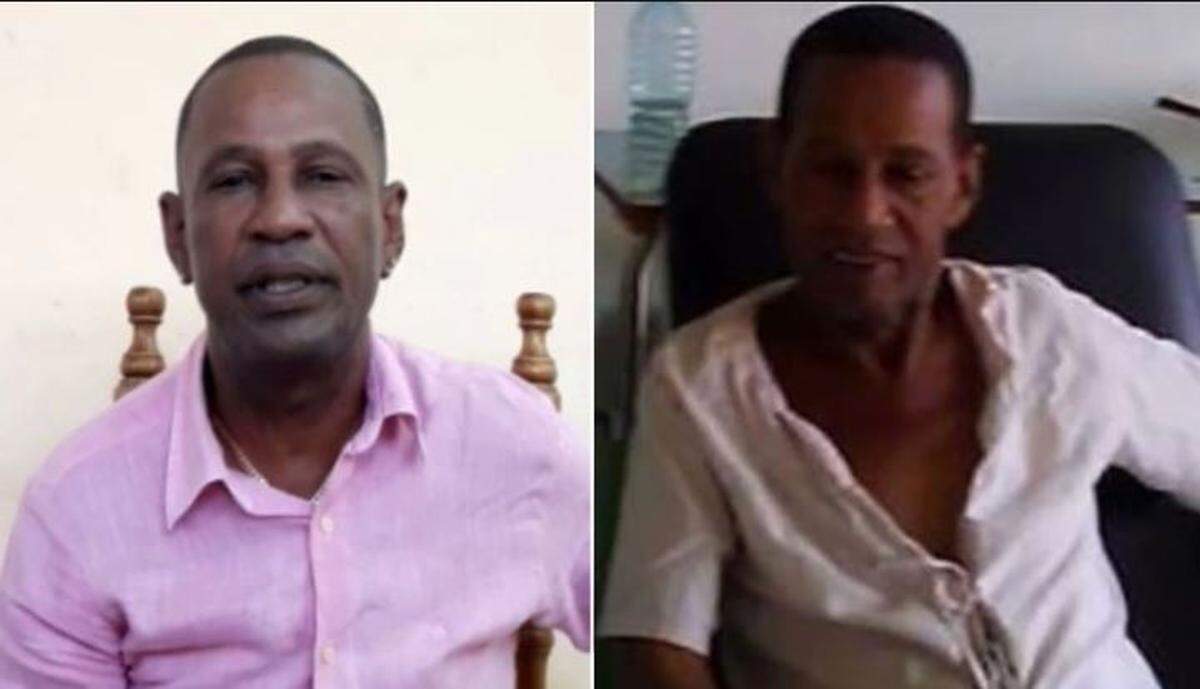
Their continued imprisonment is a “human tragedy,” Ambassador Kelley E. Currie, the U.S. Representative on the U.N. Economic and Social Council, said at the event organized by the U.S. permanent mission to the United Nations. She said the campaign’s intent was to draw attention to the cases of specific political prisoners, including Cuban political prisoner Tomás Núñez Magdariaga, who is in frail health following a 62-day hunger strike. He was released from a prison in eastern Cuba on Monday.
Panelists, including former political prisoners, condemned Cuba’s use of arbitrary detentions to silence the Cuban people.
Cuba continues to use such detentions, even as tallies by the Cuban Commission for Human Rights and National Reconciliation show that politically motivated detentions have fallen from a spike of 9,940 detentions in 2016 to 5,155 in 2017 and 1,694 through August of this year. The short-term detentions tend to range from a couple of hours up to two days.
The human rights event followed the first visit to the United Nations by Miguel Díaz-Canel, Cuba’s new president of the Council of State and Council of Ministers, in late September and comes at a time when Cuba, as it traditionally does at the U.N., is condemning the U.S. trade embargo against Cuba as a systematic violation of Cubans’ human rights.
Although Currie said Díaz-Canel tried to paint a “rosy picture of his country” while he was at the United Nations, she said: “Today the situation remains dire for those who disagree with the regime.”
As shouts of “Cuba si, bloqueo (embargo) no” rang out and the desk pounding continued, Currie’s words and those of panelists who followed her were sometimes drowned out. She asked security to remove the protesters but the noisy demonstration continued.
“I think we’re getting a good demonstration of respect for freedom of expression in Cuba,” said Michael Kozak, of the State Department’s Bureau of Democracy, Human Rights and Labor. He said Cubans on the island were being jailed “for doing nothing more than we’re trying to do today.” He suggested that those who wanted to hear the speakers put on their headphones.
Secretary General of the Organization of American States Luis Almagro said Cuba not only represses its citizens at home but exports that experience to other Latin American countries.
“You know you can shout yourselves silly, but that’s not going to change anything,” Kozek said at the end of the event.
José Ramón Cabañas, Cuba’s ambassador to the United States, called the human rights event a “show” and criticized the White House for timing it on the day that Cuba was celebrating the 65th anniversary of Fidel Castro’s “History will absolve me” speech. Castro made the four-hour speech in his own defense as he was being tried on charges related to the attack on the Moncada Barracks.
Follow Mimi Whitefield on Twitter: @HeraldMimi
This story was originally published October 16, 2018 at 12:00 AM.