
Colombia hard-right and leftist presidential candidates to spar in run-off race
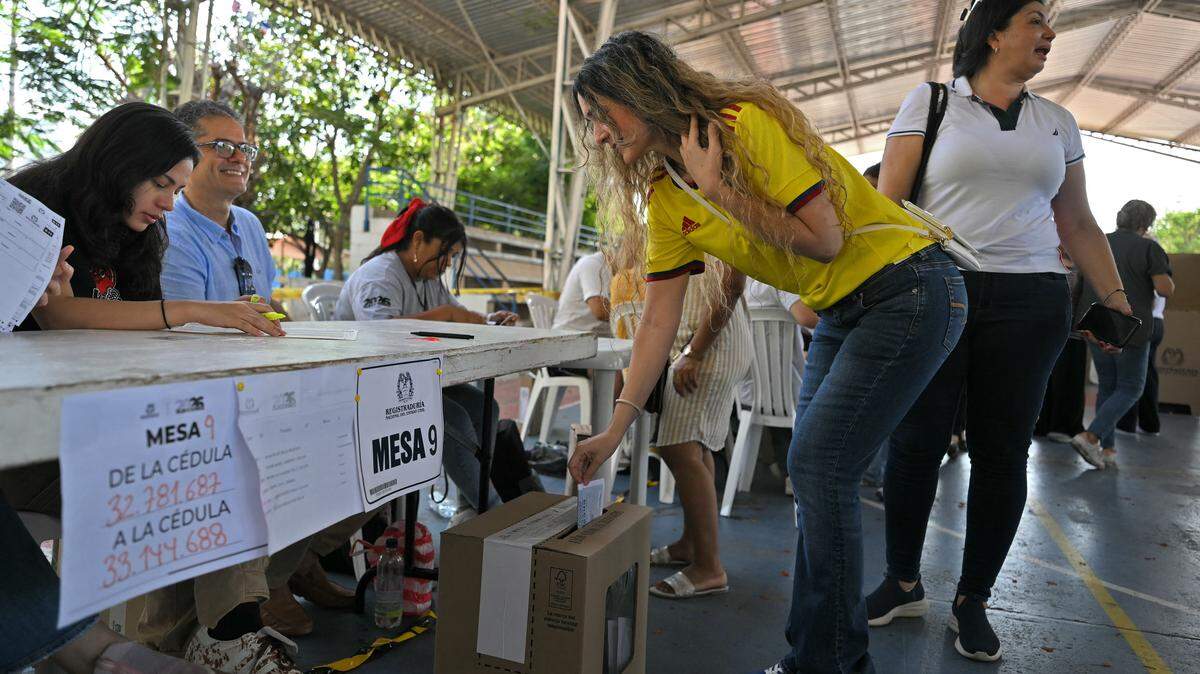
Colombia’s presidential race will head to a second round after no candidate reached the majority required to win outright.
Hard-right candidate Abelardo de la Espriella emerged as the unlikely vote leader on Sunday, gaining some 44% of votes and beating the pollsters’ favorite, leftist Senator Ivan Cepeda, who received just under 41% of votes.
The two will face off in a second round on June 21 in a race that analysts say highlights the extreme polarization of Colombian politics.
Less than two hours after polls closed across the country at 4 p.m. on Sunday, de la Espriella and Cepeda emerged as the clear frontrunners set to advance to the run-off.
In recent months, the race had narrowed to become a competition between three candidates: Cepeda, de la Espriella, and right-wing contender Paloma Valencia.
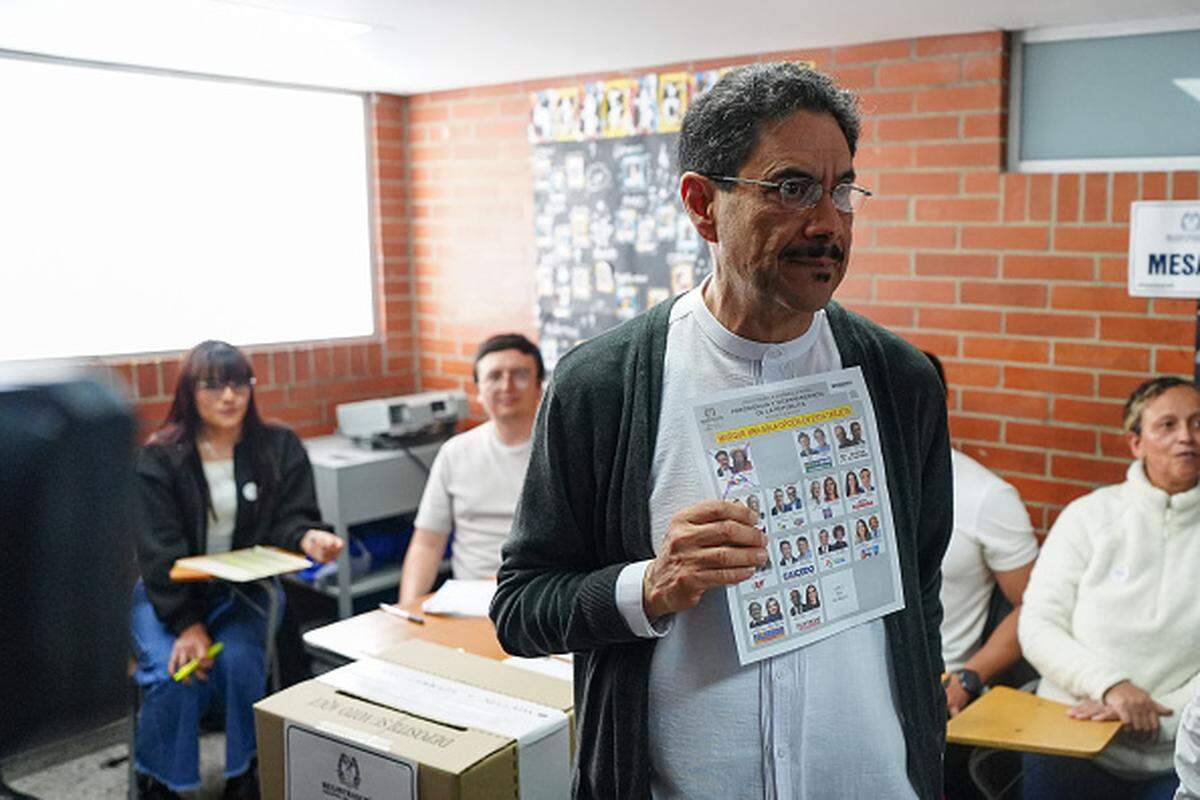
Cepeda was widely expected to advance to the second round as the only leftist candidate, coasting off of the fervent support from incumbent President Gustavo Petro’s base.
Selected to succeed Petro in leading the Historic Pact for Colombia party, the candidate promises to continue the president’s pro-labor reforms and continue peace negotiations with armed insurgent groups.
But few predicted he would receive fewer votes than de la Espriella, a result which analysts say highlights widespread dissatisfaction with the Petro administration.
“I believe that the de la Espriella phenomenon and the surprising vote in these elections are due to a kind of protest vote against Petro and his government,” said Gabriel Clavijo, a political scientist and international relations expert at Bogota’s Javeriana University.
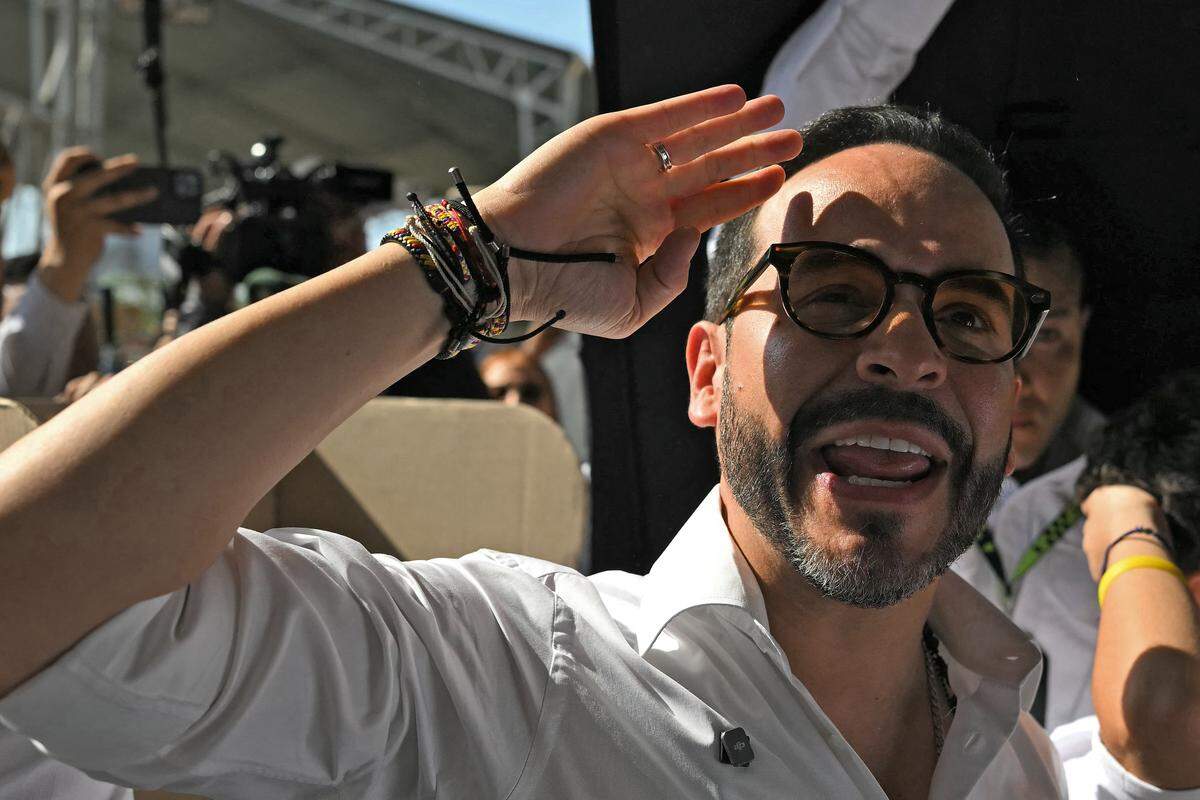
De la Espriella, who adopted the moniker “The Tiger,” sold himself as an anti-establishment candidate who would root out government corruption.
The criminal defense attorney ran a campaign pledging law and order, modeling himself after Salvadoran strongman Nayib Bukele by promising to construct “megaprisons” to jail criminals.
He has declared himself a close ally of the White House and promised to slash public spending and invest in fracking for oil.
De la Espriella, who has never before held public office, also promises to sever peace talks with armed groups and unleash a full-on offensive against rebels.
The attorney trounced his opponent, Paloma Valencia, who was seen as the right-wing establishment candidate and was backed by former President Alvaro Uribe; the senator failed to reach 7% of the vote.
Analysts say de la Espriella’s success owes to his anti-establishment messaging and his ability to tap into the polarized political landscape.
“Abelardo won because… his campaign’s goal was to defeat Petro,” said Miguel Jaramillo Lujan, a political strategist. “I think ‘El Tigre’ capitalized on the situation; he successfully built a persona, a cause, and a compelling narrative.”
On the other hand, Valencia struck a more moderate tone, choosing a centrist candidate as her running mate.
But following Sunday’s results, she announced her backing for de la Espriella’s campaign, denouncing Petro and Cepeda’s “communism”.
Now, the two finalists represent near-opposite ends of the political spectrum, highlighting what many experts describe as the intense polarization in the country.
Starting Sunday tonight, Cepeda and de la Espriella were expected to ramp up their attacks on one another as they fight to convince moderate voters that they are the less threatening of two extremes.
“The attacks are going to be much more intense,” Clavijo said, “and we’ll see increasingly radical positions across the political spectrum among Colombian voters.”