
Venezuela’s uncertain future looms large over Colombia’s presidential election
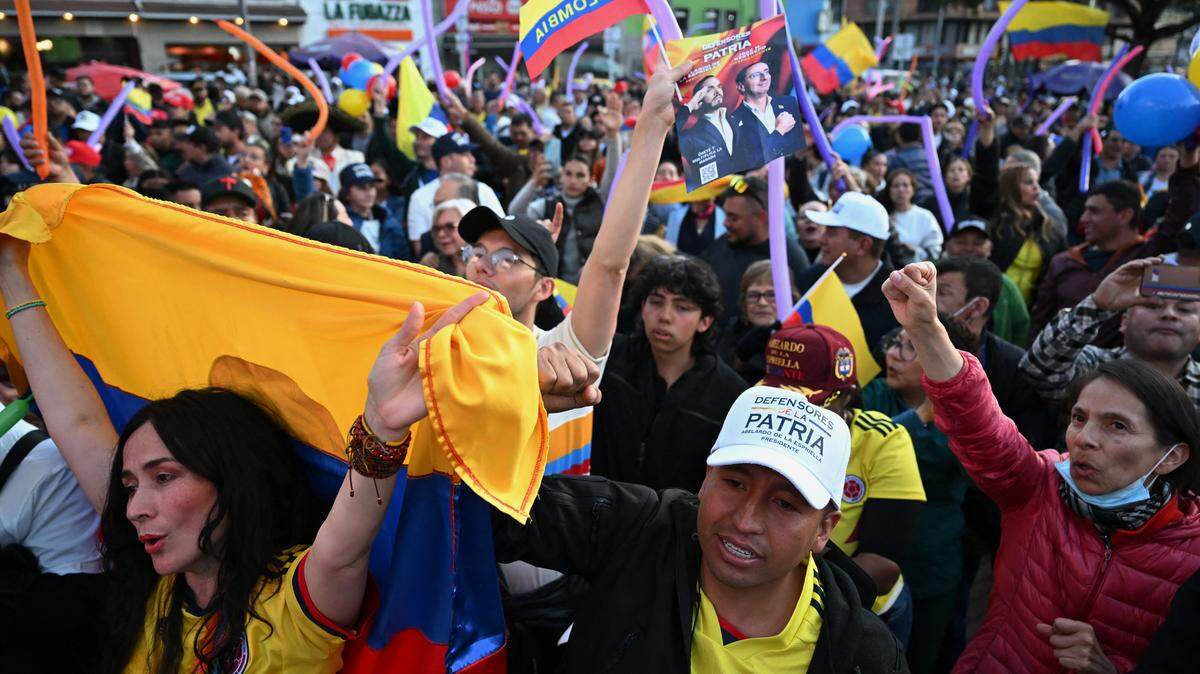
Less than two weeks before the first round of Colombia’s high-stakes presidential election, it is anyone’s guess who might lead the South American nation for the next four years.
The race has narrowed to a handful of hopefuls who personify staunchly different political persuasions – a sign of the country’s polarized electorate.
While the candidates proffer solutions to everything from inflation to insecurity, one issue has no easy fix: what to do about Venezuela, a country that shares a 1,379-mile land border with Colombia.
Since the United States military deposed Venezuelan strongman Nicolas Maduro on Jan. 3, there has been a question mark over the political and economic future of Venezuela.
In Colombia, that uncertainty bears real ramifications for whoever assumes office in August, who will be forced to navigate trade, security and diplomatic relations with Caracas, all under Washington’s watchful eye.
Who are the key candidates?
As it stands, three candidates have a chance at the country’s highest office ahead of first-round elections on May 31.
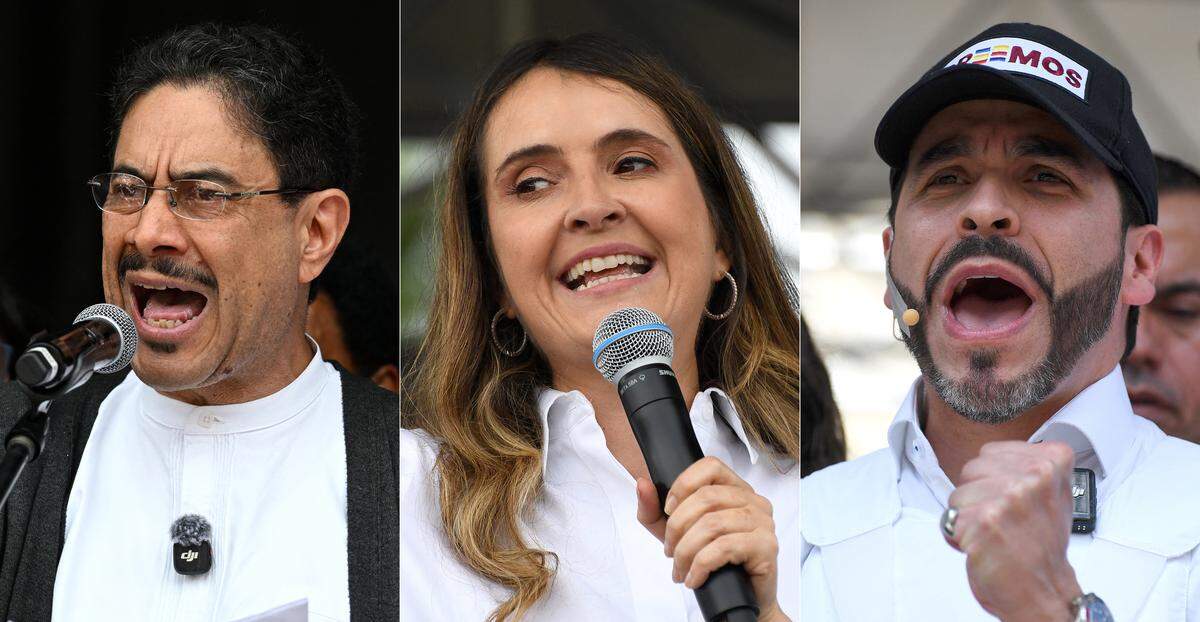
Leading the pack with roughly 40% in voter intention polls is Ivan Cepeda, the designated successor to lead leftist incumbent Gustavo Petro’s Historic Pact party.
On the right, the race is divided between two hopefuls: Abelardo de la Espriella and Paloma Valencia.
De la Espriella is a famous criminal attorney in Colombia and his bid for the presidency marks his first stab at public office.
Valencia, on the other hand, has served as a Senator since 2014 for the Democratic Center party, which is led by hard-right ex-President Alvaro Uribe, who served from 2002-10.
Both candidates on the right promise pro-business reforms and an iron fist against surging rebel violence.
Meanwhile, Cepeda pledges to continue Petro’s progressive platform which promotes labor rights and advocates for marginalized sectors of the population.
The long shadow of Jan. 3
“None of the candidates really has a policy on the situation in Venezuela,” said Ronal Rodriguez, a researcher at Bogota’s Universidad del Rosario’s Venezuela Observatory.
He argues that, while relations with Colombia’s neighbor were a key talking point in previous electoral cycles, candidates have avoided being pinned down this time round.
Rodriguez noted that those who did make declarations about Venezuela have been forced to backtrack since Jan. 3. For example, de la Espriella had pledged to sever relations with Venezuela but now he says that, while he would not sit down with Interim President Delcy Rodriguez, he would work with Caracas, albeit through the U.S.
“It is unlikely that a Colombian president… would enter into a confrontation with a country that is currently under U.S. tutelage,” noted Rodriguez.
Valencia, who said last year that she would work with Venezuelan opposition figures Maria Corina Machado and Edmundo Gonzalez, also now appears geared to follow Washington’s lead in working with the interim government.
“For our government, cooperation on the reconstruction of Venezuela will be a priority,” wrote Valencia in an X post in April.
While the right-wing candidate has said she does not see herself sitting down with Delcy Rodriguez, she appears set on cooperating with the White House.
Meanwhile, leftist candidate Cepeda has avoided concrete declarations on Venezuela. But the longtime senator is haunted by a history of tweets supporting Hugo Chavez, the late strongman who created Venezuela’s socialist state, and his successor, Maduro.
“If he wins the presidency, there could be significant pressure from U.S. authorities against the Colombian government,” said Rodriguez.
The analyst noted that Cepeda could face similar sanctions from the White House as has Petro, who had his U.S. assets frozen after President Donald Trump accused him of being “an illegal drug dealer” last year.
Shortly after Maduro’s capture, the White House threatened a similar operation against Petro for opposing the intervention. Cepeda, who has vocally condemned U.S. interference in Latin America, will be under pressure from Washington to cooperate.
A fruitful bilateral relationship
With the candidates under pressure to work with Venezuela, albeit on Washington’s terms, a few key bilateral issues come into play.
“Improving the relationship between these two countries has enormous gains to offer for both sides that I think it will be difficult for a forthcoming administration to overlook,” explained Elizabeth Dickinson, deputy director for Latin America at the International Crisis Group.
She noted that Venezuela used to be a key export market for Colombian agricultural goods, particularly staple crops, chickens and eggs. While trade took a hit when ex-President Iván Duque, who served from 2018-22, severed ties, there is now an opportunity for Colombian businesses to export food as well as pharmaceuticals and consumer goods.
For Rodríguez, trade with Colombia is vital to Venezuela’s economic future: “Venezuela’s economic recovery depends largely on how its relationship with Colombia is managed.”
The analyst added that Washington is keen for Colombia to buy natural gas from Venezuela, which recently agreed to export the hydrocarbon to its neighbor.
In addition to economic issues, security problems are a key topic in bilateral relations.
The land border between Colombia and Venezuela has historically been a hotbed for guerrilla activity, narcotrafficking, and illegal mining.
Colombia’s next president will be under pressure to tackle the country’s worst internal security crisis since the 2016 peace deal with FARC rebels.
While Cepeda vows to continue negotiating with armed groups, Valencia and de la Espriella pledge a heavy-handed approach against the rebels.
However, fighting armed groups on the lawless border with Venezuela, a conflict hotspot, may prove difficult without help from Caracas.
“I think one of the challenges for the Colombian state over the past decades has been the fact that armed and criminal groups… have moved seamlessly across the border and been able to take refuge in Venezuela,” Dickinson said.
The analyst noted that Colombian guerrillas have historically found refuge in Venezuela, where local security forces are often “complicit” with rebels, taking a cut from illicit economies.
But now Delcy Rodriguez is under pressure from Washington to expel Colombian armed groups – many of them U.S-designated terrorist organizations.
The right-wing candidates may then be forced to sit down with the interim president after all if they want to deliver on their mandate of crushing the armed groups.
But Dickinson also noted that Caracas may not be able to help: “I think it would be very difficult for Venezuela to immediately turn that ship around and start combating the very criminal groups that they have had a complicit relationship with.”
The human cost
As Colombia’s presidential candidates tip-toe around Venezuela and Washington pushes economic “reconstruction”, there is another vital issue surrounding bilateral relations: migration.
“The stability of millions of Venezuelans residing in Colombia is currently up in the air,” said Juan Carlos Viloria Doria, president of the Global Alliance for Human Rights and Vice-President of Venezuelans in Barranquilla, an advocacy organization.
Some 2.8 million Venezuelans live in Colombia, many of them after having fled economic hardship or political persecution. Roughly one million face an uncertain migratory status, having entered the country informally.
“The next administration will have the task of implementing better public policies to protect and integrate migrants,” said Viloria.
For him, Colombia’s next president will assume an important role not only in formalizing migrants but in pushing for change in Venezuela that will allow them to go home:
“Colombia must strive to find a peaceful, constitutional, and coordinated solution that supports Venezuelans in the process of rebuilding their country.”
Additional reporting by Isabel Ramelli