Criminal syndicates tighten grip on Amazon as rainforest nears collapse
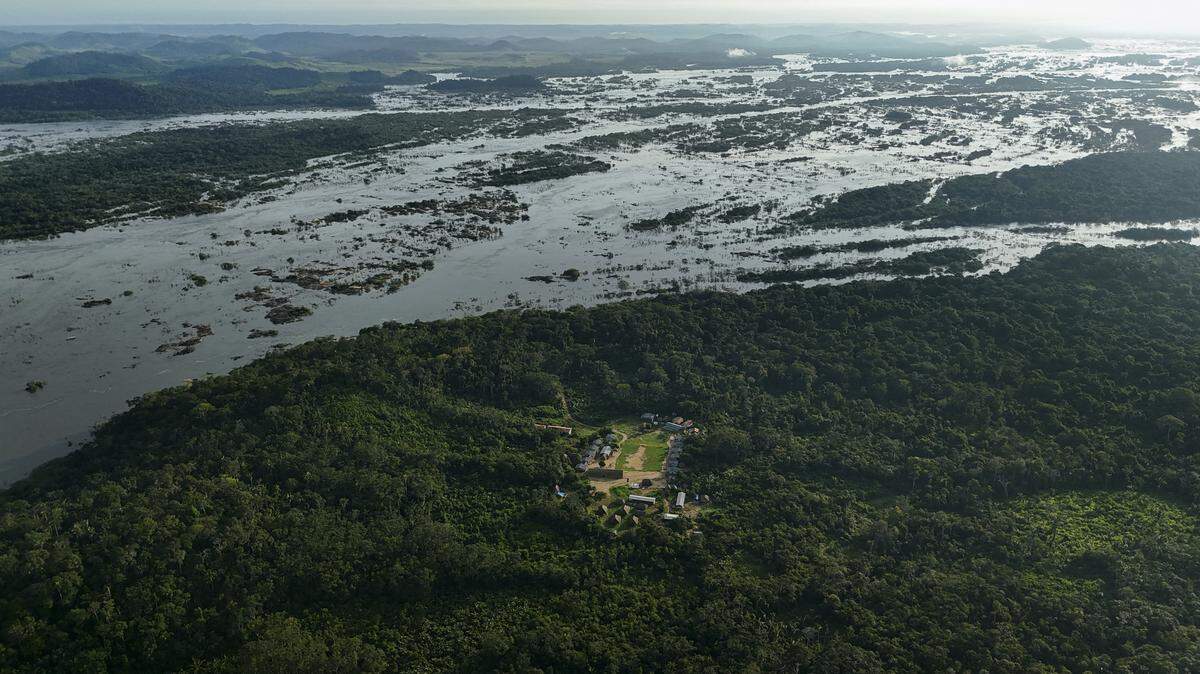
Deep in the Amazon rainforest, where rivers serve as highways and entire communities sit days away from the nearest government outpost, organized crime is reshaping one of the planet’s most critical ecosystems.
The men carrying rifles are no longer just drug traffickers.
They are gold smugglers, land grabbers, illegal loggers and extortionists. They move cocaine along jungle waterways, poison rivers with mercury, finance cattle ranches with laundered cash and impose their own systems of order in territories where governments barely exist.
And according to a sweeping new report by the Brussels-based International Crisis Group, an independent non-profit think thank dedicated to preventing deadly conflicts, they are rapidly outpacing the states trying to stop them.
“The Amazon, the world’s largest tropical rainforest, is under assault from organized crime,” the report warns, describing a basin-wide criminal expansion that now stretches across nearly every corner of the rainforest.
What was once viewed primarily as an environmental crisis has evolved into something far more dangerous: a regional security emergency capable of accelerating ecological collapse.
The report, titled “A Jungle Heist: Shielding the Amazon from Organised Crime,” argues that criminal organizations have become one of the greatest obstacles to preserving the rainforest because they increasingly control the illicit economies driving deforestation, violence and state corruption across the basin.
Criminal syndicates
The consequences extend far beyond South America.
Scientists have long warned that the Amazon is nearing a catastrophic tipping point. Roughly one-fifth of the original forest has already disappeared, placing the ecosystem dangerously close to the estimated 20% to 25% threshold beyond which vast portions of the rainforest could begin transforming into dry savanna.
If that happens, the Amazon would lose its ability to recycle rainfall through the atmosphere, dramatically weakening one of Earth’s largest natural defenses against climate change.
Indigenous territories and protected lands in the Amazon currently store an estimated 34 billion tons of carbon. If large sections of the rainforest collapse, the report says, the Amazon could cease functioning as a global carbon sink and instead become a major carbon emitter.
But increasingly, the forces accelerating that destruction are not just multinational corporations or ranchers clearing land for cattle.
They are criminal syndicates.
The report estimates organized crime is active in at least 67% of Amazon municipalities across Bolivia, Brazil, Colombia, Ecuador, Peru and Venezuela.
Some of the groups involved are among the most powerful criminal organizations in the hemisphere.
Brazil’s criminal organizations Comando Vermelho and Primeiro Comando da Capital have expanded aggressively across the Amazon over the past decade and now dominate key trafficking corridors linking coca-growing regions in Colombia and Peru to Atlantic ports used to ship cocaine to Europe.
Together, the two Brazilian groups are estimated to have roughly 130,000 members nationwide.
The new report describes a sprawling transnational criminal system in which Brazilian syndicates, Colombian guerrilla dissidents, Ecuadorian gangs and local crime families collaborate and compete simultaneously while moving drugs, gold, weapons and money across porous borders.
“The rivers are the roads,” one senior law enforcement official told Crisis Group researchers.
Coca cultivation
Drug-trafficking routes increasingly snake through remote sections of the rainforest as traffickers seek to avoid more heavily policed corridors elsewhere in Latin America.
Peru now accounts for most coca cultivation within the Amazon basin, according to the report, while laboratories hidden throughout Colombia, Ecuador, Peru and Bolivia process coca into cocaine before it moves through the rainforest toward ports in Brazil and Ecuador.
One major route runs through Brazil toward West Africa and eventually Europe. Another funnels cocaine through the Amazon toward Ecuador’s port city of Guayaquil, now one of the world’s principal departure points for cocaine shipments heading to Europe.
The violence surrounding those routes has transformed parts of the Amazon into some of the deadliest regions in Latin America.
In Tabatinga, a Brazilian city bordering Colombia and Peru, gang wars between Comando Vermelho and rivals backed by Primeiro Comando da Capital pushed homicide rates as high as 80 killings per 100,000 residents between 2020 and 2023.
Across the broader Brazilian Amazon, homicide rates now exceed the national average by more than 30%, according to the report.
Yet drugs are only part of the story.
The report says illegal gold mining has become even more profitable than cocaine trafficking in parts of Latin America, fueled by soaring global gold prices and rising international demand.
Criminal groups now control or tax illegal mining operations stretching from Venezuela’s Bolívar state to Peru’s Madre de Dios region and deep into Brazil’s northern territories.
The profits are staggering. Illegal gold networks move money through shell companies, corrupt traders and international supply chains that often blend illegally extracted gold with legitimate exports before it reaches global markets.
Brazilian gold mined illegally inside Indigenous territory has reportedly been smuggled into Venezuela and exported internationally because buyers there ask fewer questions about its origins.
The environmental devastation left behind is immense.
Illegal miners clear rainforest, dredge riverbeds and leave behind toxic wastelands contaminated with mercury and cyanide.
At least two million hectares of Amazon forest — about five million acres, roughly the size of the state of New Jersey — had already been damaged by illegal gold mining by 2024, a 52% increase in just six years, according to the report.
Mercury contamination has become so severe in some Indigenous communities that blood mercury levels among Yanomami and Munduruku residents routinely exceed World Health Organization safety thresholds.
The report describes widespread neurological illness, chronic disease and collapsing food systems in mining zones where rivers can no longer safely provide fish or drinking water.
The most vulnerable
In Brazil’s Yanomami territory, where some 20,000 illegal miners invaded lands inhabited by 30,000 Indigenous residents, authorities declared a health emergency after malaria rates exploded and hundreds of preventable child deaths were recorded over four years.
Women and children are among the most vulnerable.
The report details allegations of rape, child prostitution, forced labor and trafficking linked to mining camps throughout the Amazon.
In Peru, Indigenous leaders described criminal groups using children as human shields during police raids on illegal mining operations.
Meanwhile, criminal organizations are increasingly penetrating the state institutions meant to stop them.
“There is a policy of state capture by organized crime,” one Brazilian diplomat told researchers.
The report documents repeated cases of police officers, military personnel and local officials collaborating with traffickers and miners in exchange for payments that dwarf public salaries.
In Peru, prosecutors have investigated 80% of elected authorities in five Amazon regions for alleged criminal conduct.
In Venezuela, the report says members of the security forces — including senior military officers — have facilitated cocaine shipments or collaborated with trafficking organizations.
Local ‘guards’
The corruption runs so deep that some Indigenous groups no longer trust state security forces.
Many communities have created their own “guards” — local protection units designed to monitor territory and resist criminal intrusion.
Some use drones, GPS systems and satellite imagery to track illegal activity. Others patrol rivers themselves.
But these groups often face heavily armed criminal organizations with little outside support.
The Amazon accounted for one in every five killings of environmental and land defenders worldwide in 2022, according to figures cited in the report.
In some areas, the guards themselves have been infiltrated or co-opted by criminal organizations.
The report describes Indigenous patrols in Venezuela allegedly working alongside armed groups controlling mining areas and extorting workers along river routes.
Elsewhere, communities fear local police are collaborating with traffickers and miners.
In one incident recounted in the report, Indigenous guards in the Peruvian Amazon confronted police officers allegedly transporting illegal mining equipment into protected territory. Officers responded by firing warning shots into the water.
Governments across the region have launched repeated military and police operations targeting illegal mines and trafficking routes, but the report says most crackdowns have produced only temporary disruptions.
Mining equipment destroyed during raids is quickly replaced.
Traffickers shift routes
Illegal miners relocate across borders.
“We can’t bomb climate change,” one Brazilian law enforcement officer told Crisis Group researchers.
The report argues that one of the central failures of Amazon security policy has been the inability of governments to maintain a permanent presence in remote regions where criminal groups operate freely.
Large portions of the rainforest remain effectively ungoverned.
More than five million people in rural Amazon areas live over six miles from the nearest health center or hospital.
Many communities are accessible only after days of travel by river.
“The state has historically been feeble across much of the Amazon,” the report notes.
That vacuum has allowed criminal organizations to evolve into parallel powers. In some territories they establish rules, enforce order, resolve disputes and decide who may enter or leave communities.
Residents who resist are often threatened, displaced or killed.
The report ultimately argues that protecting the Amazon will require governments to stop treating organized crime and environmental destruction as separate crises.
They are now inseparable.
The International Crisis Group recommends deeper cross-border intelligence sharing, stronger anti-corruption measures, tighter oversight of international gold and commodity markets and far closer collaboration between governments and Indigenous communities.
The report also urges international companies to ensure supply chains are free from products tied to environmental crime and organized criminal activity.
But the authors warn that time is running short, concluding:
“Criminal groups are for now moving much faster than law enforcement across the Amazon’s vast reaches.”