
Colombia reels from explosive attack as death toll climbs to 20
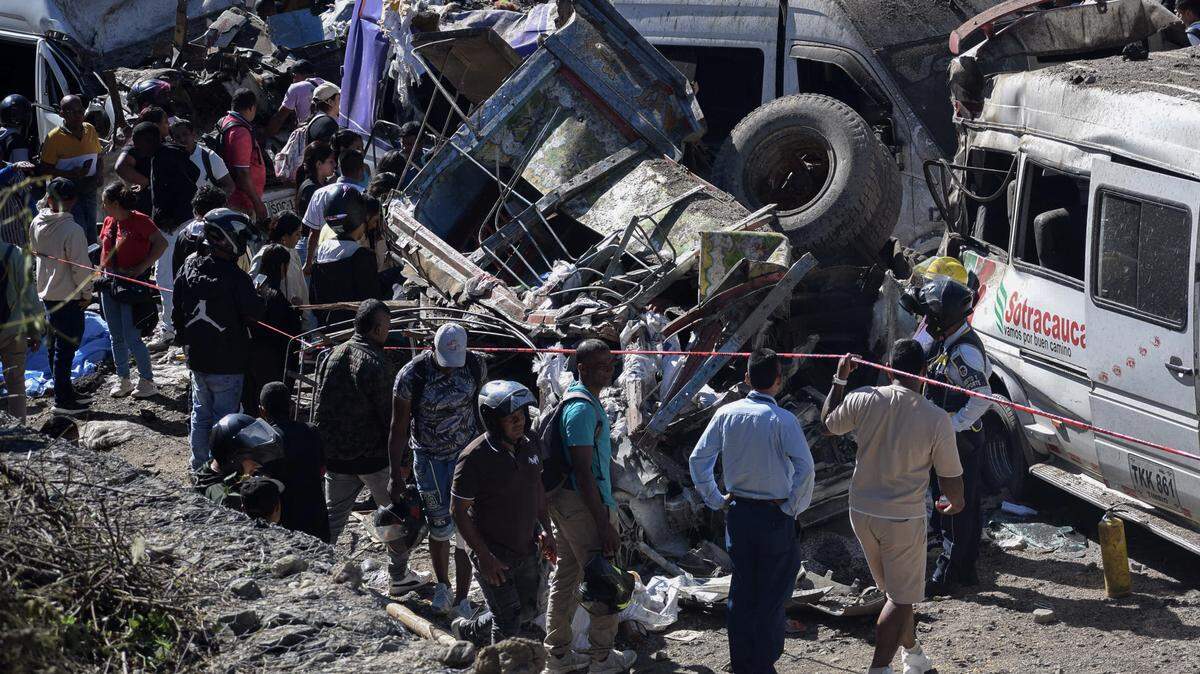
The death toll from an explosive attack in Colombia on Saturday has risen to 20, according to authorities, with over 36 more injured.
The government blames a dissident faction of the demobilized FARC rebels for detonating an explosive on the Pan-American Highway in the southwestern Cauca province.
The explosion was part of a wave of attacks in recent days which have rocked Cauca and fueled security concerns ahead of presidential elections next month.
“It is a tragedy that has torn our department apart and plunged our families into deep mourning. There are no words to describe the pain we feel today,” said the governor of Cauca, Octavio Guzmán Gutiérrez, in an X post. He later announced three days of official mourning in the province.
Saturday’s bombing was the most fatal in a string of attacks in Cauca in recent days, which is one of the regions most affected by Colombia’s internal armed conflict.
Despite a 2016 peace agreement with the Revolutionary Armed Forces of Colombia, the country has seen a resurgence in violence in recent years as new armed groups consolidate power over the drug trade and illegal mining.
Authorities say Saturday’s attack was perpetrated by the Central General Staff, EMC, a rebel group under the command of infamous ex-FARC commander Ivan Mordisco.
“Those who carried out the attack… are terrorists, fascists and drug traffickers,” President Gustavo Petro posted on X following the bombing. “I want the strongest possible global action against this narco-terrorist group… I want the people of Cauca to be freed from this mafia.”
But the Petro administration has faced criticism, with Governor Guzmán calling on stronger action from the national government.
“Cauca cannot continue to face this barbarity alone.… We call on the national government to take decisive, sustained and effective action in response to the serious public order crisis we are facing,” Guzmán wrote on X, calling for the Ministry of Defense to deal with the crisis.
On Saturday night, Defense Minister Pedro Sánchez travelled to Cauca and pledged a crackdown on terrorism.
The latest attack is part of a trend of increased violence against civilians in Colombia’s armed conflict, analysts say.
“The bottom line here is that the EMC, who the authorities have accused of being responsible for these attacks, has a pattern of attacks on civilians and civilian infrastructure that is very alarming,” said Elizabeth Dickinson, deputy director for Latin America at the Brussels-based International Crisis Group.
She noted that while civilians are increasingly caught in the crossfire of rebel attacks on security forces, Saturday’s bombing marked “a new low in terms of the level of indiscriminality.”
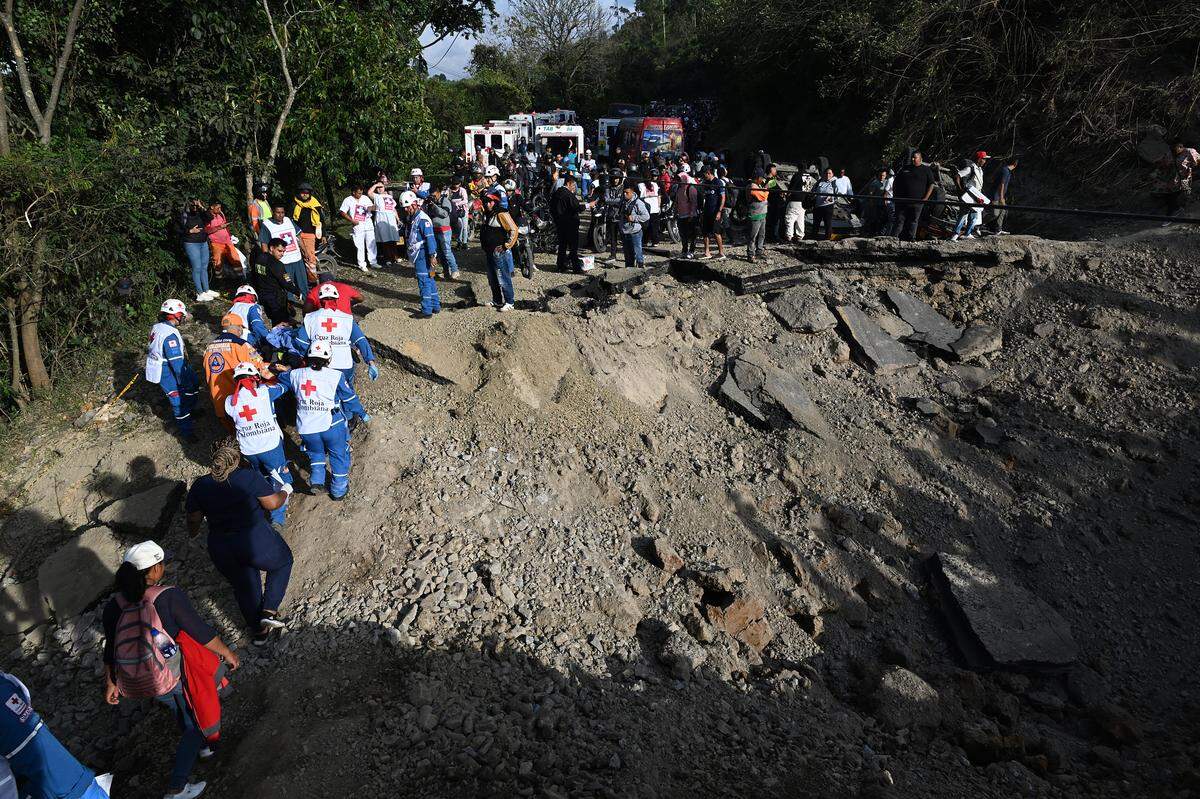
The bombing was part of a string of attacks in Cauca in recent days, according to the state government.
It fuels wider security concerns in Colombia, which has proven a key issue ahead of first-round presidential elections scheduled for May 31.
Ivan Cepeda, the leftist candidate from Petro’s Historic Pact party, has pledged to continue the current administration’s strategy of “Total Peace,” which aims to negotiate peace deals with armed groups.
“The effect of this attack on the election is likely going to be minimal against Cepeda, considering his very solid voting block perceives this as another signal that negotiations must prevail,” said Sergio Guzman, director of Colombia Risk Analysis, a Bogotá-based political risk consultancy.
Cepeda, whose running mate, Aida Quilcue, is an Indigenous senator from Cauca, condemned the attack in an X post and highlighted that it had targeted Indigenous people in a stronghold for his party.
But Cepeda’s right-wing rivals seized the opportunity to criticize what they describe as the failure of peace negotiations.
“The time has come to admit, in no uncertain terms, that the Total Peace initiative has FAILED,” wrote Paloma Valencia, the candidate for the right-wing Democratic Center party, in response to Cepeda’s statement on X.
Valencia, who is also from Cauca, proposes an iron fist against armed groups in the same vein as her political mentor and party leader, former President Alvaro Uribe.
The attack “will give steam to members of the opposition who want to end negotiations and move forward with a more aggressive plan to face the [rebels],” Guzman said.
Meanwhile, the bombing compounds concerns about the democratic process in rural areas run by armed groups.
“This really has a chilling effect across the population,” said Dickinson, adding that “in an electoral context, we would ideally want the opposite. We would want people to feel freedom of movement and an ability to cast their vote without these sorts of pressures.”
This story was originally published April 26, 2026 at 2:05 PM.