Amid desire for change, Colombians may turn to former guerrilla in Sunday’s vote for president
Colombians go to the polls on Sunday to elect a new president amid concerns that the country is heading in the wrong direction and that the government has failed to protect its citizens from the economic impact of the coronavirus pandemic.
More than 39 million Colombians are registered to vote in one of the 12,263 polling stations inside the country, or in one of 250 places set up in 67 countries, including the United States, where an early voting process began Monday.
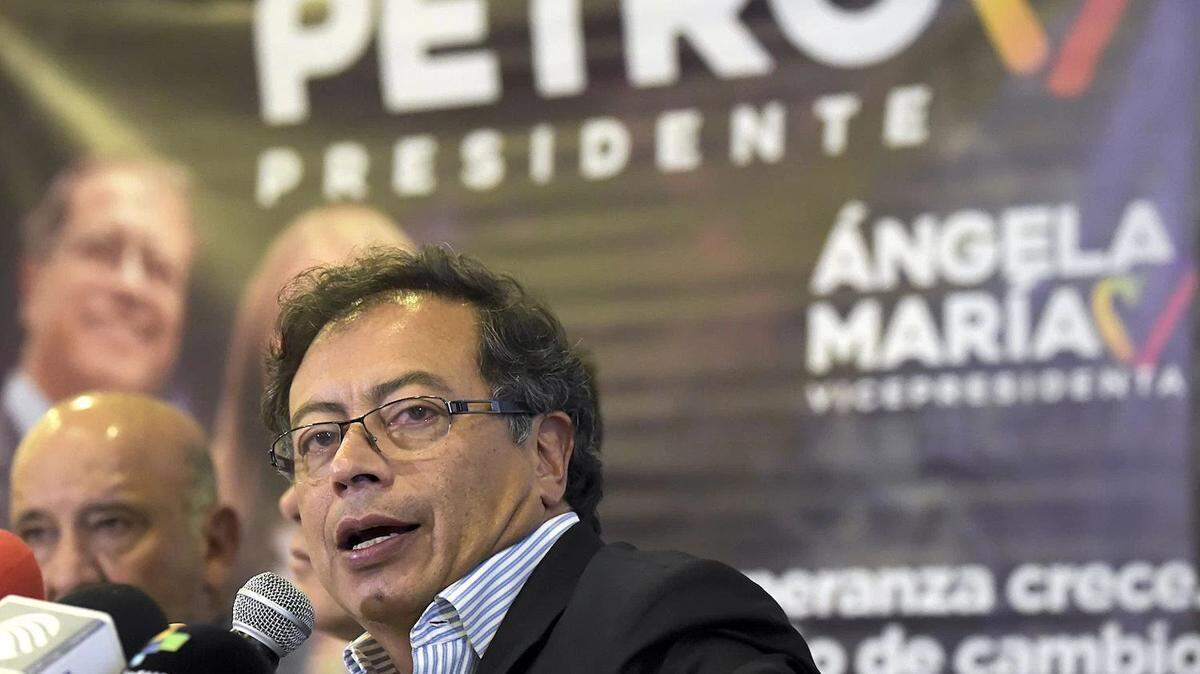
The latest polls suggest that leftist candidate and former member of the M-19 guerrilla group Gustavo Petro will garner the largest number of votes, passing on easily to a second round of voting set for June 19 if he does not win the election outright on Sunday.
More than 40% of Colombian voters say they favor Petro, who has a 13-point lead over his nearest contender, former Medellín Mayor Federico Gutierrez, whose support levels stand at around 27%, according to a survey over the weekend by polling firm Invamer and the Bogotá-based daily El Espectador.
In third place is former Bucaramanga Mayor Rodolfo Hernandez, with 21%, who still has a chance to move on to a second round of voting if he manages to gather more votes than Gutierrez on Sunday.
As the candidates moved to the final days of the election, their campaigns have pounded heavily on a message of change, attempting to capitalize on the unpopularity of President Iván Duque, whose disapproval level now stands at 67%.
“The popularity of the current president is one of the lowest in recent history,” said former Colombian Foreign Minister Rodrigo Pardo. The general perception is that Duque failed to take steps to protect the lower and middle class from the severe economic impact caused by the coronavirus pandemic.
In contrast with previous elections that were dominated by lingering political issues, such as the peace process with guerrilla groups, Colombians appear headed to the polls “seeking to improve their living conditions, because the last few years have been very negative for the great majority, due mainly to the coronavirus, but also because of other issues,” Pardo said.
According to the Invamer/El Espectador poll, 74% of Colombians believe that the country is heading the wrong way and only 21% believe the opposite. The economy is one of the top concerns among those polled, along with growing violence, drug trafficking, unemployment and corruption.
Even Gutierrez, the candidate most closely aligned to the current administration, talks about change in the interviews he has given ahead of the election, but he is having a hard time competing against Petro, who has been promoting change for years.
Coming out of the far left, Petro’s message includes replacing the political parties that have ruled Colombia for years, something he pushed in the two previous presidential elections, in which he also ran.
“People in general are tired of the status quo and you can feel this sentiment not only in the election, it’s something that has been the perception since 2019 and in particular last year,” amid the massive and at times violent demonstrations against the government, said Silvana Amaya, senior analyst of the think thank Control Risks.
“There is general discontent and people want changes. And that means economic change. People are suffering and the middle class was affected by the pandemic,” she added.
Petro’s campaign speeches are heavily laden with references to the economic hardships faced by the lower classes. “We can’t continue with hunger, we can’t continue with the injustices. ... We can’t continue with governments that want to condemn the people to a life of inequality and lack of rights and liberties,” he said Sunday.
But his promises of change sound too threatening to some, who see in his discourse and his past as a guerrilla indications that he will attempt to reform the state into a socialist regime like former Venezuelan leader Hugo Chávez did in Venezuela two decades ago.
Fabio Andrade, a Colombian activist in Miami, fears a Petro victory could mark the beginning of the end of the country’s democracy.
“Petro is a threat to democracy, its institutions and the peace in Colombia,” he said. “This is easy to see if you examine what he has said and what he has done. This is a man that took up arms against the Colombian people and has now taken the path of the ultra left to gain power through votes.”
But not all analysts believe that Petro would be able to achieve in Colombia what Chávez did in Venezuela, given that he would only have four years in power if he wins the presidency, and that he would have many challenges, including the need to improve his relationship with the armed forces, which fought against the M-19 guerrillas in the 1970s and ‘80s.