Lula warns Trump: stay out of Brazil’s presidential election
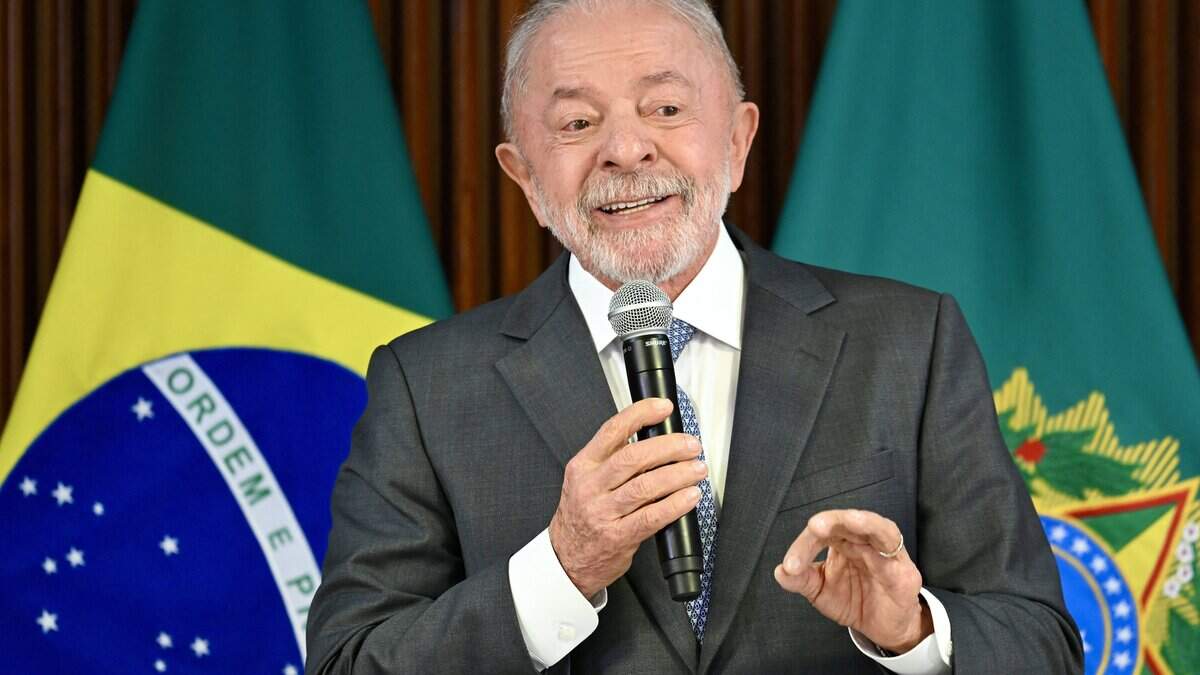
A fresh diplomatic clash erupted Wednesday between Brazilian President Luiz Inácio Lula da Silva and U.S. President Donald Trump, as Lula sharply rebuked Trump for commenting on Brazil’s electoral politics and warned Washington against meddling in the country’s presidential race.
Speaking to reporters in Geneva after attending the G7 summit in France, Lula made clear that Brazil would not tolerate foreign interference in its democratic process, particularly from the United States.
“Brazil’s elections are Brazil’s business,” Lula said. “I want the same respect for Brazil that I have for the United States.”
Lula’s unusually blunt remarks came after Trump escalated his criticism of Brazil’s judiciary, calling the South American nation “politically dangerous” following the conviction of Eduardo Bolsonaro, son of former President Jair Bolsonaro and one of the most prominent figures of Brazil’s far right.
Trump said Brazilian authorities had jailed “someone running in an election” who was “doing well in the polls,” portraying the case as politically motivated persecution.
But Trump appeared to make a factual error: Eduardo Bolsonaro is not running for office in October’s election. He appeared to confuse Eduardo with his brother, Sen. Flávio Bolsonaro, who is expected to mount a major conservative challenge against Lula.
Eduardo Bolsonaro, a former congressman who has lived in Texas since early 2025, was sentenced Tuesday by Brazil’s Supreme Court to four years and two months in prison after being convicted of coercion tied to efforts to interfere in legal proceedings against his father.
According to the court, Eduardo used his political connections in Washington to pressure U.S. officials into sanctioning Brazilian authorities in an effort to derail the prosecution of Jair Bolsonaro, who last year received a 27-year prison sentence for orchestrating an attempted coup after losing the 2022 presidential election to Lula.
Supreme Court Justice Alexandre de Moraes, a central figure in Bolsonaro-related investigations, delivered a blunt assessment.
“A federal lawmaker’s duty is not to lobby foreign governments against his own country,” Moraes wrote.
Lula dismissed Trump’s criticism as stemming from a poor understanding of Brazil’s institutions.
“I think Trump knows very little about Brazil,” Lula said. “If the Brazil he knows is the Brazil he sees through the Bolsonaro family, then he doesn’t really know Brazil.”
He then delivered one of his sharpest jabs, suggesting the United States—not Brazil—could benefit from lessons in electoral administration.
Brazil’s electronic voting system, Lula noted, allows votes to be counted and results announced within hours, avoiding the prolonged disputes that have increasingly marked U.S. elections.
Brazil, he said, conducts elections that are “calmer, smoother and less problematic.”
“If anyone needs to learn about civilized elections, it is Trump,” Lula said.
The dispute comes amid broader strains between Washington and Latin America’s two largest economies, Brazil and Mexico, both of which have pushed back against the Trump administration’s expanding anti-cartel campaign.
Officials in Brasília and Mexico City warn that Washington’s latest moves risk crossing the line from counternarcotics policy into interference in domestic affairs and national sovereignty.
In Mexico, President Claudia Sheinbaum recently issued one of the strongest rebukes yet.
“These are not rhetorical questions: Mexico is nobody’s piñata,” Sheinbaum said in a nationally televised speech before thousands gathered at Mexico City’s Monumento a la Revolución.
The remarks reflected growing unease across Latin America over Washington’s increasingly expansive definition of cartel warfare.
Tensions escalated further after Secretary of State Marco Rubio announced on May 28 that Washington would designate Brazil’s two largest criminal organizations — Primeiro Comando da Capital (PCC) and Comando Vermelho — as Specially Designated Global Terrorists, with formal Foreign Terrorist Organization status expected to follow.
The designation would place the Brazilian gangs in the same legal category as Hamas and Hezbollah, significantly expanding Washington’s ability to pursue sanctions, prosecutions and potentially broader security operations.
The Trump administration says the move is justified by the gangs’ growing international reach and what Rubio described as their “brutal attacks” on officials and civilians. U.S. officials say both groups now operate transnational networks with links extending into the United States.
Brazilian officials, however, see the move as potentially dangerous.
Lula has accused Washington of trying to recast Brazil’s public security challenges through a counterterrorism framework that could justify unilateral U.S. action.
“We will not accept being treated like children; we will not accept being treated as if we were a banana republic,” Lula said in a separate speech last week criticizing Rubio’s announcement.
The political tensions are unfolding alongside growing economic friction.
In recent months, the Trump administration has revived tariff pressure on Brazil, proposing a 25% tariff on Brazilian imports and accusing Latin America’s largest economy of unfair trade practices. The move came despite Lula’s visit to Washington in May, where he sought to ease trade tensions.
Lula said that during a brief interaction with Trump at the G7, he handed the U.S. president documents outlining Brazil’s efforts against organized crime and detailing investment opportunities in rare earth minerals, which are critical to advanced technologies.
“As Trump talks a lot and listens little, I gave him everything in a folder,” Lula said.
Lula also pushed back against Washington’s concerns over China’s expanding economic footprint in Latin America, arguing that the United States has ceded ground through inaction.
“I told Trump that the United States has not participated in public tenders in Brazil for a long time,” Lula said. “It cannot complain about China occupying spaces that were left empty.”
This article was complemented with El Nuevo Herald’s wire services.