Keiko Fujimori leads Peru vote, heads toward runoff amid fraud claims
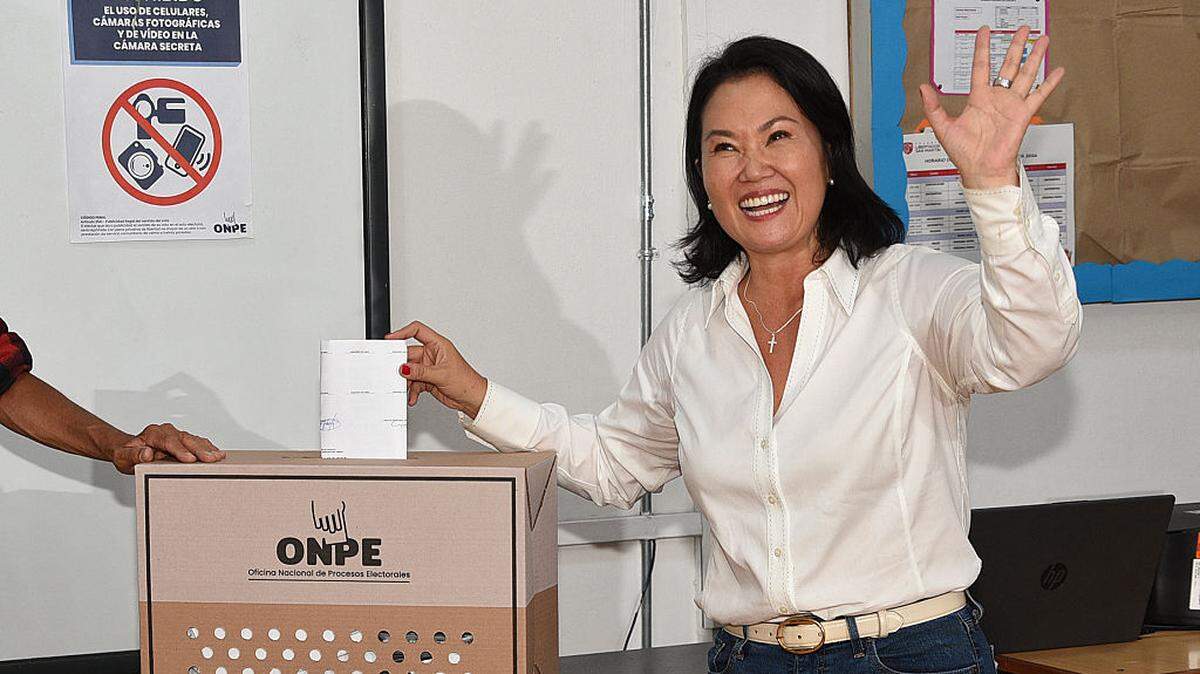
Keiko Fujimori appeared headed for yet another presidential runoff in Peru after early results from Sunday’s election showed her leading a fragmented field, setting up a potential showdown with ultraconservative former Lima mayor Rafael López Aliaga in a vote shaped by rising crime, political instability and disputes over the electoral process.
With 51.6% of ballots counted, Fujimori — the conservative candidate from Fuerza Popular — had secured 16.9% of valid votes, while López Aliaga, of the right-wing Renovación Popular party, followed with 14.7%, according to Peru’s Office of National Electoral Processes. The early tally placed both candidates on track to advance to a June 7 runoff to decide who will govern for the 2026–2031 term.
The narrow margins reflected a deeply fragmented electorate and underscored the volatility of a country that has cycled through eight presidents in the past decade. Centrist Jorge Nieto trailed in third place with roughly 12.9%, followed by businessman Ricardo Belmont with 9.8%, comedian Carlos Álvarez with 8.4%, leftist Roberto Sánchez with 7.7% and center-left candidate Alfonso López Chau with 7.6%.
The preliminary outcome, if confirmed, would mark the fourth consecutive time Fujimori advances to a second round. She previously lost runoffs in 2011, 2016 and 2021, but her latest showing suggests she remains one of the most durable political figures in the country despite years of polarization surrounding her candidacy and the legacy of her father, former President Alberto Fujimori, the authoritarian leader who governed Peru from 1990 to 2000, and who remains one of the country’s most polarizing figures.
His administration is credited by supporters with defeating the Maoist Shining Path insurgency and stabilizing Peru’s economy after years of hyperinflation, but it was also marked by corruption scandals, human-rights abuses and the 1992 “self-coup” in which he dissolved Congress and ruled by decree. Alberto Fujimori later fled the country, was extradited from Chile and convicted in 2009 on charges including human rights violations and corruption, receiving a 25-year prison sentence.
Speaking after early projections were released, Keiko Fujimori described the election as a battle against leftist political forces and emphasized security concerns that dominated the campaign. “The results are a very positive signal for our country, because the enemy is the left,” she said in brief remarks to supporters, while pledging a tougher approach to crime and economic policies aimed at attracting investment.
López Aliaga, a wealthy businessman known for his hardline rhetoric and strong support among conservative voters, also declared momentum, though he criticized irregularities reported during voting. Earlier in the day, he called the problems “very serious electoral fraud” and threatened to mobilize citizen protests, echoing broader complaints about logistical failures.
Sunday’s vote was marred by delays in distributing electoral materials in several districts of Lima, forcing authorities to extend voting into Monday. Officials acknowledged that hundreds of polling tables opened late or not at all, leaving tens of thousands of voters unable to cast ballots. In some locations, long lines formed under intense heat and humidity, fueling frustration and distrust in the electoral system.
Authorities said prosecutors and anti-corruption police opened inquiries into the incidents, even entering the offices of the electoral authority and a company responsible for distributing materials to gather information. By nightfall, demonstrators gathered outside the electoral agency chanting “fraud” and demanding explanations.
The election unfolded against a backdrop of deep public dissatisfaction with political institutions. Surveys show more than 90% of Peruvians express little or no confidence in government and Congress, reflecting years of political infighting, corruption scandals and repeated presidential removals.
Crime has also surged, becoming one of the central issues of the campaign. Many voters blame the rise in violence on the expansion of transnational criminal groups and weak state institutions. Candidates across the political spectrum proposed aggressive security measures, including anonymous tribunals for criminal cases, prison complexes in remote areas and expanded police powers.
“We’re living in a country dominated by drug trafficking, with crime out of control,” Elena Flores, a Lima shopkeeper, told France’s AFP news agency, echoing concerns shared by many voters who expressed frustration not only with insecurity but also with political instability. “Everything is terrible. Crime has practically destroyed us,” said Raúl Cabana, a construction worker.
The vote was mandatory, and more than 27 million Peruvians were called to the polls. Voters also elected lawmakers in a newly restored bicameral congress, marking the first time since 1990 that Peru will return to a Senate-and-lower-house system. Ballots stretched more than 16 inches in length, reflecting the unusually large number of candidates and parties competing.
Despite political turmoil, Peru remains one of Latin America’s more stable economies, supported by strong mining exports and relatively low inflation. Analysts say that economic resilience has helped cushion the country from deeper crises but has not translated into political stability or improved public security.
The next president will inherit a difficult landscape: rising criminal violence, fractured political institutions, and a population increasingly skeptical of elected leaders. Whoever wins the runoff will also face pressure to restore confidence in electoral processes after the logistical problems that overshadowed the first round.
This article was supplemented with reporting from El Nuevo Herald wire services.