Treasury Department sanctions five senior Nicaraguan officials over repression
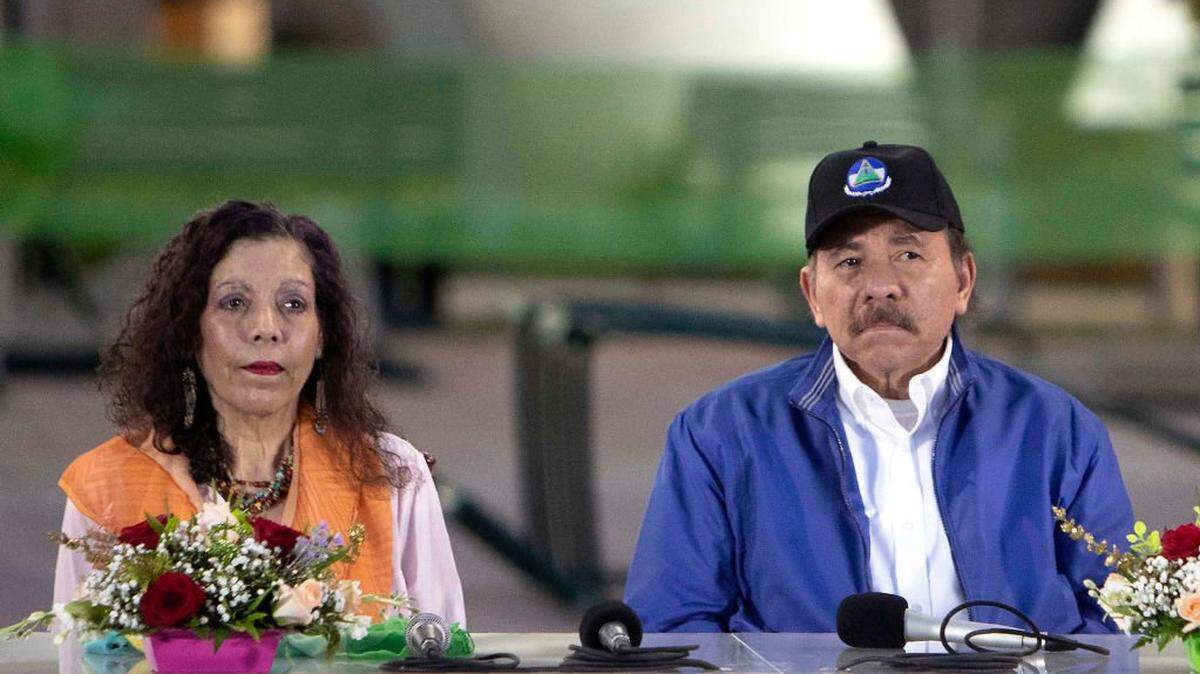
The United States on Thursday imposed sanctions on five senior Nicaraguan officials, accusing them of helping President Daniel Ortega and his wife and co-President, Rosario Murillo, to entrench an increasingly authoritarian system through financial controls, labor policies, telecommunications surveillance and military intelligence operations.
The Treasury Department’s Office of Foreign Assets Control said the designations target officials who lead key agencies enabling what it described as the Murillo-Ortega regime’s “campaign of repression and tyranny.”
“The Murillo-Ortega dictatorship has continued its domestic and international campaign of repression and tyranny to intimidate, stifle, and undermine peaceful political opponents and dissenters,” Treasury Secretary Scott Bessent said in a statement. “We will continue to hold the dictatorship to account and to amplify the Nicaraguan people’s aspirations for freedom and justice.”
Those sanctioned include the director and deputy director of Nicaragua’s Financial Analysis Unit, the minister of labor, the deputy director general of the telecommunications regulator TELCOR, and the head of the army’s Directorate of Military Intelligence and Counterintelligence.
The action was taken under Executive Order 13851, which authorizes sanctions against Nicaraguan officials accused of undermining democratic institutions.
As a result of Thursday’s action, all property and interests in property of the designated individuals within U.S. jurisdiction are blocked, and U.S. persons are generally prohibited from engaging in transactions with them. Entities owned 50% or more by one or more of the sanctioned individuals are also blocked.
Treasury warned that foreign financial institutions that knowingly conduct significant transactions for the designated individuals could face secondary sanctions, including restrictions on maintaining correspondent accounts in the United States.
The Treasury Department said sanctions are intended to change behavior rather than punish and that designated individuals may petition for removal from the sanctions list.
Financial intelligence unit
Treasury designated Retired Maj. Gen. Denis Membreno Rivas and former Police Chief Commissioner Aldo Martin Saenz Ulloa, who have served as director and deputy director of the financial analysis unit since 2012.
Treasury accused the government of weaponizing anti-money laundering and counterterrorism financing laws to target political opponents. According to the department, the unit has monitored foreign funding flows to block support for opposition groups and civil society organizations and has liquidated the assets of dissidents and nongovernmental organizations without legal basis.
The agency’s leadership structure — chaired by active-duty officers loyal to Ortega — undermines its autonomy and allows the government to use financial oversight tools to persecute critics, Treasury said.
Labor ministry
Johana Vanessa Flores Jimenez, appointed minister of labor in August 2025, was also sanctioned.
Treasury cited a recent report by the Office of the U.S. Trade Representative alleging that Nicaragua’s labor policies have exploited workers, created unfair conditions of competition and confiscated property belonging to religious institutions and U.S. persons or businesses. The report said such practices have created a high-risk environment for U.S. companies operating in Nicaragua.
Telecommunications and surveillance
Celia Margarita Reyes Ochoa, deputy director general of TELCOR since 2023, was designated for her role in the telecommunications regulator, which Washington describes as a pillar of the government’s surveillance apparatus.
Under a 2024 telecommunications law, TELCOR was granted expanded authority to collect private data, intercept communications and geolocate individuals, further tightening state control over media and social networks, Treasury said.
The agency noted that TELCOR’s director general, Nahima Janett Diaz Flores, had already been sanctioned in 2022 for similar reasons.
Military intelligence
Also sanctioned was Maj. Gen. Leonel Jose Gutierrez Lopez, who headed military intelligence for more than a decade.
The unit oversees internal and external surveillance for the Nicaraguan army and coordinates with police and state security agencies, according to Treasury. U.S. officials say it plays a central role in monitoring protesters, journalists, human rights defenders and former military officers considered disloyal.
Broader crackdown
Since widespread anti-government protests erupted in 2018, Nicaragua’s government has detained and expelled opposition figures, shuttered independent media outlets and forced hundreds of journalists and civil society leaders into exile.
In January 2025, Nicaragua’s National Assembly approved constitutional changes that elevated Murillo from vice president to co-president and subordinated other branches of government to the executive, effectively eliminating the separation of powers, according to U.S. officials.
.