Bolivia ends socialist era as opposition leaders head to historic runoff
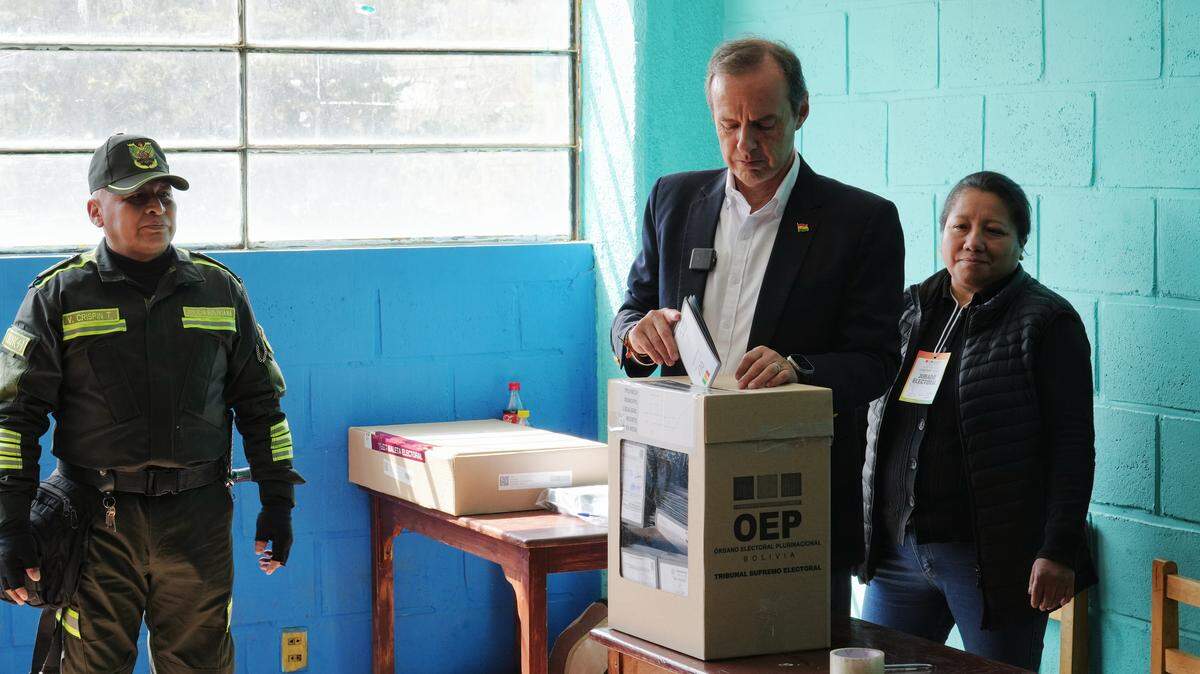
Bolivia has entered a new stage in its life as a democracy after nearly two decades of dominance by the Movement for Socialism. In Sunday’s general elections, the ruling party suffered a collapse that stripped it of any chance to remain in power and left it clinging to survival as a political force with just over 3 percent of the vote.
The new political landscape sets up a runoff on October 19 between Senator Rodrigo Paz Pereira of the Christian Democratic Party and former president Jorge “Tuto” Quiroga of the Libre alliance.
Preliminary results from the Supreme Electoral Tribunal, with 95% of ballots counted, showed Paz Pereira leading with 32.1% of the vote, followed by Quiroga with 26.8%. Since no candidate reached the threshold required to win outright, the runoff will decide the presidency.
The rise of two opposition contenders underscores the extent of MAS’s collapse. The party, in power since 2006 under Evo Morales and later Luis Arce, nominated former Interior Minister Eduardo del Castillo after Arce abandoned reelection amid a deepening economic crisis marked by dollar shortages, falling reserves and growing social unrest.
Del Castillo earned just 3.1%, a dismal showing but one that narrowly preserved the party’s legal status.
The defeat confirmed a long-building trend of internal fragmentation, with factions loyal to Arce and Morales vying for influence alongside new leaders seeking independence from both. Senate president Andrónico Rodríguez, once considered Morales’s protégé, finished with only 8% despite his strong position in congress and inside the unions.
Morales, constitutionally barred from returning to the ballot, urged his base to protest through blank votes, but the effort only further weakened his political standing. Once the dominant figure of national politics, he now faces the challenge of redefining his role as the party he founded struggles to recover.
Businessman Samuel Doria Medina, who came in third with 19.8%, had briefly led late-stage polls but failed to maintain momentum as Paz Pereira surged. His elimination reshaped the contest, with his endorsement expected to strengthen Paz Pereira’s chances in the runoff.
Other candidates trailed far behind, including Manfred Reyes Villa with around 7% and Del Castillo just above the minimum threshold to keep MAS alive. Taken together, the results revealed a fragmented but clearly opposition-driven electorate determined to replace the ruling party.
Quiroga, 64, seeks a return to power after briefly leading the country from 2001-02 by constitutional succession following Hugo Banzer’s resignation. His campaign has emphasized fiscal stabilization, closer engagement with international financial institutions, and market-oriented reforms.
Seen as the conservative option, his platform calls for a definitive break from the MAS era and a reorientation of Bolivia’s economic strategy.
Paz Pereira has positioned himself as a centrist alternative with broader appeal. The son of former president Jaime Paz Zamora, he has built his career on themes of renewal and reconciliation. His strong showing, coupled with new endorsements, makes him the frontrunner heading into the second round.
If successful, he will face the challenge of governing with a fragmented congress. For two decades, MAS held a dominant majority in the parliament, enabling it to push through sweeping reforms without compromise. The new balance of power will demand negotiation and coalition-building to advance any legislative agenda.