Bolivia heads to the polls for presidential election as ruling party faces collapse
Bolivians will head to the polls Sunday in a general election that could mark the end of nearly two decades of dominance by the Movement for Socialism party, known as MAS, the once-unbeatable political force founded by former President Evo Morales.
Long viewed as an electoral juggernaut, MAS now faces the most serious threat in its history. Polls show the party fractured, deeply unpopular and at risk of losing not only the presidency but also its legal status — a stunning reversal for a movement that once shaped Bolivia’s national agenda.
Nine candidates are vying for a five-year presidential term, but none has broken the 25% mark in recent polls. The largest bloc of voters remains undecided, underscoring a deep sense of disillusionment with the political establishment.
The election unfolds amid a worsening economic crisis. Inflation is at record highs, U.S. dollars and fuel are scarce, and the cost of basic goods has soared. Whoever wins will inherit one of the most difficult economic situations Bolivia has faced in recent years.
To win outright in the first round, a candidate must secure more than 50% of the vote, or at least 40% with a 10-point lead over the closest runner-up. If no one meets that threshold, the top two candidates would compete in a runoff on Oct. 19.
Notably absent from the ballot are two of Bolivia’s most prominent political figures: sitting President Luis Arce and his former mentor, Morales. Their long-running feud has split MAS into warring factions, further weakening the party.
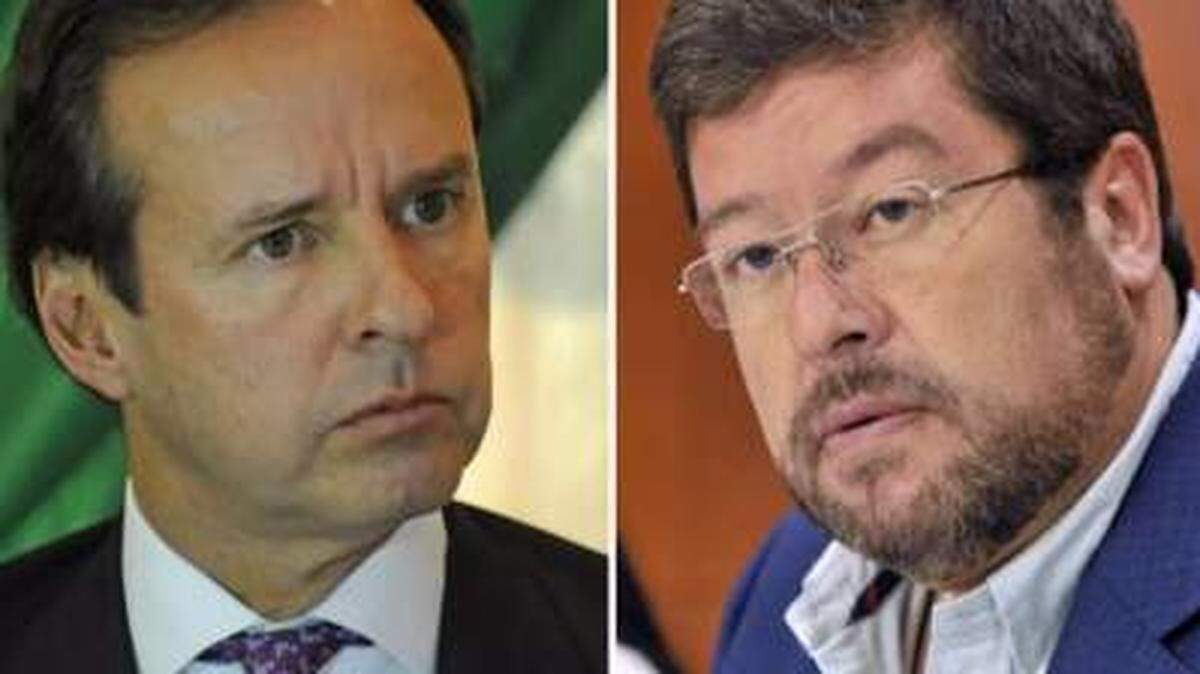
The main beneficiaries of MAS’s decline are businessman Samuel Doria Medina of the Unidad alliance and former President Jorge “Tuto” Quiroga, running under the Libre alliance.
Doria Medina, a former planning minister, has led the polls since June, with Quiroga trailing closely behind. Most polls show a couple of percentage points’ difference among them, with the preferences for each sitting near the 20% mark.
Both are expected to advance to a runoff if current trends hold — potentially paving the way for Bolivia’s first right-leaning government in nearly 20 years.
“This scenario will require pacts between different political forces to guarantee governance over the next five years,” political analyst Lily Peñaranda said in an interview with Spain’s EFE news agency. “Economic policy will have to be negotiated, because the crisis doesn’t allow the state to spend a single cent more.”
Voter frustration is being driven by an economy in freefall. A shortage of U.S. dollars has paralyzed imports, fuel lines stretch for blocks and food prices have spiked. Critics blame the MAS economic model for depleting reserves and stalling growth.
Doria Medina has proposed a “comprehensive adjustment” — including cuts to public spending, boosting gas exports, Central Bank reforms to ensure independence and the strategic development of Bolivia’s vast lithium reserves.
Quiroga’s platform centers on rebuilding foreign reserves by reaching an agreement with the International Monetary Fund, cutting taxes to attract investment and reducing the size of government. He also advocates incentives for bank lending to stimulate job creation.
Analysts say the core issues in the fiercely contested election are Bolivia’s leftist economic legacy, the future of its democratic institutions, and the livelihoods of millions navigating the worst financial crisis in decades.
“This seems like the end of the cycle not only for MAS, but for an entire model of government,” said Bolivian political analyst Verónica Rocha.
MAS burst onto the national scene in 2002, when Morales finished second with 20.9% of the vote. Three years later, he won the presidency with 53.7%, then expanded his margins to 64.2% in 2009 and 61.3% in 2014.
The party’s grip on power was briefly broken in 2019, when Morales resigned amid fraud allegations and what he described as a “coup d’état.” An interim government led by Sen. Jeanine Áñez held office until Arce returned MAS to power in 2020 with 55.1% of the vote.
At its peak, MAS controlled two-thirds of both houses of Congress, pushing through major reforms with minimal opposition. Its strength came from deep alliances with labor unions, Indigenous groups and rural communities.
That unity began to unravel in late 2021, when Morales and Arce clashed over the party’s future and the 2025 presidential nomination. By this year, the rift had widened into a full-blown schism.
Arce has said he will not seek re-election, clearing the way for his former interior minister, Eduardo del Castillo, to run as MAS’s official candidate. Morales, who is barred from running due to term limits, has urged supporters to cast blank votes — a move seen by many as an attempt to undermine Senate President Andrónico Rodríguez, who is running independently under the Popular Alliance banner.
Del Castillo is polling just above 2%, well below the 3% threshold MAS needs to maintain its legal standing as a party. Rodríguez is also polling in the low single digits, leaving the once-formidable MAS political machine in disarray.
Former Morales spokesman Álex Contreras said the infighting has left MAS “on the verge of ending a political cycle” and “symbolically undoing” decades of grassroots organizing.
Marianela Paco, a former communications minister under Morales, said the party’s grassroots base is “indignant and disappointed” with both Arce’s administration and Morales’s legacy.
“The people who supported MAS have retreated,” Paco said. “I expect high abstention in Sunday’s vote, as they wait for an opportunity to regroup in the future.”
This article was complemented by El Nuevo Herald’s wire services.